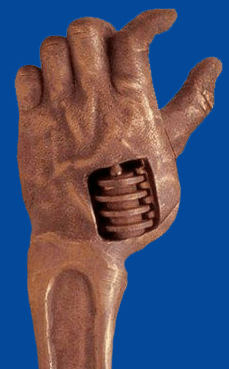
 Back when I was a rookie, I was asked to chase down a left-handed monkey wrench. The AD said it was critical for the next scene and I had to find one at all cost. He was adamant about it and made it clear that he trusted me to get the job done. He told me not to bother coming back if I couldn’t get one into the hands of the Gaffer within the hour.
I hustled toward the car with several perplexing thoughts. My dad was left-handed and he never used a left-handed wrench of any kind. In fact, every wrench he owned could be used in either hand. I became suspicious in that moment and wondered if I was being targeted with a test.
Taking a left before I got to the parking lot, I snuck around to the generator and asked the Best Boy if he had ever heard about a left-handed monkey wrench. He chuckled and asked if I had overheard someone being initiated. I told him a couple people were talking about it and I knew no such tool existed, but I wanted to make sure. He said, “It’s an initiation, which means we’ll have a light day. If I were you, I’d change departments for the rest of the day and find someone to serve.”
I headed over to the props truck and told them that I heard they needed help. “Yes,” shouted the Property Master. “Today’s a light day, which will allow us to catch up and organize the truck for the next few heavy days we’re about to hit.” I dove in and worked hard.
Later that afternoon I bumped into the AD. He switched his smile to a firm, piercing look. “I told you not to come back unless you found a left-handed monkey wrench.”
“On my way to the parking lot I bumped into the Property Master. She was struggling to organize the truck for fear of not keeping up with weekly schedule. Knowing that your success is critical to this picture, I volunteered to help make sure the props department would meet with your requirements. I knew your success was more important than finding a left-handed monkey wrench, especially since our Gaffer is capable of getting the job done with just about any wrench.”
The AD smiled at me and nodded his approval. “I’ll see you back on my team tomorrow,” he shouted as he strolled away.
My initiation was over and I wouldn’t be tested for the remainder of the picture. Unfortunately several people walked off of the film because they feared being controlled like a child controls a toy or plaything. They didn’t understand the difference between a one time test to see what a person is made of versus a controlling personality that continually chokes life out of a project.
Since most people’s next meal ticket is based on the strength of their last picture, it’s important for all members of the production team to develop good boundaries so they do not succumb to a real controller. Unfortunately the person with the control problem is sometimes a department head, an investor-producer that doesn’t understand the filmmaking process, or worse yet, a rookie director who never learned how the creative process works.
What Real Controllers Want
The controller wants what you have because he or she lacks those valuable qualities. The most sought after quality is being able to feel good about yourself without having to receive a pat on the back from someone else. Controllers also hunt down those who are secure in their skin, accomplishments, and overall position in life.
And, if your attention makes others feel good, the controller will be all over you. In fact, if you can feel good about other people and aren’t intimidated by their successes, you’ll have a control target placed on your back.
Controllers find it easier to put others down in order to feel good about who they are. The higher the position held by a controller, the more likely he or she will carry fear, having been promoted to the level of incompetence or the unknown.
The only way to alleviate a disaster during a film production is to set healthy boundaries and use the established hierarchy protocols that allow all departments to function properly.
What Not To Sacrifice
All too often we let go of things that are important to us in order to survive the constant attacks from a controller. This forces us out of the life we were meant to lead and we slowly become something that no longer looks like us. It therefore becomes critical that we set healthy boundaries to protect our hearts and our future. And yes, that might require you walking away from or avoiding certain people while on set.
Some elements worth protecting include the understanding that your ideas and contributions matter. Another consideration to keep yourself strong is to stop others from pushing your buttons, belittling your accomplishments, or talking down to you. But most importantly it’s prudent to make sure you never become a doormat by allowing others to push your needs below theirs.
Oh, it’s okay for you to choose to put others above yourself, but it’s not okay to allow others to force you down to make sure their needs are met. Choosing to serve others from your heart works very differently than having someone guilt you or coerce you into meeting their needs.
The controller must not be allowed to manipulate you and put your career at stake. You must fight to maintain who you are regardless of what they do. It’s not easy, especially when the controller gets others to “help” prepare you for your next level. Those well-meaning people buy into the controller’s manipulation and do his or her dirty work to take you down a few notches in the name of preparing or strengthening you.
Unfortunately you might have to walk away from the well-meaning people to protect your heart and career. Once they realize that their help actually hindered or hurt you, they will try to appeal to your good graces, but it might not be prudent to allow them back into your life—a difficult decision that only you can make.
The next time someone asks you for help that pulls you from your path in life, make a mental note that they might be a controller or a controller’s enabler. Set your boundaries and make sure your valuable, creative assets are well protected. Then get on being the best you that you can be, while having a lot of fun in life.
Copyright © 2018 by CJ Powers

 Later in life I’d hear Hannah Brencher share about how our voice, as a writer or filmmaker, is birthed in our experiences and emotions. Brencher said, “Live and then write it down.” It’s such a simple activity that develops our voice, yet it’s all too often overlooked.
  CJ's Corner