
Creativity in Short Film Festival Selections

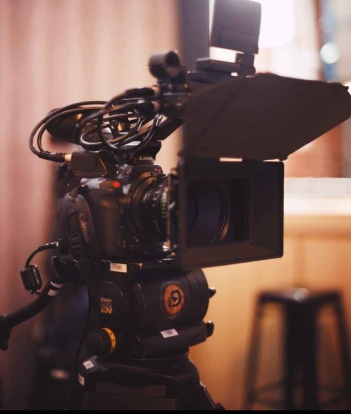
pexels-photo-2335046.jpeg

Photo by Bruno Massao on Pexels.com

I know numerous filmmakers who make short films to keep themselves sharp in between their major projects. I also know several students who shoot shorts with the hopes of being discovered. All of their creative knowledge goes into shooting the story they believe might help them achieve awards and attention.

However, the festival circuit is a highly competitive market with a uniqueness not considered by most filmmakers. Few producers contemplate the steps necessary to find the right festival for their story and build the film in a fashion that garners the greatest number of invitations by festival selection committees or jurors.

To help the filmmakers out, I’ve decided to write about a creative approach that will increase their chances of winning a meaningful award. I use the term meaningful because there are less than 50 festivals that will bring acclaim to a filmmaker out of several hundred. It’s easy to win an award if you’re willing to submit your film to small festivals with little competition. There are even fewer Academy Award-qualifying festivals.

BUDGET

The first consideration is the film’s budget. Few filmmakers have taken time to research their return on investment based on their out-of-pocket production budget. Statistically, the higher the budget, the greater the chance of being accepted by any given festival. This is true because the audience, and certainly the selection committee, can see the quality of a film increase with a bigger budget. That’s why some first-time filmmakers hate competing against a company like Pixar who enters high budget animated shorts from time to time.

While the selection process is easy for higher budget films, winning is not. The Short Movie Club conducted a survey and learned that higher budgets do not guarantee to receive an award. Here is a table I put together based on the research results of winners. I put it in the order of best to the worst chance of winning.

Budget

Odds of Win

$10K 3.60%
$20K 2.45%
$500 1.64%
$5K 1.21%
<$20K 1.09%
$0 0.77%

You can see that the budgets, or lack thereof, create an interesting return on investment. The zero-dollar budget is filled with passionate friends who want to help make the film, but when production hits harder than most realize, their skills don’t make it to the silver screen. However, the volunteer cast and crew that gets to eat, thanks to a $500 budget, puts more of their sweat equity on screen. Budgets that exceed $20K are also hampered in the amount of effort that clearly comes across on the screen. Whether the crew is made up of professionals that are trying out new positions, or a passionate group that wants to use the short as a political statement, something falls short in higher budget films.

However, when a passionate group makes a film that they believe in, and have a few extra dollars for CGI work, great music, or something substantial that can differentiate the show from others, the odds of winning an award goes up.

FESTIVAL PERSPECTIVES

Once the budget is settled, then the genre becomes most important. In qualified festivals, documentaries, dramas, and animation shorts rule the awards ceremonies. In unqualified festivals, animation, horror, and sci-fi bring home the awards. Selecting any other genre greatly reduces the filmmaker’s chance to win.

The one exception is niche festivals. For instance, a faith-based festival rarely will give an award to any film except for that of the faith-based genre. That also holds true for LGBTQ+ festivals not giving space to films that are not overt in their agenda.

Knowing the perspective of the festivals of interest prior to production helps the filmmaker creatively focus on the elements that are award-worthy. Promotional dollars can also be saved by not marketing the film to the wrong outlets and markets. However, the smaller the niche, the less likely the filmmaker will become known for his film.

FILM LENGTH

The shorter the film, the greater the chances of a festival accepting the film. Here is a table showing the acceptance rate based on the length of the film.

Length of Film

Odds of Acceptance

5 min. 25.00%
10 min. 11.26%
15 min. 11.73%
20 min. 11.57%
25 min. 11.79%
30+ min. 10.92%

The win rate is a very different set of percentages, as it reveals that brevity is king. The only exception is the 15-minute film that has enough time to develop a character that is worth rooting for. The caution comes in the development process that suggests the tighter the story, the better the chances of winning.

Length

Odds of Win

<:05 min. 7.00%
5 min. 1.84%
10 min. 1.39%
15 min. 2.00%
20 min. 1.45%
25 min. 1.01%
30+ min. 0.91%

I’ve been a festival judge numerous times and I can tell you that based on the vast majority of submissions that I’ve seen, 99% of them demonstrate that they are not award-winning films in the first 60-seconds. It is therefore prudent for filmmakers to immediately capture the attention of the audience with as much on-screen quality as possible.

However, most shorts do not immediately introduce you to the problem or the main character in the first 60-seconds, which guarantees that they will not win an award. Most film entries open with the mundane so you get a feel for the character’s life before something significant happens—killing the film’s chances of surviving the overloaded festival circuit.

Award-winning filmmakers typically open with a scene that oozes of the protagonist’s character or immediately drops the audience into the middle of a problem that is in full swing. While there are some films that win outside of that formula, the vast majority of awards go to the filmmaker who makes a film according to the needs of the targeted festival.

The process of developing a story for a particular festival takes a tremendous amount of creativity. And, it’s very limiting in that the film might not play well in commercial markets that do not hold to those constraints. In fact, if you make a 30+ minute film and release it on Amazon Prime, you’ll make good money and are almost guaranteed to not win a single festival award due to the film’s length—unless you apply to the Emmys.

Filmmakers have to pick between festivals and commercial exploitation. Rarely can a film be successful in both venues. Unfortunately, most filmmakers disagree with that statement, attempt to prove it wrong, and fail miserably. This multiple decade long attempt at reinventing the proverbial wheel in filmmaking continues with every generation. Their hope is more powerful than the measured reality.

Creativity must be applied with reason for success to ensue.
© 2019 by CJ Powers

Is The Book Or Film Better?

Book vs. FilmThe number of scripts I receive for consideration or review every year is astounding. Each of the major studios receive about 100 scripts a day and 99% of them are not worth reading. The biggest dilemma I face comes from the author. Most of the scripts I receive are from talented literary authors trying to write a screenplay, which seldom goes well.

The first problem that I typically encounter is the author using detailed and flowery words in long-winded descriptions, as if it were lifted right out of a novel. Few authors understand that the screenplay is written in a specific manner for budgeting and creative purposes, and obviously, for the screen. Here is a scene example that I’ll use to discuss the differences:

NOVEL

“Adrenaline pumped through David’s veins as his pace quickened toward the lone grave hidden beneath the canopy of large oak trees deep within the forest. His soiled gym shoes stopped in front of the fresh pile of dirt rounded over like a grave before rain settles the soil. David’s face aged 10 years in that moment and his legs weakened. He dropped to his knees with sorrowful eyes, knowing that he might be facing his daughter’s burial site. His hands looked like gnarled creature paws as he stroked away at the soil, digging deeper and faster with a weak hope of finding an animal in her place.

But he knew the truth. His hands would soon find his kidnapped daughter. He readied himself for the sight, as he plotted a new vision for revenge. His hand snagged a piece of material. The same as the dress his daughter wore at her seventh birthday party, the night she was kidnapped. David’s face flushed and turned stone cold. A fiery revenge welled within his soul forcing him to his feet. “I’m com’n for yah,” he groaned. With more energy than he thought possible, David bolted through the woods focused on his target.”

SCREENPLAY

EXT. FORREST – DAY
Exhausted, David scrambles through the forest. He stops at a fresh grave. Grimacing, David drops to his knees. He paws through the soil. David stops, hardens himself and glances off in the distance.

DAVID
I’m com’n for yah.

David runs from the grave, letting a streak of sunlight hit the floral cloth protruding from the soil.

PRODUCTION TOOL

The same overall action occurs in both depictions of the scene. The screenplay version is measured at 2/8 of a page, which tells the production manager how long the segment will take to film and how much it will cost. The word choices within the screenplay suggest the needed shot list to capture the story. The list includes:

  • XLS: David running in forest
  • MS: David panting as he runs
  • CU: David’s gym shoes stop at the grave
  • MS: David drops to his knees
  • MLS: David kneels at daughter’s grave
  • CU: David
  • CU: Hands digging
  • MS: David’s dialogue
  • LS: David running away from grave
  • XCU: Dress protruding from grave

With the scene being 2/8 of a page, the DP and 1st AD know they have to capture the full shot list in an hour to stay on budget. If, however, the scene were written like the novel, it would take 4-6/8 of a page and the team would allow 3-4 hours for the shoot. Unfortunately, the scene will still only take 15-20 seconds on screen, making the novel version far more costly to shoot—forcing the project over budget.

When properly written, a screenplay reveals the shooting schedule, budget, and camera shots.. It also hints at the character arcs and the emotional tonality the actor must consider when developing his character. There are also hints sewn into the script about the editorial pacing and tempo.

A person who knows how to read a professional screenplay can easily spot the above. But the novelist has no clue what information must be laced into the scene or how to concisely interweave it. Most don’t understand how this scene is likely to be shot handheld because of the story’s emotional turmoil and shooting schedule.

Beginning screenplay writers find themselves writing something halfway between the novel and professional screenplay, which inaccurately reflects the shoot requirements with information that cannot be seen on screen. A screenplay improperly written becomes a useless tool for the producer and production team. The better the screenplay writer, the more accurate the budget.

BOOKS ARE NOT FILMS

A second factor I face with authors is their misguided understanding of what makes for a good film versus a book. The original story allows the reader to get inside of the protagonist’s head, while the film can only show what happens, unless you like a lot of narration, which slows a film down and pulls the viewer out of the film story.

Books are about thought and films are about action. They are two different mediums and must be treated according to its own form. While most authors feel disgruntled about having their story altered to better fit the medium, they hate with a greater magnitude films that try to follow the book and end up destroying the story as a result.

The vast majority of great authors have to get used to seeing their “A” plotline become a “B” plotline in a movie, and their “B” plot become the “A” plotline. This inverted plotline structure makes for a far greater motion picture, and opens the story up to a wider audience than what the book was aimed at. Since movies cost a lot more than a book to create, this distinction is significant.

While there are additional factors that authors face when transitioning their work to the screen, I’ve run out of room to mention them in this post. The key is to understand that film and books are very different and require opposing skills to pull off. Flexibility is paramount for the author desiring a shot at the silver screen.

© 2018 by CJ Powers

Understanding the Visual Draw of Men

Understanding_VisualWe’ve all heard that men are visual. We’ve even heard that they are more visual than women. We’ve also been told that this difference is significant. So monumentally different, in fact, that women can’t quite understand what it’s like to live in a man’s visual world.

In a recent video hosted by Dennis Prager of Prager U, Dennis clarified some of the visual differences between a man and a woman. His examples were all related to sex, since this is one area more easily explained. However, the difference between a visual person and a literary-oriented person are far more reaching than the one life category of sex.

The Internet shifted from being a literary to a visual platform in 1994 with the first release of pictures and direct broadcast images. This expanded to far more homes in 2010-2014 with the introduction of broadband connections. Today there are hundreds of millions of visuals being consumed daily across the globe.

This increase in video-based Internet connections causes many women to believe they have become more visual. The great decline in the written word suggests there is something to the idea. But being visually versus literarily driven is not determined based on the amount of visuals consumed. It is established by how the visual impacts the individual.

I had the opportunity to observe a woman in her natural life setting as she interacted with the Internet, TV, and a book. She considered herself a visual person, as she explained during our conversation about visually driven men. She never understood how her thoughts of being visual were skewed by the fact that she was not actually visual.

When she read her book, I tried to converse with her, but nothing seemed to get through. Once I became overly rambunctious about chatting, she set the book to the side with extreme anger for me having interrupted her story. She was a literary-based person and I had interrupted her flow.

During a movie she watched on TV, I interrupted her often and she had no problem responding. She even took her eyes off the screen numerous times during our conversation. Pulling away from the visual medium took her little effort. In fact, she got up and walked into the kitchen several times without concern for having missed any visual information.

The Internet gave an interesting twist to my observations. When she was reading text, our interactions were just as adversarial as our book experience. But she had no qualms about being interrupted while watching videos online. The pause button was simple for her to push regardless of the visual story unfolding.

The woman who thought she was highly visual didn’t understand the drive that visuals have on men, nor the understanding that she was not consumed by the visuals. When we discussed it, she tried to point out how visual she was due to her inability to pull herself away during one part of the movie. I asked what was happening at the time and she mentioned her transfixiation with the dialogue—a literary, not visual element.

To help women understand men’s visualness, I’ll explain it using literary terms. Visuals are typically a man’s first language. Little boys do not chatter it up like little girls do, instead they keep a close eye on their toys and make sounds as they picture the dump truck backing into the construction zone filled with its load of gravel.

When I was at a Fortune 50 company a woman handed me a stack of reports to review before my afternoon meeting with our male executives. The pile was just shy of an inch thick. After reviewing the materials, I designed a one-sheet dashboard report with seven graphics.

I placed the thick report in front of each executive and handed them my one sheet. Within two minutes the action steps were decided and the executives asked if they had missed any key points from the report. I merely pointed out the woman’s name who worked diligently to produce the report and suggested they give kudos for her impressive and detailed efforts.

They agreed, got up, leaving the reports on the table, and took the dashboard report. The visual tool was a reference for our newest venture announcement minutes later, which was based on the report. The executives never read the report, but they referenced the visual dashboard report daily. Why? Because it gave the same information using their first language of visuals.

After my last speaking engagement, I was surrounded by business people wanting more information. One person noticed the notes for my keynote presentation and asked if he could take a picture of it. Within a few seconds men were lining up to do the same. For longer speeches, I use a sketchnote outline.

My notes are made up of a series of visuals depicting each portion or step of my speech. The pictures are directly correlated to my talk. I’d say it’s similar to an infographic that rapidly explains my entire talk with pictures. In fact, when these moments happen there is always one or two people who demonstrate their prowess by citing the part of my talk for each picture they see. They are amazed at how well the picture captures the talking point, which of course is why I do it.

I’m a visual person who has never been able to give a talk from a written outline. However, I found that longer talks are easily presented using a sketchnote outline. Why? Because I’m visual. Or, I can put it another way…I read, write, and speak visual first, English second.

So what language drives you…visual or literary?

© 2018 by CJ Powers