
Family & Faith Screenwriting Workshop

With the surge of Christian organizations and family advocate groups finding funds to make a difference on screen, the number of requests I’ve received for conducting screenwriting workshops is on the rise. The most requested lesson is how to write a secular quality story with a moral message without preaching.

There are several answers that work well, but the most important goes against what organizations are willing to stand behind or support financially. Great story requires a change in the main character, protagonist or hero. It requires the audience to see a flaw in the person that by the end of the movie is used as a strength, is overcome, or turned into a strength.

While everyone of faith has moved through this process, as their sinful nature is transformed into a godly one, most organizations don’t want to present the sinful character. Courageous is a perfect example of a story that has a good protagonist turn into a great protagonist, avoiding the wretched corruption in the protagonist’s life that requires some form of redemption.

The things that make great secular movies excellent is redemption. Most audience embraced films have some form of redemption or growth from bad to good in the protagonist’s life. And what better film company to handle such a story in a life changing way than a Christian based company. Yet, most avoid showing anything sinful for fear of leading their audience astray.

Many filmmakers lose sight of the fact that they can take the audience on a journey and walk them from a point of weakness or sin to a place of redemption based on growth, change, or grace. They understand the transformation better than any secular writer, but few will take the risk of creating a story that shows the negative. Therefore, they create a hero that goes from good to great, hoping it will capture the audience with their message.

The Bible on the other hand is filled with sin being transformed by grace. There are battle scenes, peeping Toms, lust, lying, stealing, murder, arrogance, and other forms of detestable acts easily portrayed visually. However, no one questions the Bible about causing others to sin because of the stories, as each story also demonstrates the consequences and it’s related grace filled redemption.

I’m a firm believer that showing life as it is, followed by the appropriate consequences and the redeeming value available through God, will draw those who struggle in life into an unconditional love that heals. It’s too bad that most Christian and family writers do not agree, or if they do agree, cannot find support for those types of stories.

The audience wants to know that they are not alone in the human condition of making mistakes or sinning. Hollywood does a great job of demonstrating to the audience that “everyone is doing it” and they aren’t alone in it. But, who is demonstrating the consequences and opportunities for redemption from that fallen state? Who is helping the next generation learn how to make decisions by showing them the process through flawed characters who learn the hard way?

Christian films will skyrocket to success when the writer addresses the human condition in an honest way. Our country is filled with real people struggling with real problems that need real answers. People want the truth and preachers are quickly moving to new pulpit styles that are authentic and transparent, so isn’t it time for Christian writers and filmmakers to do the same?

Directing Intensity

A director recently asked me how he could improve his intense scenes with less experienced actors. I told him that the key to the level of intensity is in the actor’s perception on how they are coming across on screen. Most feel like their intensity isn’t big enough unless they become theatrical, which doesn’t work on camera.

The best way to help the actor understand their level of intensity is by painting a picture in their mind of what big intensity would look like and then ask them to think about it during the scene, but not portray it. This creates internal conflict and an intensity begging to come out, which reads very well on camera.

Telling the actor to bring more or less to their performance is a waste of time. Whenever we tell the actor to back off a bit on the intensity, they have no point of reference and feel awkward, which detracts from the scene. Instead, telling the actor to picture themselves in another situation and express what their character is fighting for in a way that they can pre visualize will help immensely.

Once you can tell they have the picture in mind, you can return them to thinking about it, but not acting on it. This will generate enough internal conflict to build intensity from the camera’s viewpoint. However, you will frustrate the actor and must compensate by encouraging them after each take. Without doing so, the actor will start withdrawing and alter their character. After all, it takes a lot of confidence to play something other than who they are.

When helping the actor to develop what the character is fighting for, it’s important to use action words. Saying that he is shuffling toward his destiny, or raging against a bureaucracy designed to hold back the little people, gives the actor something specific to work from.

Shuffling and raging are both words that describe a visualization of an emotion and are ideal for building character. All trained actors are taught to “do business” and using action-based words adds to that skill. It helps the actor turn the emotional elements of their character into action or reactions, which feed intensity.

I can’t help but notice that the vast majority of acting awards have gone to actors who had a good director. Rarely will you find an actor achieve excellence with a poor director. The reason is simple, actors can’t see their performance and they can’t come up with all the needed visualizations of their emotions.

It takes a great director to create a visual moment that is safe for an actor to dig deep and draw out strong emotional ties from their own life that are action oriented. Few actors will trust their deep emotions with a director that doesn’t know how to visualize it or make it come across well on camera.

Imagine how an actor would feel as they draw from a point of vulnerability to find that the director allowed the intensity to appear over the top and made the actor look foolish. The actor would feel burnt and during their next opportunity will perform what is safe, rather than award winning. The director owns the emotional tone of the picture and the artistic expression. Therefore, directors must work to build trust with the actors.

I worked with one actor a couple years ago who, in my opinion, was one of the best stage actors in the area. However, the camera is far more sensitive to action than the stage and everything must be played smaller. During his first shot, I watched a stage performance. He could sense that it was over the top and too animated for the camera and asked for help.

I had the choice of saying play it smaller, as most directors would do, but I didn’t. I told him that his character was headed to an appointment with a fragile piece of art to exchange for a $50,000 bonus check. Then I asked him to do a dry run without “acting,” but to think about the fragile art and his bonus check. The intensity of his care for the fragile coupled with a sense of speed read well on camera – The camera saw a concerned man moving quickly to resolve.

I had the camera team roll with the idea that we’d use a tail slate if it worked. The performance was perfect. His stage presence disappeared without undermining his emotions. He was able to keep his stage thinking in place along with his confidence. The scene worked beautifully. His next shot was even better after having shot such a successful take.

A director who can protect his actor’s emotions during each take will draw out the perfect level of intensity, giving the actor a great piece for his or her reel, not to mention festival accolades. The key is helping the actor to draw from and visualize their life experiences and emotions.

For those working with experienced professionals, selecting key action verbs to describe the character’s objective or what they are fighting for will more quickly accomplish the same result. Learning about the actor’s emotional reserves and their ability to translate it to the screen will help the director decide which approach will work best.

Establishing a Production Workflow

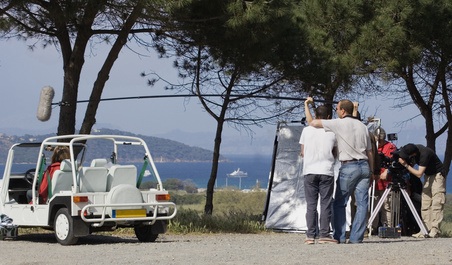
Whether operating in the corporate work force, being a stay at home mom, or directing a multimillion dollar picture, everyone accomplishes more in the morning than in the afternoon. That is, unless they sleep through most of their morning.

Setting the workflow for a picture is critical to meeting the deadline and staying on the strict shooting schedule. The key factors that directors face in developing their workflow include:

1. Production crews get more work done in the morning than after lunch. Therefore directing the scenes with a higher level of difficulty or more creative challenges can take advantage of the morning crew, while simple set ups are best done in the afternoon.

2. Moving a production team between locations is time consuming and costly. The director and production manager will take this into account and not require more than one move in a day. If multiple locations are required, efficiencies and cost savings can be gained from a second crew by only moving the director and actors.

3. Selecting when the first shot is to take place and sticking with the schedule is a huge factor in meeting daily deadlines. The First AD can help keep the cast and crew on schedule by keeping him in the loop, especially if he is directing the background.

4. Setting milestones within the day for creative shots and difficult scenes is critical to staying on budget. Since there are only six hours from start to lunch, it is crucial that the director hits his morning milestones and only explores creative concepts within the additional time frame earned by reaching some early.

By keeping on pace in the above manner, the director will find the producer hanging over his should far less often. He will be freed up for more creative thought and the extra time gained from these disciplines will allow him to help the actors explore other aspects of their characters, which will strengthen several scenes and the over all film.

Copyright © 2011 By CJ Powers
Photo © amelie – Fotolia.com