Elements of a Great Pitch

I had an opportunity to successfully pitch a story concept to a producer a couple weeks ago. He was excited about the project based on how I shared the story and told me to contact my attorney to close our deal.

A few days later, I had a writer pitch me a story concept in hopes of getting me to collaborate on her screenplay, but her pitch left me without any desire to read her script. The project died before it could be launched, all because she didn’t understand the key elements in a pitch.

Pitching a story requires three key elements:

1. A unique idea or concept.
2. A marketable story.
3. Great story telling.

The unique idea is very difficult to accomplish in this day and age when studio marketers want something familiar, but different. They immediately reject the same ole thing and the totally new thing. They are looking for something familiar so they know how to market it, with enough of a twist to spur on interest from the potential audience.

The marketable story must be relevant and cutting edge. It needs to be something visual, yet touching. It must satisfy the niche markets, while being universal enough to reach the masses. In other words, it has to hit what the market manager might be thinking at the time, or you have to convince him that your story will set a new trend in motion.

If by some chance you master the first two abilities, the story is the last thing that will make or break your pitch. The great pitches always include the following:

Create a Connection
People want to work with great relationships that are built by people persons. The energy that comes from a positive collaborator is essential to your story’s success. The pitch session is the time and place to be the person that your friends like, not the cold businessperson you may need to be during negotiations.

Showing a sincere interest in the person you’re meeting with will go a long way, especially if you take the time to listen to what he has to say about your story. All too often the person is so much into telling their story that they don’t notice that making a simple tweak would land them a deal. In other words, get them to want to do business with you, but be real in the process. Phonies are easily spotted in Hollywood.

Charismatic Magnetism
Share your story as if you’re really into it. Help him to visualize the scenes as you express them. Tell the story dramatically when you’re at a dramatic point in your story, and make it humorous when you share the comedic bits. Be an entertainer and see if you don’t get applause and a contract.

Set-Up the Story
Tell the producer what makes your story great. Explain when and how you came up with the story, as the heart behind the story will add to its value. In fact, if you can share the genesis of your story, while showing how it’s grounded in reality, you will surely grab his attention. And, no matter what, make sure he understands why its relevant.

Introduce Your Characters
Share enough about your characters so the producer gets a feel for who they are. Let him become their buddies and learn how to care about them. Then, turn up the story with plenty of jeopardy so he needs to hear every bit of your story to be satisfied.

These key elements will make your pitch session a success. However, one simple caution always applies: Don’t get nervous. Now, of course you’ll get nervous, so make sure you take enough time to get to know everyone in the room and help them to get to know you before you dive into your story.

Being real and relaxed are still the two greatest tools you have on your side. Producers and studio executives deal with fake all day and long for those real down to earth conversations and stories. So, just be yourself and have fun telling the story you know all too well.


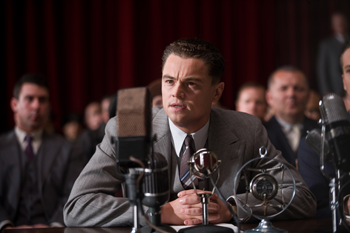
Interviews from the Movie “J. Edgar”

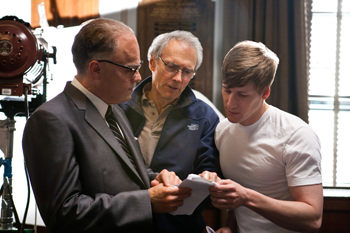
It’s time for Oscars® contenders to battle. The number one contender this season is Clint Eastwood, who was honored for his work with two Oscars® in the category of Best Director, for “Million Dollar Baby” and “Unforgiven.”
 Clint pulled together an incredible team for the new movie “J. Edgar,” due out on November 9th in limited release and on the 11th for its full release.

“J. Edgar” explores his personal and public life from Edgar’s perspective, revealing a man who could distort the truth as easily as he upheld it, based on his own idea of justice.

The team is made up of screenwriter and Oscar® winner Dustin Lance Black (“Milk”).

Academy Award® nominee Leonardo DiCaprio (“Inception,” “The Aviator”) as Edgar. Academy Award® nominee Naomi Watts (“21 Grams”) and Oscar® winner Judi Dench (“Shakespeare in Love”) help make this film a worthy contender.

However, with a great team supporting his efforts, Eastwood remains humble concerning the film. Eastwood says, “What made the story so interesting and, I hope, carries over to the movie, is that you get to know Hoover well enough that you understand him, his love for his mother, his need to protect the country, his relationship with Tolson…all the things that make up a life. He was more than the Director of the FBI, he was a complex guy. I hope we can draw people into his world so that, for a couple of hours, they see history through his eyes.”

The points in history explored stretch across Edgar’s lifetime and required a range of clothing highlighting the unique styles of the 20s, 30s and 60s. DiCaprio had to undergo hours of old-age prosthetic make-up.

“To take somebody from his mid-twenties to his seventies is an interesting challenge,” remarks make-up artist Sian Grigg. “Leo was never going to look exactly like Hoover because he has a totally different face, but he has a great face to work with. I used mouth appliances to help change the shape of his face, applied a prosthetic neck appliance to give him a double chin, and inserted a nose augmenter to deform his nose a little bit, all to get him closer to looking like Hoover. His hair stylist, Kathy Blondell, dyed his hair brown and added gray hairpieces at various stages; she even plucked out some of the hair in his widow’s peak to give him a squarer hairline.”

The team worked hard to make sure the audience focused on the story, not the actors. “This is a story about relationships,” Eastwood says, “intimate interactions between Hoover and everyone around him, from those closest to him—Clyde Tolson, Helen Gandy, his mother—all the way to Robert Kennedy and other well known political figures, even presidents. If it had just been a biopic, I don’t think I would have wanted to do it. I like relationship pictures, I like exploring why people do or did certain things in their lives.”

“This was one of the most challenging characters I’d ever seen on the page,” DiCaprio says of Black’s script, which spanned Hoover’s entire professional life. “Communism was almost like a terrorist movement in Hoover’s eyes, and he battled it and other perceived enemies throughout his career.”

This film is poised for several Oscar nominations and will be one of this year’s best pictures. After all, it’s about a man that changed the way we enforce the law.

Young Edgar, “Imagine if every citizen in the country was uniquely identifiable with their own card and number, say, the pattern on their fingers. Imagine how quickly they could be found when they committed a crime.”

Developing Paradoxical Characters

Making a character interesting drives the audience’s desire to follow his or her goals and outcomes. The audience wants to get behind a character and cheer them on, but they must first be drawn to them in a unique way that inspires exploration of the character. This is best accomplished by using a paradox within the character’s life or personality.

M.A.S.H. was known for it’s paradoxical characters. Alan Alda’s character of Hawkeye was diametrically opposed to war and wanted no part of it, yet every time he desired to go AWOL, the loudspeaker would announce the in coming wounded and stop him in his tracks. Hawkeye was drawn to the operating room because saving lives was more important than his hatred of war.

These two opposing drivers made his character enjoyable to watch and raised numerous questions in the minds of the audience. They needed to understand what made him tick. During its eleven seasons, people came to love Hawkeye even though they never knew what to expect next, yet his consistency was amazing.

The best way to develop an interesting character is by starting with his flaw. This flaw will have a visible action associated with it to play well on screen. To add strength to the character, it’s important to never explain the flaw, but just demonstrate it. The actions should be divided up into three distinct visuals.

What the flaw causes him to do in:
1. Public
2. A small group of friends
3. Private

Once in place, the dialog can be used to create further conflict or raise additional questions with the audience. The visuals will help connect the various demonstrated flaw elements to the character in a way that the audience can understand. This makes change or growth in the character at a later point in the story much easier, as all you have to do is change the visual – Cluing in the audience that he has changed his ways.

The best way to express the paradox throughout the show is to take the flaw and determine what it might look like as a blessing. For instance, the person who can be stubborn can also persevere. Perseverance can look very similar to stubbornness, but with a positive spin. Hawkeye hated war because too many people died, yet being a surgeon kept him from leaving the war because if he left, too many people would die.

The paradox within his character was based on the same flaw, which was developed throughout his life. It was his Achilles’ heel or the basis of his human condition – The part of him we all fell in love with.

Creating a person who is good and gets better by the end of the film does nothing for the audience. It’s only when we see and understand their humanity and flaws that we can relate and then cheer them on to grow into a mature and rich life. We love rags to riches stories, not rich to filthy rich stories. In this case, I’m speaking of the richness of their character development, but financially speaking we would find the same to hold true.

So, try writing a flawed character that you can turn into an overcomer. Create that person who can turn their flaw into a positive. Turn that stubborn person into the one who perseveres long enough for help to arrive during the scenes of the downed airplane.

Or, maybe you want that shy person to be the only one that listens well enough to figure out the answer that spares a man’s life in the eleventh hour. Or, the scrawny kid that constantly gets ridiculed until the day they are locked in a closet of a burning house and the kid is the only one to make it through the vent to get help and unlock the door to free the others seconds before affixation.

Finding a paradox gives the audience plenty of entertainment and gives the writer lots of creative thoughts worth pursuing. It is a great form of character development that every writer needs to embrace. It’s also a character that can provide substantial irony for the audiences entertainment.

Copyright © 2011 By CJ Powers