
“Hard Faith” Film Releases

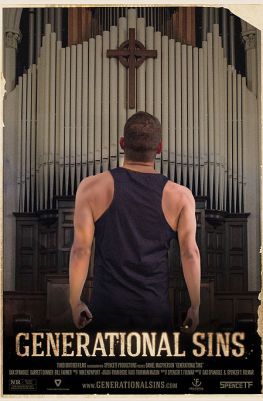
Generational_SinsThe Hollywood Reporter last week featured a story about Christian movies going blue. In 2012, Blue Like Jazz was a Christian film that tested the waters with drugs, sexual innuendo, binge drinking, and foul language. It caught the attention of many supporters, becoming the second largest Kickstarter funded movie at the time.

The filmmakers’ careers were blocked in a unique boycott situation after the film’s release. They were reportedly stopped from ever working on another Christian film. One documentary even had the filmmakers discussing the disdainful treatment that they received from other Christian filmmakers.

A lover of controversy, writer-director Spencer Folmar decided to follow in their footsteps. On October 6, 2017, his film Generational Sins releases in theaters. The film is PG-13 and has 32 profanities. Folmar is trying to coin the genre and is reportedly trademarking the phrase “Hard Faith” films.

Instead of getting boycotted, Folmar is getting a new level of support. The Dove Foundation, known for its family safe seal of approval, has started a new category of approval for those 18-years-old and up. Generational Sins has received the stamp.

Movieguide, a watchdog organization for family friendly and godly films, thinks the film should be judged on its artistic merits, not on its language. However, their position was not one of agreement as they wrote…

“There’s an underlying problem with the approach of looking like the world in order to reach out to it. It’s not how Jesus ministered, it’s not how the apostles preached, and it’s not how the Bible tells believers to live (Rom 12:2, John 17:15-18). What turns Christians off, and many others as well, is when believers, who are likely well intentioned, brag about the edginess of a particular choice because they’ve decided to mix it with Jesus. That doesn’t somehow make it cool all of sudden.”

There were thousands of movies during the golden age of cinema (1933-1963) that were real, morally healthy, and pushing artistic boundaries. Many of those stories were godly, well received, and worthy of the general public’s time and money. None of those films stooped to vile comments on the silver screen.

But the “in thing” today is all about the buzz of new faith-based filmmakers putting the gritty truth into their films in order to reach a more secular audience. The funny thing is that Jesus told stories to the secular public without profanity. Even his parable about a loving father dealing with a prodigal son was shared without being explicit.

Redemptive films, which I strongly support, rarely use any profanity, if at all. They are crafted to demonstrate the character’s repugnant lifestyle without drenching the audience in its filth. It only takes a couple quick scenes to express where the character begins his story arch, which ends in an uplifting place.

A good craftsman can create a story that reflects a raunchy lifestyle without immersing the audience in a bath of displayed evil. While I don’t feel all of the unsavory acts must be done off-screen, I wouldn’t for a moment suggest a director leave the audience feeling like they participated in the character’s depravity. After all, the goal of the film is to show the character’s transformation from an immoral lifestyle through to his redemption.

In the case of redemptive storytelling, the transformation is used to promote the film. In hard faith films, so far, it’s the edginess and profanity that’s being used to promote the film. The focus seems to be on debauchery rather than transformation.

This choice is forcing the film into a limited release schedule with only 14 theaters. In other words, the distributor is assuming the film will flop unless the controversy puts people into the seats.

So, my question is, does 32 profanities in a faith-based film entice you to the theater?

Copyright © 2017 by CJ Powers

Redemptive Films Change Society

RedemptiveMany have asked me to clarify why I’m passionate about creating redemptive stories. The answer rises from the depths of my soul, which I find myself contemplating time and again. The contemplation is not a form of second-guessing, as I’m firm on my position, but it’s about distinguishing the gap between the two.
I’m adamant about society being challenged by story to consider who they are verses who they truly want to be. United Kingdom writer Jeanette Winterson wrote, “True art, when it happens to us, challenges the ‘I’ that we are.”

Great motion pictures always start with a character living their normal life, which gets turned upside down and explored from a new vantage point in the second act that fuels contemplation. The audience gets to watch the character explore how he or she faces life and its circumstances.

Writer and filmmaker Susan Sontag said, “All great art contains at its center contemplation, a dynamic contemplation.”

The character is eventually forced into an emotional corner that requires a life-changing decision. Prior to the final moment, we see the character test out a few possible outcomes, but to no prevail. However, by the end of the third act, the character has chosen to live a new normal life going forward.

Art’s ability to force contemplation and change our viewpoint is of great value to society. Being able to create such media empowers the filmmaker to alter how people perceive society and how the people fit within that new world he presents. It’s no wonder those in power seek to master the media.

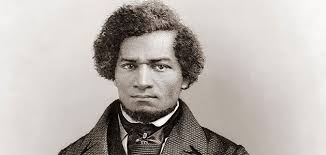
Frederick_DouglassFrederick Douglass, in his Pictures and Progress essay wrote, “Poets, prophets, and reformers are all picture-makers—and this ability is the secret of their power and of their achievements. They see what ought to be by the reflection of what is, and endeavor to remove the contradiction.”

But why are pictures, or more specifically motion pictures, so moving?

Douglass further wrote, “To the eye and spirit, pictures are just what poetry and music are to the ear and heart.”

In other words, there is an innate power within pictures to demonstrate what a better life can look like and how to embrace it from where a person currently stands on any given issue. That is why films start with the character’s normal life, moves him or her into an exploration of the roadblocks in life that force contemplation, and finally resolves with the character choosing a new normal life.

I would venture to say that a motion picture that doesn’t move the audience emotionally from their current place in life to a better one is void of art. The idea that art forces contemplation is an important one, as our society must learn how to change for the better, not to its detriment.

Pulitzer-winning poet Robert Penn Warren said, “Art is the process by which, in imagining itself and the relation of individuals to one another and to it, society comes to understand itself, and by understanding, discover its possibilities of growth.”

Filmmakers, the best of our picture-making community, have been ordained to inspire society’s growth. There are no other animals around who can hold a torch to this appointed responsibility.

In fact, Douglass said, “Man is the only picture-making animal in the world. He alone of all the inhabitants of earth has the capacity and passion for pictures.”

Redemptive stories are created for society. Its movies start with the character’s normal life, moves them through demonstrable roadblocks, and forces him or her to make a life altering decision that brings the character into a new normal life, which adds to society’s growth.

Creating stories that make a direct impact on society is what I’m all about. That is where my artistic appetite thrives and that is why I’m passionate about making redemptive films.

© 2017 by CJ Powers

Creativity: Gift or Craft

I heard a podcast with stand up comedians Ken Davis and Bob Stromberg talking about creativity. The one thing that stood out worth sharing was that neither man felt creativity was a gift. To clarify, they defined the “gift” as the capacity and desire to create, while they said “creativity” is a learned craft that everyone can practice.

I agree that everyone can be creative especially when following these 5 practical steps that I use:

1. Capture

The first step in being creative is capturing the things that stir the emotions. When I capture in a quick note or sketch the thing that impacted me or moved me, I’m able to remember it and give it my full consideration.

2. Explore

Once I’ve captured the moment, I then explore why it touched me. I ask myself questions in an attempt to learn the truth about why I felt the humorous or dramatic moment.

3. Birth an Idea

When I contemplate or meditate on the very thing that I chose to explore, new creative ideas pop into my mind. The one that makes the greatest impression fuels the fire of passion, giving me an opportunity to flesh out the concept in the form of an artistic expression.

4. Play

People stop being creative when they stop playing. It’s therefore important to play around with variations of the new artistic idea. Rather than searching for the one “right” answer to present, playfulness requires exploring multiple right answers to find the most entertaining one that clarifies the message.

5. Polish

Assessing the presentation or performance with a test audience helps me figure out what worked and what didn’t work. More importantly, I learn what the audience understood or missed. This new gained knowledge gives me a chance to tweak and polish my creative idea for its final and official production.

Being creative is a choice that requires a playful viewpoint while developing the craft. Everyone is capable of being creative, but not everyone chooses to work hard at capturing the emotional elements required to be successful. Fortunately the first step is child’s play, which everyone is capable of because we all know what its like having been a child.

© 2017 by CJ Powers