Counter Programming Coming Soon

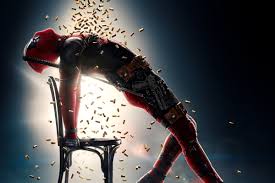
Deadpool 2Deadpool 2’s huge box office showing is a sign that it’s time for Disney to diversify from their current superhero trajectory. The mega hit broke numerous records with its expected irreverent tone and supercharged irony introduced to audiences during its freshman release in February 2016.

The second sign was the buzz generated by those hating the Avengers 4 film’s cliffhanger ending that forces the audience to wait a year for the next installment. The on-screen Marvel Universe is starting to show wear, but it did get a temporary shot in the arm from The Black Panther.

History suggests that the Marvel film franchises might soon follow the same pattern Marvel experienced with the collapse of the comic universe after they merged all the characters into one set of stories—The Avengers.

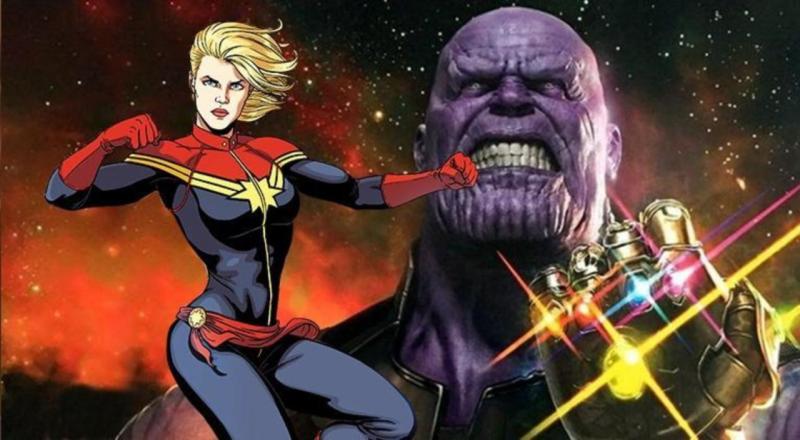
It turned out that those reading Captain America wanted him to stay dominant against the uber bad guys, but the superhero’s enemies got so big it took numerous Avengers to stop them. Even Thanos, who seems to be the ultimate villain is nothing compared to Captain Marvel who will be introduced next year to help save the day, making Captain America look like an ordinary guy.

Steve Rogers, who became Captain America, attracted a lot of people to the Marvel universe because he was a conservative that believed in doing what was right regardless of the odds. He was also fully human, just like everyone in the audience, but thanks to a unique science that greatly increased his strength, became an icon for individuals standing up to all that detracted from a wholesome lifestyle.

But Rogers has since become insignificant to the extraordinary powers soon to be displayed by Captain Marvel who can easily wipe out Thanos, once she shows up. No longer does the universe relate to the typical man and woman on the street, as the stories now take place in space, rather than in our own backyards.
CaptainM_ThanosDeadpool 2 makes fun of these superhero counterparts as the story breaks the fourth wall numerous times to give a wink to the audience. Tongue-in-cheek humor allows Deadpool to even make fun of Ryan Reynolds, the actor who portrays him. The film systematically lets go of all superhero conventions. An example includes blowing up the main character in the beginning of the film, tossing his bloody body parts out into the audience in the 3D version.

For Deadpool 1 & 2 to work at the box office, audiences had to be getting tired of the superhero formula, which is a sign to Disney and the lagging Warner Brothers DC Universe to start diversifying the types of films being released.

bookclub-1Book Club was one counter-programming film that wasn’t given enough screens to satisfy the audience’s demand. The film was allocated to smaller screens, stopping many fans from finding seats due to sold out theaters. While the $12.5MM box office take might normally seem small to a studio executive, he or she must look past the dollars and realize that the falsely constrained opening was caused by the film being relegated to smaller theaters—another sign that audiences want to watch a lot more than superhero films.

Counter programming is a must to balance the coming superhero releases this summer. There are so many weaker franchise films releasing that this tiring trend will become more obvious with sliding turnouts. Diversifying before the coming slump is key to keeping audiences happy, but studios tend to milk every dollar from their shining stars and CGI worlds.

Studios have never been able to turn on a dime, opening the doors for independent filmmakers ready to release alternative programming. The best part of the process for independents is that the audience votes with their ticket purchases. The market is ready for a new trend to develop, and it is likely to be the type of films that will swing the pendulum back to the conservative side of telling wholesome and moral stories.

In other words, it’s time for the maverick, disruptive films to be conservative, wholesome and moral. Keep your eyes open over the next three years and see how the coming trend plays out.

© 2018 by CJ Powers

Your donations will help add live podcast interviews to this site. Please support this blog’s future by clicking the button below.

Buy Me a Coffee at ko-fi.com

Exploring Morality in Feature Films

good-v-bad.png
A film story is an argument that is expressed within its 2-hour time constraint. The stronger the argument, the more compelling the film becomes in changing culture. This power is seeded within a moral argument and is demonstrated by the main character, thereby impacting the audience’s perspective on the topic.

Understanding the morality at the root of the story helps the filmmaker develop threedimensional characters, define core conflicts that drive the story, empower a unified theme, and assert a subtext that thrusts the audience to the filmmaker’s conclusion. These elements seed the audience’s decision to not only consider change, breaking up their ill-patterned behaviors, but also inspire the viewer to take action toward implementing their version of the main character’s solution in their own life.

But how does the filmmaker define his morality?

Morality is that set of behaviors that the average person would label good or bad. The good being socially acceptable or positive in nature, and the bad being harmful to a person or immoral. This definition causes filmmakers to pit a good person against a bad person throughout the story, allowing the exploration of both sides of a given argument. The filmmaker’s view on what is considered good and bad is endeared to the audience for consideration within their own life.

Obvious protagonistic battles against the antagonist might show up in the form of spy/crime stories like James Bond or Batman. Within these overt stories is a character who decides to be selfless on behalf of another, revealing the power of grace bestowed upon those in need. In subtle stories, a fine line might separate the good guy from the bad guy, especially if the good guy has to cross a moral line to do what is “good” for others.

An example of a subtle line between good and bad showed up in Three Billboards Outside Ebbing, Missouri. The story was about the fine line between blindly trusting the local police and holding them accountable for their biased treatment of others. Within the story the audience witnessed a demonstration on how those who suffered a crime should behave when treated poorly. It further explored how others should treat those who have been injured by anger, vengeance, and abuse.

The mixing of the various emotional responses to the moral dilemma gives plenty of fuel to the writer. By having a character facing each angle of the issue, the filmmaker is able to bring full consideration to bear for the audience’s enlightenment. The screenplay can also reveal how the good guy can all too easily cross the moral line in the name of seeking unfulfilled justice, making him just like the bad guy.

In Batman, the caped crusader breaks the law by becoming a vigilante in order to capture the infamous bad guy. In Back to the Future, Marty convinces his dad to punch Biff and right history. The Equalizer commits crimes to save others from injustice and death.

On the other side of the coin, especially in more subtle stories, the bad guy appears just like the hero with one slight difference—his morality. The Joker in The Dark Knight made it clear to Batman that they were cut from the same cloth, giving the filmmaker a range of emotional challenges to share how different moral and immoral choices might play out, revealing that self-sacrifice is the ultimate demonstration of love-based morals.

Subtle films can also reveal truth by choosing the opposite. When we watch immorality on screen appear to win, the moment typically illuminates the good that lost. We can look to religion for an example of immorality winning in the death of Jesus. His death gave all appearance that he lost, but his real goal was to die for the mistakes of others, covering our behavioral errors with his moral goodness.

Our movie theaters are loaded with sacrilegious humor these days, but most of it points clearly to the opposite being the right choice in life. When we laugh at the political incorrectness or immoral behaviors, it is due to our recognition of what we know to be right that causes the laughter. In other words, laughing at the immoral during the exploration of morals is a sign that we know what a moral life looks like, forcing us to consider if we need to tweak our own life to the good.

I’m amazed at how every true exploration of morals points the audience to what is right, regardless of their background or original beliefs. I’m convinced this is possible because the moral will always win over the immoral.

So, why is it that faith-based films avoid showing both sides of an argument that morality will win?

The answer is easier than you think. Faith-based films aren’t created to reveal truth through all sides of an argument, but are designed to avoid arguments and conflicts in order to demonstrate what utopia looks like through the eyes of the filmmaker. Unfortunately, I know few people who can relate to such unrealistic stories because their lives are far from ideal. This results in them avoiding that genre of film.

It’s a shame because filmmakers who have lived both immoral (before their spiritual awakening) and moral (after their awakening) lives would be able to better reveal the truth and consequences of all sides of an issue for our community at large. Every member of the audience would be able to watch the pros and cons demonstrated by characters and be able to make a wise decision concerning changes in their own life for the good.

I believe filmmakers do a disservice to the general public when they don’t show all sides of the good and bad within the form of a film’s argument. After all, morality wins over immorality whenever placed side-by-side for an equal comparison. Since morality always wins, you’d think filmmakers would embrace all controversial subjects knowing that the film would guide the audience to make healthy decisions for their future.

Let me summarize things in this way… Film story is an argument that directly impacts the viewer, but a movie made without anything argued ads nothing to our culture.

© 2018 by CJ Powers

WGN Around Town’s Ana Belaval

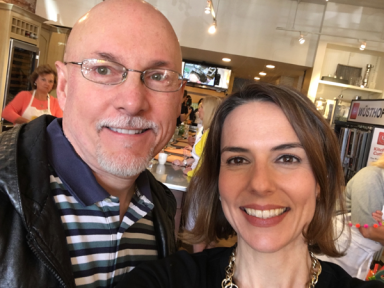
CJ_AnaIn the spirit of this morning, I cooked a tasty omelette and then headed downtown to Marcel’s Culinary Experience where WGN Morning News’ “Around Town” was shooting seven live segments with reporter Ana Belaval. I had the opportunity to meet Ana, her producer, and camera person. The team does live segments everyday plus Facebook video posts.

Ana came to WGN from Univision where she started as an assignment reporter for the Chicago affiliate and climbed the ladder to become a network correspondent and substitute anchor in New York. Her long-term goal was to work in the general market, which happened when WGN picked her up—one of the few Spanish reporters to cross over to the English broadcast market.

Ana_Shoot

Watching her mad skills was an absolute joy. Not only did she capture everyone’s attention in the room, but she came across naturally and approachable. Watching a couple of the live segments allowed me to see why she was able to win three Emmy Awards. But reporting wasn’t her only ability.

She bantered with the producer several times and constantly salted in off-the-cuff jokes from her quick wit. It was clear that the producer loved working with her and that the team had a true entertainer in their midst for those slow moments waiting for the clock to signal the next live segment. I couldn’t help but notice that Ana’s ability to keep her team fresh guaranteed high production values.

Ana’s humor flowed naturally in the moment with great precision, as if she had stand up comedy experience, which I later learned she does. Several years back, she was asked to participate in a celebrity stand up comedy event and received more laughter and applause than she expected. Inspired by the audience that night, Ana started writing jokes and testing them out in comedy clubs and during television appearances.

ana_coffee.pngHosting WTTW-TV’s “The Chicago Stand Up Project” was a great side gig for Ana to perform her routines, while introducing the latest comedians joining her on stage. She also spent time on local shows for the Latino community, giving back to her Puerto Rican heritage. Blogging was even a part of her life for a time, having developed the popular “Ay Mama” blog that eventually ended due to time demands required by her and her writers’ families and professional schedules.

I have no doubt that Ana’s natural talents will continue to shine for years to come and are likely to show up in additional venues. She can be followed on Facebook at http://facebook.com/wgnanabelaval/ and on Twitter at http://twitter.com/anabelaval or @anabelaval.

Copyright © 2018 by CJ Powers