A Few Differences: Faith-Based and Redemptive Films

© Argus - Fotolia.comThis week I was asked about the difference between faith-based films (a genre), as defined by Hollywood, and redemptive stories (not a genre). One person asked why a film couldn’t be both. Another inquired about who created the definition. And, the biggest question was, “Why do redemptive stories generate 10-20 times more revenue than most faith-based films?”

Since its difficult to categorize the two for comparison (one being a genre and the other one not), I’ll do my best to answer the questions based on known presentation and marketing information.

The faith-based genre definition was generated by a marketing department and ad agency. The team’s task was to release a picture to a market and generate 2.5X more revenue than the picture and prints cost to make. In order to do so, the team had to describe the picture in the right way to the right audience and convince them to purchase tickets.

All of the major studios did the same over several years and watched the measurable results. The definitions were adjusted with each release until the marketing departments and ad agencies were able to reproduce positive results with multiple titles. The elements involved in reproducing similar results led to the definition of the faith-based genre, which was supported by church audiences. However, with the definition in place, it didn’t stop Hollywood from trying to market non-faith-based films as faith-based films.

The biggest difference between faith-based and redemptive stories is in the delivery of the message(s). Faith-based films typically preach or teach one or more messages, while redemptive stories visually demonstrate one message. Please understand that one type of film is not “better” than the other, but very different.

For instance, if it’s done in the right light to raise the significance of the story’s redemptive value in the eyes of the audience, a redemptive story has no problem (within reason) demonstrating non-gratuitous violence, language and sexuality. The bigger you want grace or mercy to appear at the climax of the film, the greater the depravity must be demonstrated in order to create the emotional contrast – Known to most as story conflict.

In a faith-based film, conflict and depravity are rarely demonstrated, but instead are alluded to, for fear of making someone in the audience feel uncomfortable or lead them astray. Because of this choice, the emotional contrast can’t be visualized and therefore the messages are presented through dialog – teaching and preaching.

In other words, redemptive stories are filled with conflict, highly emotional, visually demonstrated, and can be a part of any genre, while faith-based stories are safe and explained, but most importantly are labeled as a genre unto itself.

We also see this affect in the funding requirements. Church funded films must be safe, not lead anyone astray, and many times present the Gospel message, driving filmmakers to create faith-based films. Privately funded films must create a profit, which forces filmmakers to heighten the conflict, visual and emotional contrast within the story.

The market is large enough for both faith-based and redemptive stories to coexist, however, marketers still need to work on differentiating the two types of films. There’s nothing more disappointing than sitting in a theater to watch one type of film and find the other playing on screen.

As for the difference in revenue, it’s anyone’s guess. The best argument I’ve heard suggests that few people want to be told how to live (faith-based), but most want to learn from watching other’s experiences (redemptive).

Copyright © 2015 by CJ Powers

Why I’ll Never Make One

Les Miserables PosterI’ve watched too many faith-based films over the past two years. It was curiosity more than anything else. The sudden glut of like-minded stories peaked my insurmountable drive to understand why and how it happened.

Looking first to the past, I learned that church-supported “Christian” films had been around since the early 30’s (not to be confused with religious biblical films that started in 1908), but faith-based films launched in 2006 and was immediately embraced and sustained by millions of home schoolers.

Studios got behind the new films, after fledgling around with previous breakout Christian films. Hollywood didn’t know how to promote the films nor did they know how to build the ideal audiences; so faith-based films that arrived complete with audiences intact or with church based promotional campaigns were welcomed.

Studios finally got a handle on the faith-based market when they realized the similarities between all of the faith-based films. These were the same similarities that made genres and sub-genres what they are today. By simply labeling faith-based films a genre, the studios got control over what was once elusive.

Unfortunately that meant audiences would suddenly focus on what made faith-based films faith-based, which was mostly the story’s weaknesses. The good news is that redemptive stories were never tossed into the mix, although many Christians tried to convince others that redemptive films were also faith-based.

The biggest arguments surrounding the claims were in connection with two high profile redemptive stories: The Blind Side and Les Miserables. The faith-based market claimed The Blind Side as one of their own, even though director Tom Hooper specifically stated that it was not a faith-based film. Les Miserables was rejected by the faith-based community due to the whore, drunkards, and other low life characters, even though the story was arguably the greatest redemptive story about faith, forgiveness and love within the past two decades.

The weak, yet repetitive elements within faith-based films, the clear acceptance of non-faith-based films because of certain elements, and the rejection of overt redemptive films missing certain elements, made it clear that faith-based films were about a specific Evangelical culture, not the Bible’s theme of redemption.

What made and didn’t make a faith-based genre became obvious to all film studios. It also helped clarify why some films made a lot of money at the box office, and why others flopped in general release or barely survived in limited release.

When I read the list of elements making up the faith-based genre and saw it played out on screen over the past two years, I concluded that I’d never make a faith-based film. In fact, I’m not capable of putting into a story the things that make a film qualify as a faith-based film.

This is probably a shock to some who know my penchant for redemptive stories. But those who are shocked are simply ignorant about what key elements make up faith-based films versus redemptive films. However, this can easily be clarified with a weekend marathon.

I propose you watch three faith-based films back to back on Saturday, followed by three redemptive films on Sunday. The difference between the two genres should become obvious. For the faith-based films I recommend Facing the Giants, Left Behind (2014), and Soul Surfer. For the redemptive films I recommend The Blind Side, Les Miserables (2012), and Captain America: The Winter Soldier.

My personal take away from each film was high, but not in the way you’d expect. I can, however, clearly state that I learned something valuable from each of the six films. Unfortunately, I’ve since forgotten what I’ve learned from the faith-based films and I still clearly remember what I learned from the redemptive films.

After you surface from your weekend binge of films, you’ll be able to clearly understand why I’ll create redemptive and not faith-based stories. You’ll also be able to understand why I still remember the message from the redemptive stories and not the ones from the faith-based stories.

Once you clearly see the difference between the genres, you’ll no longer be shocked that I won’t ever make a faith-based film. You might even get excited enough to cheer me on with making redemptive stories.

Happy viewing!

Copyright © 2015 by CJ Powers

The Toy Story 2 Argument: People vs. Ideas

jacket illustration: © Disney • Pixar

jacket illustration: © Disney • Pixar

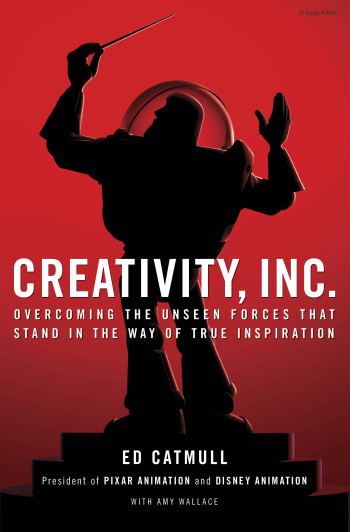
Ed Catmull offers business lessons from Pixar and Disney in his book, “Creativity, Inc.” I agreed with his perspective on the value of people over ideas, which runs counterintuitive with the majority of production companies.

Most of his philosophy came about during his work on Toy Story 2, a production that originated as a direct to video release, but took a sharp turn and became one of the most successful theatrical sequels of all time. Unfortunately the success and its lessons came at a great cost that formed Catmull’s philosophy.

The argument comes from the business value that either the people or the ideas are more important. The determination of what a company values most determines the processes that exploits that value. If ideas are more important, then the company churns their employees in search of great ideas, but if the people are more important they see to their needs knowing that they will create great ideas.

“If you give a good idea to a mediocre team, they will screw it up,” says Catmull. “If you give a mediocre idea to a brilliant team, they will either fix it or throw it away and come up with something better.”

Putting a team of the right people with the right chemistry together is the necessary precursor to getting the right ideas. But not everyone agrees with this philosophy. When asked among industry peers the responses to people vs. ideas generate a 50/50 response. This statistically suggests that no one is responding to fact or experience, but rather are all guessing, picking a random answer, as if flipping a coin.

“To me, the answer should be obvious: Ideas come from people,” says Catmull. “Therefore, people are more important than ideas.”

The key is determining what makes the people the right people for a project. Some would suggest character alone is sufficient, while others state the importance of mastering one’s craft or holding years of experience. I find that what makes for an ideal person to join a team is one who subscribes to a continuous pursuit of knowledge, the endless exploration of their craft, and a willingness to learn from peers.

“In the end, if you do it right, people come out of the theater and say, ‘A movie about talking toys— what a clever idea!’ But a movie is not one idea, it’s a multitude of them. And behind these ideas are people,” says Catmull. “The underlying goals remain the same: Find, develop, and support good people, and they in turn will find, develop, and own good ideas.”

It’s no wonder that master craftsmen are drawn to others who have mastered their craft. Nor is it strange that excellent creatives gravitate to projects that attract like-minded creatives.

Copyright © 2015 by CJ Powers