
5 Reasons for Using a Director Viewfinder

Mark V Director ViewfinderI was recently on the set of an independent feature film and realized the one thing slowing down their production was an indecisive director who lacked a director viewfinder. Instead of the director quickly determining what type of shot set-up and lens he wanted using the glass, he made the camera and grip team move the equipment around 2-3 times to determine each set-up. That choice cost them 45 minutes of shooting during the time of my visit.

The experience prompted me to provide 5 reasons why independent filmmakers should use a director viewfinder:

  1. PREPRODUCTION: Many directors create a shot list and map out their camera set-ups during preproduction. Some use small objects to represent their talent and test their blocking with set prints, models, or taped tabletops. By using the director viewfinder in this way, the director can estimate the approximate camera position for the DP prior to the shoot.
  2. LOCATION SCOUTING: Few independent productions have the benefit of a location scout.  By keeping a director viewfinder handy, the filmmaker can immediately test the composition of any cinematic location he stumbles upon.
  3. DEVELOP DP SHORT CUTS: The director viewfinder can be set to any standard aspect ratios (Academy, TV-4X3, 1.66, 1.76-16X9, 1.85, 2.35, and 2.55) and formats (Film: S16, 35mm, Anamorphic and Video: 2/3”, 1/2″, 1/3”, Mini DV, 1/4″, 1/5”, 1/6”), so when the director finds his shot, he can immediately share the specifications of the shot with the DP by looking at the settings. This allows the DP to quickly delegate important information to his camera and grip teams.
  4. SIMPLIFY GRIPS JOB: Film shoots can require multiple cameras, dollies, cranes, jib arms, etc. Having the grips set and shift each set-up until it’s close to the director’s vision tires the team and slows down the shoot. Ideally the equipment would only move once per set-up, which is easily facilitated by a director using his viewfinder.
  5. PREPARE FOR A STUDIO PICTURE: Directors need to build skills and good habits that create productive conditions during a shoot. A director who burns $50-$500 an hour on a small production is typically more wasteful than a director working a studio picture, who uses a director viewfinder and burns through $5K-$50K per hour. He typically has a process or methodology that provides a highly creative and efficient environment.

Mini Director ViewfinderEveryone knows that a writer must have software to properly write screenplays, but few understand the critical importance of the director viewfinder (and the director notebook). The viewfinder allows the director to pre-visualize the limits he places on the audience and allows his first step in translating the written word from the screenplay to a visual for the silver screen.

By carefully selecting the right series of images, the director is able to move the audience emotionally down the path of his choice. He is able to determine what they see and when they see it, making them vulnerable to his dramatic story. To that end, I started using a director viewfinder with my first directing job and found it to be a tool I couldn’t live without.

I have the Alan Gordon Mark IV director viewfinder (The latest version is the MarkVb) and the Opteka mini director viewfinder. While the glass is better on the Mark IV, the mini has the latest formats and aspect ratios. The mini is convenient to carry in my pocket when I don’t have my backpack handy. Prices range from $99 – $700+, depending on the features desired.
Copyright © 2013 by CJ Powers

Gangster Squad – Review

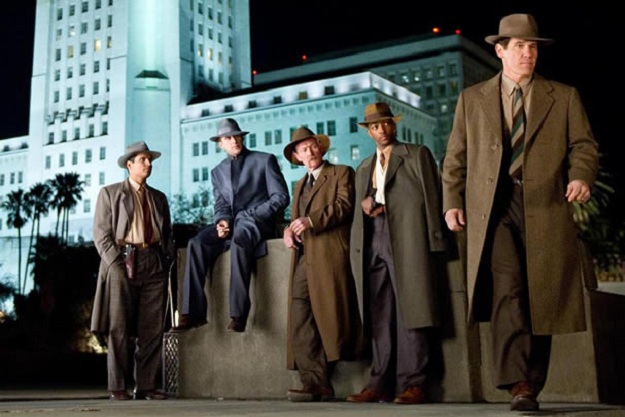
Gangster Squad All-Star CastGangster Squad did not take advantage of its all-star cast, but was enjoyable enough to download someday as a rental. The 1949 story was about Mickey Cohen (Sean Penn) who worked to build an empire that would take over all off-track-betting from the Pacific to the Mississippi. LAPD Chief “Whiskey Bill” Parker (Nick Nolte) pulled a task force together headed by Sgt. John O’Mara (Josh Brolin), to bring Mickey down. O’Mara handpicked the team with his wife’s help and started banging heads before they were ready or trained.

While the film fired off more bullets in the climax than the action required, the story had a softer edge like the ABC series Castle, written by the same screenwriter, Will Beall. The softer edge might also be attributed to producers Kevin McCormick (The Lucky One) and Michael Tadross (Arthur).

This shoot’em up was R-rated for strong violence and language, which mostly took place in the second half of the film. Emma Stone did a great job playing Grace Faraday, Ryan Gosling’s love interest, but her scenes were designed more as eye-candy than plot or character development.

Gangster Squad PosterSean Penn was the greatest disappointment, but not due to poor acting. He excelled as Mickey, but deserved a far meatier role than this story allowed. His fake nose was believable, but it wasn’t necessary given the soft TV oriented screenplay.

One scene was completely removed in order to soften the film and a replacement shot. The original scene depicted a group of men breaking through a movie screen and shooting up the audience. Once the news hit with the Aurora, CO Dark Knight tragedy, the film was shelved until January so the scene could be replaced.

Overall, Warner Brother’s attempt at bringing back the studio’s series of gangster films never left the ground except for those who like the bland gangster stories from their grandparents youth. In my mind the rebooting of this dusty franchise failed to capture the contemporary audience, for which it was intended.


The Magic of Grace

The stage lights were brighter than normal, limiting my vision of the sold out crowd. My nerves were on edge, knowing that my peers were salted in among the enthusiasts. The annual award competition between local magic clubs was always intense and provided great entertainment for fans, and this night was no different.

The Magic of GraceI had just taken another bow, extending the applause a bit longer.  My assistants flanked me, so I gave them the signal. The house lights came up and the women made their way into the audience, seeking volunteers for my final act.

The escape routine was straightforward to impress fellow magicians. I had no gimmicks or failsafe levers, just a simple timer release and a guillotine blade that swung down to slice open anyone seated on the wooden chair. The failsafe was removed to heighten the tension and capture the highest award possible from the show.

I had done the escape numerous times and typically got out of the chains and ropes within the first thirty seconds. This gave me ninety seconds to daydream before jumping out of the blade’s path a fraction of a second before it swung past the chair, which always generated applause.

But something didn’t seem right during this performance. There were too many volunteers bombarding my assistants for their attention. My assistants normally had to beg a few people to join me on stage, which works out well, as hesitant people seldom tie good knots and rarely figure out how to immobilize me with chains and padlocks.

Six volunteers followed my assistants to the stage. One looked familiar, but I couldn’t place him. My memory raced to figure out who the man was. In the meantime, my lead assistant demonstrated the power of the blade. She manually released the guillotine lever, which was followed by five quick clacking sounds and the blade swinging down hard and fast, slicing a watermelon that was set on the chair. The blade was so sharp that it split the watermelon in half without splattering any of it.

Once the assistant reloaded the blade into its cocked position, I took a seat on the chair and signaled the assistants to have me constrained. The assistants held up boxes of rope, straps, chains and padlocks for the volunteers. Within seconds all four limbs and my torso were secured. Then it dawned on me who the man was, but it was too late.

The volunteer tied my neck to the chair with a rope. His technique suggested that he knew exactly how to immobilize me. As he pulled his last knot taut, he whispered in my ear, “I’ve tied a knot that will tighten with every attempt to escape.” He walked away with a crooked smile. He was from the Elmhurst Magicians Club.

As one of my assistants helped the volunteers back to their seats, the other set up a four-panel dressing screen in front of me to block the audience’s view of my escape work. The lead assistant then hit the timer and the 2-minute countdown began. I immediately shifted my neck to determine the man’s ability and found that every move pinched the rope deeper into my skin. His assessment was accurate.

Thirty seconds into the routine, my lead assistant stepped back and glanced at me. Instead of daydreaming, she found me in the exact same position when the screen was set in place. Shock filled her face and the audience started whispering.

Since time was of the essence, I started to untie my hands, waist and legs. My right foot was freed, but my left foot was still in place. By shifting my weight around and twisting my torso, I was able to find the slack in the chain, freeing my right hand to work on the knot holding my neck to the chair.

The timer clicked down to sixty seconds remaining. My lead assistant nervously glanced behind the screen and gasped. The crowd’s murmur grew louder, driving the curiosity of my second assistant. She left her position and glanced behind the screen. A shriek bellowed from her mouth, causing one of the competition judges to stand and ask, “Is something wrong?”

My assistant quickly moved back to her position and tried to calm herself. The din of the audience increased. Another judge stood, not knowing what to do. My lead assistant noticed there was only thirty seconds left on the clock and glanced back at me. Our eyes connected. I wasn’t free. Her eyes welled and she turned abruptly to the timer. She grabbed the hand on the timing clock and tried to stop it from moving.

My other assistant turned pale and ran off stage in tears. Someone from the audience yelled out, “Don’t let him die!” My assistant returned to the stage with an axe to cut the ropes, but the clacking paralyzed her.

I stood and yanked my left foot from the ropes, twisting the chair slightly from its position. The rope’s chokehold was significant, but I lunged forward, knocking over the dressing screen as the swinging blade shattered the chair into pieces. I stood up and reached out my hands to both assistants.

We stepped forward into a grand barrage of applause, as the rope around my neck fell to the floor. The third judge stood with the other two applauding our climatic ending. Within seconds everyone was giving us a standing ovation. Both assistants were eating up the applause and reflecting their gratitude back to the audience with broad smiles.

My one assistant leaned toward me and whispered, “You know we won the competition.” I smiled and took another bow. My lead assistant turned and looked me in the eyes. “You’ve just retired that escape,” she quipped. “You’ll never be able to recreate such a memorable performance.”

Years later as I reflected back on that night, I remembered the incredible adrenaline rush in the final two seconds. It was during that specific moment when God’s grace allowed me to stumble forward out of the rope. I could hardly believe it.

The odds of my left foot slipping out of the rope in the exact moment the blade splintered the chair was amazing. It was something that could never be planned or recreated. It was greater than the awe brought about by any illusion. It was a magical moment in reality that was perfectly orchestrated by God’s grace.

Copyright © 2013 by CJ Powers
Photo © INFINITY – Fotolia.com