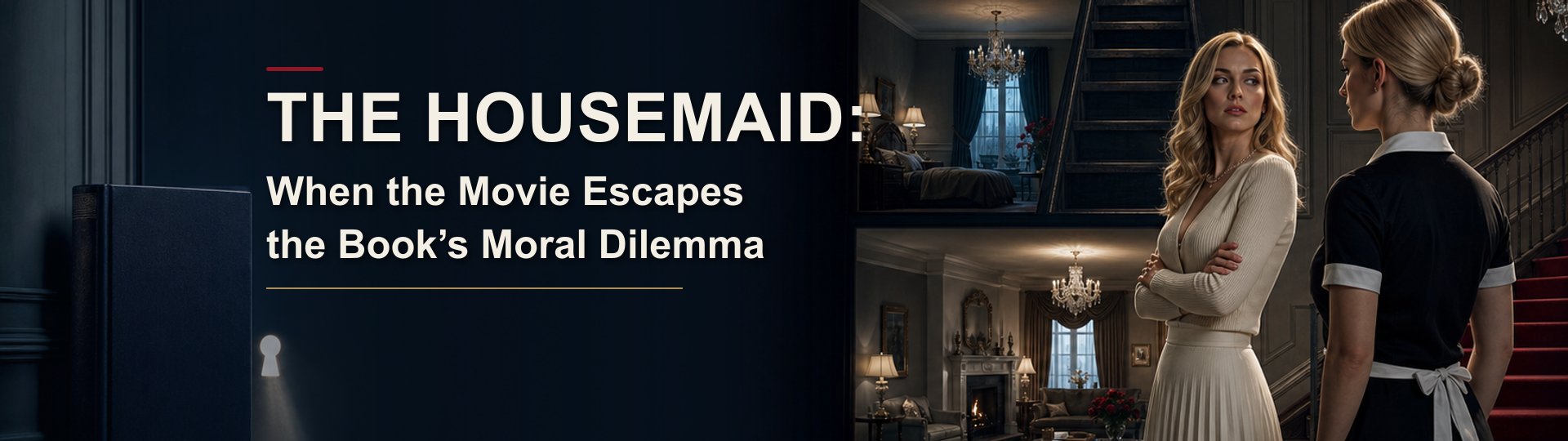
Some ask, “Is the book or the movie better?”
My answer is simple: it depends on what you want the story to be.
Do you want a story about a woman wrestling with whether survival justifies using someone else as a weapon? Or do you want a story about women breaking free, breaking rules, and punishing the man who trapped them?
Freida McFadden’s book develops a moral dilemma. The movie delivers a revenge fantasy.
Both may satisfy an audience, but they do not tell the same story.
SPOILER ALERT—I’ll try to keep as many reveals off the table as possible, but some will surface because they are necessary to the points I discuss.
The Book: A Thriller with Moral Dilemma at Its Core
The book is a thriller that keeps you guessing from the start. You may even find yourself wanting to scream at Millie to get out of the house, NOW! Enzo confirms your suspicions early, which only makes your heart race faster as you read on.
But Andrew’s picture-perfect family, including his wife, Nina, and her daughter, Cece, will have you feeling relaxed just long enough to believe Millie might be safe working as their housemaid.
Until it’s too late.
The author explores one moral dilemma from several different angles. At first, it looks like each character is fighting a private battle. But as the book reaches its climax, it becomes clear that the story keeps circling the same question:
To keep our hands clean, can we leverage someone else to do the dirty work, or does that action automatically make us guilty?
Each major character faces that same dilemma from a different position. Millie faces it as the desperate outsider trying not to return to prison. Nina faces it as the trapped wife trying to escape with her daughter. Enzo faces it as the one person close enough to see the truth and brave enough to ask whether escape is enough if someone else is left behind.
Millie faces her moral dilemma in several ways throughout the story. She justifies lies to avoid losing her job and returning to prison. Midway through the story, she justifies believing the worst about Nina because it allows her to accept Andrew’s attention. By the end, she justifies locking Andrew away as the only way to survive being killed or sent back to prison.
Nina’s dilemma is even more complicated. About halfway through the book, we learn that she manipulated Millie, using her as bait to escape with Cece. Enzo later becomes Nina’s conscience, forcing her to see the harm she has done to Millie. He also forces her to recognize that, regardless of Millie’s past, Millie has inherent value.
By the end, Nina makes the moral choice. She is willing to sacrifice herself to spare Millie.
That is where the book becomes more than a thriller. It becomes a story about what people become when survival, revenge, guilt, and justice collide.
The Book: More Than Escaping Andrew
An astute reader can see what happens when people make life-changing decisions while in survival mode, desperate to surface.
Nina chose Millie because Millie had already proven she could kill when someone vulnerable was in danger. Nina believed that if Andrew revealed his true nature, Millie might do what Nina could not.
At the same time, Nina does not simply abandon Millie without resources. She gives her tools, opportunity, and a possible way out. But that does not erase the moral problem. Nina still places Millie in danger so Millie can become the weapon Nina needs.
This raises one of the book’s strongest questions:
Can desperate victims become morally compromised?
Andrew’s abuse has definitely compromised both Millie and Nina. This shows up in the way both women plan and act against him. But the author takes it further by showing both women eventually recognizing the disturbing irony of doing to Andrew what he had done to them.
Once out of immediate danger, both women begin to see clearly again and are willing to take responsibility for their actions. But several twists place them in a position for a second chance, which they quietly and thankfully accept.
The Movie: A Thriller About Women Getting Revenge
The movie keeps many of the book’s major pieces, but it changes the moral weight of the story.
Instead of letting the characters sit inside the consequences of their choices, the movie moves quickly toward release. The tension shifts from guilt to payback. The result is entertaining, but also simpler, cleaner, and less interested in confronting the human condition.
The book makes us wrestle with whether Nina was wrong to use Millie, whether Enzo was right to push Nina back into danger, and whether Millie crossed the line from survival into revenge.
The movie does not give those questions the same space.
By reducing Enzo’s role, the movie removes the character who most clearly acts as Nina’s conscience. In the book, Enzo forces Nina to confront what she has done. He reminds her that Millie is not disposable. In the movie, that moral pressure is shifted, softened, and sped up.
The movie also changes Millie’s final actions. In the book, Andrew’s fate is slower, darker, and more morally uncomfortable, forcing us to consider our own moral dilemmas. In the movie, Andrew’s punishment becomes more immediate and cinematic. That may work better on screen, but it also makes the ending easier to cheer.
The book leaves us disturbed.
The movie lets us applaud.
Copyright © 2026 by CJ Powers
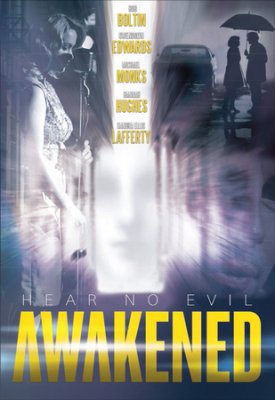 I also hope that the three festivals that awarded the film for Best Visual Effects, Best Film and Best Feature Film have learned not to put their seal of approval on bad films. I can understand the desire to award the least worst film when a festival isn’t able to draw in great filmmakers, but the only way bad faith-based films and thrillers will ever improve is when only great films receive awards.
