

Grandma’s Empty Story Chair

Grandma's Empty Story ChairMy favorite chair sits empty today, crowded in by boxes of stuff I collected over the years. Some of it will see its demise in the dumpster out back, while the more contemporary pieces will be given a home thanks to a local mission or charity.

When I left this world, I was freed from the days I spent in darkness. Having perfect sight again makes this new life extraordinary. My skin is silky smooth and my new body has no stretch marks from the excess weight I once carried on earth. I wish my great grandkids could see me this way.

I can barely remember the fear in the little one’s eyes as she reached out to touch my aged, wrinkled skin. The discoloration from medication gave my arm an eerie and deathly bluish shade. The texture alone was enough to startle any three year old, but I was glad she screwed her courage to the sticking place.

My heart raced with joy when her soft fingers touched my fragile skin. Caution was quickly voiced from my kids for my skin could be too easily torn—but I needed my great granddaughter’s touch regardless of the risk. Her loving, yet hesitant touch, gently slipped away and I fell back into my distant prison of old age. Always feeling alive, while trapped in a decaying body that no longer responded as I willed.

Now, glancing at my empty chair brings a subtle note of joy. I was glad for the opportunities I had, although few, to share stories from a time long ago. My son listened attentively to each tale and responded with questions that taxed my memory, as he searched for enough detail to remember my younger years going forward.

My daughter was also eager to learn more about my life including the love interest I had before meeting her father. She was the most empathetic person that listened to my stories and understood the value of each object I amassed over the years. The symbols were reminiscent of several life-impacting stories that I lived out and my daughter could retell most of them just by looking at the piece collected.

But today the boxes are being tossed because the grandkids and great grandkids see no value in any of it. My stories are fading as each representation rusts away or turns to dust. My empty story chair will soon be pitched, as its worn-torn look no longer matches the decorative styles of the day. And with it, I’m afraid family members will no longer cherish my remarkable stories.

Oh, my daughter will continue to share several stories, and my son will even share a few, too. But even he will one day contemplate the waning interest by his children and their kids. His time will become finite and he will have to choose between sharing one of my wonderful stories or making sure his grandkids listen to one of his. I would never wish that frustration on him.

Instead, if I could encourage him right now, I’d say…

Grandma’s story chair is empty and the artifacts surrounding it no longer speak of the thrilling life I led, so say goodbye to me once again, not fearing that I’ll permanently fade from your memories, and speak into the lives of your kids, grandkids and their kids. For you are of great value to me and I want your stories to resound with compassion and wisdom that will bless our family for generations to come.

NOTE: The sketch illustration was created by CJ in an attempt to make his story feel real. While not an illustration artist, CJ used his Bamboo drawing tablet to sketch elements from his mother’s living room.

© 2017 by CJ Powers

7 Common Mistakes of New Filmmakers

Shaky Camera TechniqueI’ve spent time with three filmmakers over the past two years coaching them on their freshman projects. They all had very different working attitudes, but they all made the same mistakes that are common among first time filmmakers.
Here are the 7 Common mistakes consistently made by newbies:

1. Lack of Preparation.

Every new filmmaker is so excited about shooting what’s in his or her head that they dive into production without the proper preparation. They don’t know that by the time shooting starts, seasoned directors have seen their film in their mind’s eye more than 100 times, working out every little detail. This lack of preparation is typically revealed by a lack of footage being shot that’s necessary to tell the story properly.

2. Bad or No Sound Design.

Audiences are used to full soundtracks, which young filmmakers forget to take into consideration until after their first film sounds thin or tinny. Even then, most newbies use 4 to 8 tracks for sound compared to 16, 32, or even 64 tracks of sound layering done by professionals. New filmmakers also have thin sound effects in their first shows.

3. Underdeveloped Story.

Beginners typically start with a cool scene idea that pops into their head and build a story over a handful of weeks. For most rookie filmmakers the development stage is the shortest. The pros take much longer developing the story. In fact, professional story development typically takes longer than preproduction, production and post-production combined.

4. Poor Casting Choices.

This is when beginners hire their friends and anyone that they owe a favor. People typically get cast based on their ability to “do business” on camera rather than being selected for their character development skills and performance. More experienced casting starts with a list of physical and behavioral attributes. The person’s ability to follow direction and draw an audience to the theater is also considered.

5. Bad Dialog.

Newbies tend to write their own scripts in a way that makes every character sound the same. Rarely are rookie filmmakers taught how to give different voices to their characters. Many times the pros will use specialists to make sure the dialog drives conflict and gives a unique voice to each character.

6. Use of Clichés.

The shorter the film the more likely a young filmmaker will use clichés and stereotypes in the creation of his or her story. The reason is based on their lack of development experience, the ease of shooting the obvious, and the lack of screen time available to explore the conflict. Pros avoid clichés like the plague.

7. Sporadic Collaboration.

Young filmmakers struggle with how to paint their vision to the cast and crew without compromise, while teaming through the cinematic collaboration process that puts excellence on screen. New filmmakers tend to find themself over controlling a project, which kills the artistry, or giving in all too often, which waters down the story. Experienced professionals know how to draw the best out of their associates through collaboration and then pick the best recommendation that’s in keeping with the vision, that is, if it’s better than the preplanned direction.

The apprenticeship process has been used for over a hundred years to raise up strong filmmakers, yet newbies continue to side step the process. For some reason most first timers desire to shoot their own film before they know how to make films, something that will continue for the next 100 years. A few survive that find mentors or get sucked into the system and climb up through the ranks. Those are the ones who learn how to avoid the common mistakes.

The Humanity of Dunkirk—Review

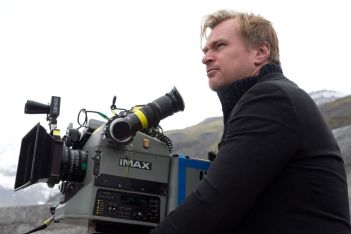
Nolan_at_CameraChristopher Nolan has another success on his hands with Dunkirk. While it won’t drive the box office like The Dark Knight, audiences will marvel at the humanity of self-sacrifice demonstrated. But before I say much more, I have to warn you that this film requires a lot of thinking and possibly a second viewing to fully comprehend.

Nolan’s artistic choices, which will not surprise fans, were spot on and amazing. However, his decision to tell three complete stories simultaneously, which all converge in act three, forces the audience to pay close attention during the entire two-hour film. This is not the type of film you’d want to excuse yourself from to take a call, get a refill, or use the restroom.

The story is about the actual events in May of 1940. Germany advanced into France and trapped Allied troops on the beaches of Dunkirk. British and French forces provided air and ground cover, while troops were methodically evacuated using every naval and civilian vessel that could be found.

The orders were to evacuate 30,000 men leaving the rest as acceptable losses, but the man in charge demanded 45,000. Thanks to the self-sacrificing actions of many that evolved into heroes as the events unfolded, about 330,000 French, British, Belgian and Dutch soldiers were actually evacuated.

BeachThe movie opens with no credits and what appears to be a boring scene, until you realize it was one of the few lulls in an intense battle that catapults you back to the reality of World War II. The film alternates between three stories told from the perspective of land, air and sea. Each story focuses on only one hero in the making based on the significant self-sacrificing choices made.
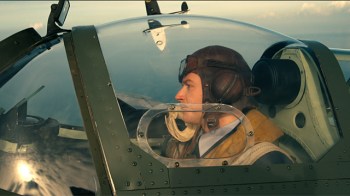
While the film has little dialog, due to the circumstances that prevail on screen, each story rises in intensity to the point where you demand to know the outcome. You soon realize that your body is contorting in a rhythm that cheers on each protagonist to make the right choice, not the safe one. Warning: No one under five feet tall should ride this intense emotional rollercoaster.

I can’t remember a film that caused me to flinch, duck and squirm in synchronicity with the protagonist for some time. And when my favorite of the three storylines climaxed, my heart felt every pounding second of contemplating the young man’s decision. He did what was right for the war efforts, not what was right for his own soul. His self-sacrifice gave rise within me to rejoice at the epilogue of that storyline—and, determine for myself to consider the greater good of those around me over my own need for survival.

Dunkirk was a stirring and uplifting film worthy of an Oscar. But, most who attend the screening will get lost in the braided stories and wonder what I saw in the film. To them I heartily say, “Watch it a second and third time until you get it.” Yes, it is worth your time. But, if you only enjoy movies where you don’t have to think, avoid this one no matter what the cost. The value of this film only rises out of thought and ones ability to relate to one of the three main heroes.

AirMy friend emotionally clicked with the air story and I related to the sea story. But both of us took much needed time after the film to discuss what we saw, as the film’s complexities were similar to Tinker Tailor Soldier Spy. Our discussion allowed us to better comprehend what we missed and the other had caught.

If it weren’t for the difficult-to-follow braided storylines, I’d give this film a 5-star rating, but its complexities reduces it to a solid 4-star rating. However, for those who don’t struggle to follow the three intertwined stories, you’ll certainly give it a 5-star rating, no questions asked.

As we reflected on the film my friend said, “I’m not sure what we just watched, but it’s obvious it was something really great. I think this is the kind of film you can watch over and over again, picking up on all the subtleties you missed in previous viewings.” I agreed. Dunkirk will be as great as you can keep up.

© 2017 by CJ Powers