 After watching a dozen documentaries about screenwriters, designers, directors and editors, I’ve come to the conclusion that these artists, at least the good ones, know how to leverage their subconscious. The art they create not only has a footing in reality, but their perspective is greatly enhanced by a highly creative filter from deep within the right side of their brain and their heart.
The most exhilarating creative ideas that pop into my head come early in the morning or at times when my mind is off playing or well rested. The pros take advantage of those moments to strengthen their work and bring new entertainment value to bear. This same moment allowed me to write this blog in the fraction of time it normally takes.
To leverage this strength, my friend David did creative work in the morning and analytical work in the afternoon when logic ruled his mindset. That’s not to say he was never creative in the afternoon, but the level of creative play was typically reduced after hours of exploration and work.
There are three commonalities among professional creatives that are worth understanding.
PLAY
Deadlines and pressure never increase creativity, but the opposite magnifies the creative flow. The strongest fuel of imagination is play. It’s made up of the same elements we explored as children and allows our inner child to come out to have fun. It can’t be taught or demanded, it can only be given a safe environment in which to let go so the creative can be free to pretend.
Play allows hearts to touch or bond without being romantic, which non-creatives don’t get, as they’re convinced something more has to be there, but its not. Play also allows passion to rise and solidifies why a work of art is important. Without it, people can’t understand what the artist saw in the work.
PROCRASTINATE
Non-creatives who have watched the procrastination process of the artist assume the person is lazy; not realizing their mind is going a million miles per hour. The percolation process is what gives flavor to the creatives’ work. A long bought of what appears to be boredom turns into aggressive workflow that can easily go late into the night or until the creative has to flop onto his bed.
Many creatives will plan ahead for their moments of procrastination by determining in advance the item they want to ponder. Most find their breakthrough by morning or in the drifting of their mind. Harnessing this natural phenomenon gives professionals an added benefit of what appears to be a secret weapon of the imagination.
OBSERVE
The best writers I’ve met or learned about through blogs and short films take time to watch a movie every day. They also peruse scrapbooks, magazines and other mind stimulating products. Not only do the myriad of observations fill them with ideas, but it also helps them to know what to avoid because it has already been done.
The most fun is watching others live their lives. People have the funniest idiosyncrasies that inspire. While some might suggest these oddities are a sign of the person’s weakness, the artist sees it as their humanity emerging in a unique fashion. These peculiarities make the person wholly them.
Being able to leverage the elements that feed the subconscious, the creative can explore matters of the heart like no one else. The more this process was protected by society, the greater was the renaissance of the time. It’s no wonder that most movements were birthed in the church, which at one time was a protected place for many hearts before the decades of judgment that ensued.
Over this weekend, as America celebrates its Independence, find time to play, procrastinate and observe. See if anything arises within your soul that must be reduced to some form or expression of art. Take this weekend to determine if being more creative will give you insights into humanity and a wisdom found by few.
 Here is an article I did for Hi-Tech Automotive Specialists, Inc. in Addison, Il.
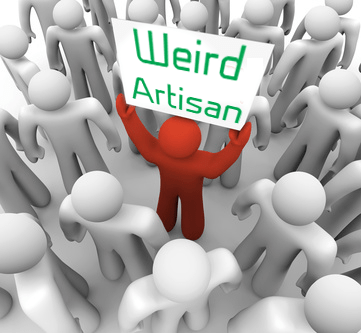 Labels are dreadful, even the good ones. All too often people try to categorize what they don’t understand, as if it will bring a sense of security where its not needed. The creative spirit is allusive to many and requires a label from the logical to understand why a person is unconventional.
 CJ's Corner