Re-Messaging Counts—Even Fake News

rosieA few months prior to our last presidential election, a group of performers made strong statements that if Trump won they’d leave the United States. Since Trump did win, none of the performers left the country. Instead they found yet another way to get their message out to the people ad nauseam.

Barbara Streisand made sure people knew she had a mental breakdown because of Trump. Miley Cyrus shared her profound need to die. And Rosie O’Donnell spoke of her great fear of seeing America go back to the Stone Age. George Clooney, Amy Schumer, and numerous other Hollywood performers chimed in with their ideas to have the entire motion picture industry go on strike until Trump resigns.

“We’re calling for a general strike that would include every single person involved in making motion pictures in Hollywood, starting with the actors and celebrities themselves and encompassing companies in charge of making props, movie memorabilia and even souvenir shops,” a spokesperson for the group told The New York Times. “It’s about time people understood that we’re the ones with the power and that the president is there to serve us, not the other way around.”

Asked to elaborate on why the group is targeting Hollywood out of all the industries in the country as their bargaining chip, the spokesperson argued that Hollywood “is, simply put, the base of the entire modern American culture.”

The Rightists, who bills itself as a “hybrid” site that publishes articles containing a mixture of fact and fiction, wrote this FAKE NEWS article. The article was then rewritten and republished so many times that the satirical sense of the story was lost. The majority of those re-messaging the fake news story were conservatives.

While I’m not sure if the conservatives were re-messaging to show the foolishness to justify their own votes, or if they were ignorant to the satire because they take life way too seriously, or, well, there are several other possibilities that can be discussed, but I want to focus on a different line of thought.

Re-messaging counts!

Anytime we re-message an article, phrase, snapshot or string of 148 characters, we are attaching our approval to the message. We are saying that we stand by what we are forwarding.

Some hope to disagree, especially if they’re forwarding satire. In other words, their goal was to forward the humor of the satire, not the message, which may or may not be picked up on by the receiver. After all, once the satirical piece left the context of the site known for its satire, many interpreted the article as truth, not humor. This suggests we need to attach a short message in front of the forwarded article that says something like, “Hey, this satire made me laugh.”

I’ve received many forwarded warning messages that were proven wrong by Snopes.com and other fact and truth policing organizations. After reading the facts, I wondered why the person who I respected sent numerous others and me the fake news. Most of the time I reply with the facts so the person doesn’t lose face from subsequent forms of re-messaging, but many times its too late.

The rule of thumb that I use when it comes to re-messaging for myself is to consider if I’d compose the message in the same way. If the answer were yes, then I’d send it as is. But, if the answer was no, then I’d want to rewrite the information before passing it along to my friends and family.

The beauty of rewording the message to meet my true viewpoint, since it will be perceived as my view after re-messaging it, is that I can quickly see if the topic is worth the effort of rewriting it. If its not worth my time and energy, then its not worth filling the Internet with more noise. But, if it is of value, then I need to consider what other important factors may have been left out of the article that I can salt into my version of the message.

While this may or may not keep you safe from falling for fake news, it will at least put your spin on the information. Then when people assume you stand behind what you forward, they will actually know your view.

Copyright © 2017 by CJ Powers

Star Trek vs. Faith-Based Canon

barco-escape-star-trek-beyond-2

Star Trek is one of the most revered science fiction franchises that hold tightly to its canon. The 13 motion pictures and 6 television series all follow the production bibles that have painstakingly been kept corruption free for 50 years. Even the independent fan films have focused on excruciating details to honor the canon.

A recent copyright infringement suit sped its first part of judgment thanks to the accuracy of the canon and the many production companies that continued adhering to the rules of the franchise world without exception. Many Star Trek bible elements have been released and highly supported by the fans, forcing production companies to scrutinize every aspect of their production in order to stay true to its canon.

But in the faith-based films that include stories based on the Bible, a canon of 66 books, few production companies adhere to it. The Young Messiah was released last March and was touted as one of the best faith-based films of 2016, but it broke canon with little repercussions.

The film is a story about Jesus at age seven and his family’s departure from Egypt to return back to Nazareth. This fresh childhood perspective gave audiences an explorative glimpse into how their future Savior grew into his religious identity.

Breaking canon in the name of “creative license” is something that Star Trek storytellers would never do. But, the makers of The Young Messiah had no problems stepping away from canon. According to the book of John, one of the 66 books within the Christian canon, Jesus performed his first “sign” or miracle at the wedding in Cana of Galilee. But, in the film, which takes place years earlier, he brought a dead bird back to life, healed his sick uncle and restored sight to a Rabbi.

While the director intended these signs to reveal the humanity of Jesus, which it did, it broke canon and distorted the truth for its viewers. This creates conflict between those defending faith-based films and those who teach from the canon in real life. And it doesn’t end there.

Back in the 1960’s a group of historical revisionists decided to adjust the thinking of the church through the media. They created a story that Jesus’ hands weren’t actually pierced when he was put on the cross because the Greek word for hand also included the wrist. They also stated that Jesus’ hands would’ve torn open due to his weight, and therefore, he was actually pierced in his wrists when they crucified him.

This notion broke canon, but evangelists liked the “new revelation” and spread the word throughout the world. Today, most pastors who weren’t around for the origin of this story teach that Jesus was pierced in his forearms, albeit close to the wrist. They shifted to the forearm because the wrist is just a series of bones that couldn’t be pierced, and the canon said not a bone in his body was broken, which piercing his wrist would have done. These further adjustments took congregations even farther away from the purity of the canon.

By the way, a couple years ago I interviewed a nurse who worked for an orthopedic hand surgeon. She said that Jesus could easily have been pierced in his hands because of the vast network of ligaments that crisscross like a web inside of the hand, which is also strong enough to hold the body’s weight without tearing.

This Easter a new faith-based film that has broken canon will be released by the title of The Shack. The most obvious departure from canon is that God the Father shows up as God the Mother. Canon states that God wanted to be called the Heavenly Father, but historical revisionists are pushing for God being able to show himself as anything he wants, which meets the canon of the Hindus and Universalists, not the Christians.

What I don’t understand is how Christians, whose lives depend on its writings, are so willing to break canon in the name of creative license, but Star Trek will do everything in its power to maintain their sacred canon. Even J. J. Abrams during the filming of Star Trek 2009 talked about the difficulty in maintaining canon, but how it was well rewarded by the audience’s appreciation.

So, why do faith-based films not follow canon? I’d love to hear your thoughts on the matter, especially since Star Trek is make believe (suggesting that canon doesn’t matter) and Christianity is reality (suggesting canon is critical).

Copyright © 2017 by CJ Powers

10 Most Significant Films in 2016

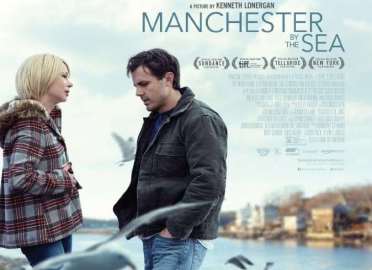
manchesterSophisticated audiences and new filmmakers eventually learn that they need to know how to “read” a film. It’s a technique used by artists that understand the significance of cinema—not TV, video or streaming, but CINEMA.

Some say it’s a lost art form that faded once the marketing boys took over Hollywood and tried to capitalize on sequels over art. However, many who watch art house films or participate in the industry have held onto the techniques. In fact, I’d say that everyone who is truly serious about the art of cinema knows how to “read” a film or they’re trying to learn as fast as they can.

The top most significant films of 2016 that reveals and strengthens that art of cinema are listed below. I tried to put them in order of their significance to the industry, although my personal biases would want to tweak the list order ever so slightly.

1. Manchester by the Sea
2. La La Land
3. Moonlight
4. Hell or High Water
5. Sully
6. Fences
7. The Jungle Book
8. Deadpool
9. Hacksaw Ridge
10. Captain America: Civil War

If you’re a super fan, you’ve already seen these films. And, if you’re a filmmaker you’ve already chatted up other filmmakers on the significance of the films. But, if you call yourself a filmmaker and haven’t seen any of these films, I’ve got to question how you define filmmaker. Maybe you’re just a video guy that shoots up concepts and releases coolness, rather than being an advocate of the cinema.

I don’t mean to sound snooty about it, but there is a big difference between the person who understands that art of cinema and its significance in the molding of our societal norms verses the guy who’s just out to watch a flick after dinner.

Copyright © 2017 by CJ Powers