

The Power of + – &: A Simple Weekly Practice to Improve Your Life or Business

If you’re like me, your planner isn’t just a to-do list—it’s a journal of what really happened. Over time, I developed a shorthand system to help track progress and determine my next steps. It’s simple. I use three symbols:

+ What’s working
What’s not
& What’s worth expanding or adjusting

This + – & system is my go-to for reflection. It’s like a weekly feedback loop—quick, practical, and surprisingly powerful.

Here’s how it works.

+ Plus: What’s Working

The plus sign helps capture the wins. These are the moments, strategies, habits, or tools that made a difference in your week. It’s about more than just feeling good—identifying what works lets you repeat it and even scale it.

Example:
A few weeks ago, I blocked 90 minutes of deep work in my planner every morning. After the time passed, I marked the block with a “+” in my planner to highlight the positive results: fewer distractions and more progress. It became the high point of my week, and I’ve kept it going ever since. That little plus led to a significant increase in productivity.

During your end-of-week reflection time, when you see a “+” in your week, ask:

How can I do more of this?

Could it become a regular part of my routine?

– Minus: What’s Not Working

The minus sign is an early warning system. It flags what’s draining your time, energy, or results. It might be something you’re doing—or something you’re avoiding.

Example:
I noticed that I was putting off sending follow-up emails to high-risk clients, even though they were scheduled in my calendar. After the time passed, I wrote a “-” in my planner. During my end-of-week reflection time, I was able to review what had transpired by asking: Why was I avoiding it?

Thinking through the issue, I realized that I needed to reduce the friction the event causes in my workflow. I needed a well-worded template to start the process. That tiny barrier was enough to delay the task and potentially lose opportunities from certain types of clients.

The minus column is about honesty, not judgment. When you spot a minus, ask:

Is this something I can fix?

Is it even worth fixing

& Ampersand: What to Expand, Adjust, or Let Go

The “&” is where this system really shines. Inspired by the improvisational phrase “Yes, and…,” it’s where reflection turns into action. The “&” symbol lets you build on a plus or rethink a minus. It’s the opportunity to tweak or drop the effort. It’s like a strategic filter—what’s worth keeping and expanding, and what’s not worth your time?

Example:
I launched a new offer that generated a few sales, but it didn’t perform as well as I had hoped. I wrote an “&” in my planner after all was said and done. This wasn’t a failure, but not a home run either. Instead, I explored its value and what might require tweaks for improvement. The message was reworked and tested on a new audience. The revised version outperformed my expectations.

Think of the “&” as your weekly growth engine. It answers:

What’s the next version of this?

Is this below the value threshold and worth dropping altogether?

It’s a bit like an XY graph. Imagine effort on one axis and value on the other. Anything above the intersection of the lines is worth pursuing. Anything below needs to be cut from your operations or offerings.

Why + – & Works

This tiny framework turns your week into a lab, where you’re not just working, but learning. It’s easy to remember, simple to apply, and endlessly adaptable. You can use it in your planner, digital journal, or team meeting agenda.

I spend only 10–15 minutes reviewing my sheet each week. That small habit has led to tremendous clarity on the value of continuing or dropping any offer or operation.

Try It This Week

Here’s your invitation. Set a 15-minute appointment with yourself. Review your calendar or journal. Then ask:

  • What’s a + this week?
  • What deserves a ?
  • What will I & into next week?

Success isn’t just about hustle—it’s about reflection and wise decisions. The + – & system helps you stay focused and move forward with clarity and purpose.

Here is the sheet I use. Feel free to click on the download button below.

Let me know how you like it.

© 2025 by CJ Powers
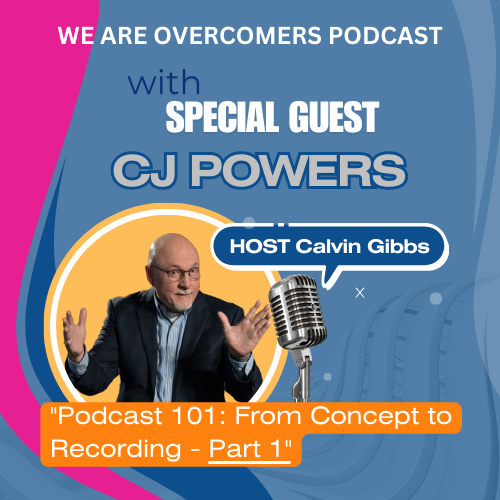
My Guest Appearances on We Are Overcomers Podcast

While I’m not a techie, I’m often contacted by people wanting answers about various digital technologies. This isn’t a misplaced ask, as I can answer most of their questions. In fact, I can simplify the answer to something the average person can understand. But, compared to a true techie who works 10-hour days in tech, there is a good deal of information I can’t speak to.

When it comes to podcasts, my experience is more extensive, having produced over 400 episodes for various clients. However, most of my time was spent on messaging and communications rather than the tech. If you have ever considered being a podcast guest or starting your own podcast, you might enjoy listening to my last two guest appearances.

I received a phone call from the WE ARE OVERCOMERS PODCAST host, Calvin Gibbs. He told me that the show was going to do two episodes on podcasting to help their audience. He knew the facts that podcasts have replaced blogging, which replaced newsletters.

In fact, podcasts are on the rise, with over 4 million shows globally. Yet, the market is not yet saturated.

I first met Calvin when he was a guest on one of the shows I produced a couple of years ago. From that experience, he knew I would be a good guest for the two special podcast episodes.

He convinced me with little effort, and these two episodes turned into a comfortable conversation with key facts that will help you be a guest or host your own podcast.

If you’re interested in listening to the podcasts, click on the images of each episode, which will take you to the WE ARE OVERCOMERS PODCAST webpage, where you can listen to the show. You can also find the podcasts on all the key platforms like Apple and Spotify.

Copyright © 2025 by CJ Powers

Building Differential Strengths as Communicators, Networkers, and Team Players

Three key skills will define the most successful professionals in 2025: communication, connection, and collaboration. While these skills may seem fundamental, they have evolved into essential tools for navigating complex work environments, building relationships, and driving success.

To thrive in our dynamic world, we need to consider these skills from the perspective of the types of people who have built a strength while focusing on a single part of it: communicators, networkers, and team players.

The Strengths of Communicators, Networkers, and Team Players

Strengths are an intricate blend of innate talent, acquired knowledge, honed skills, an experiences gained from facing challenges. At the highest level, the finest communicators, networkers, and team players have mastered their craft, consistently refining their abilities through experience, learning, and mentorship.

Communicators

Communicators are the architects of understanding. They shape how information flows, ensuring clarity and engagement.

Talent: A communicator’s most essential talent is effectively conveying ideas—painting a picture everyone quickly understands. They possess natural eloquence and an innate understanding of tailoring messages to diverse audiences. They are also strategic thinkers, deliberate in crafting messages that resonate.

Knowledge and Skills: To excel, communicators master not only language and rhetoric but also the nuances of storytelling, persuasion, and emotional intelligence. They must be well-versed in the various communication channels, whether digital or in-person, and understand the role of technology in enhancing or hindering their message.

Experience: Effective communicators often learn through failures, such as missed opportunities, misunderstood messages, or poorly received content. These experiences teach them the importance of timing, tone, and context in their communication.

Craft: The highest level of communication strength involves predicting how messages will be received and adjusting them accordingly. This skill is often developed through mentorship, where communicators learn the delicate art of crafting persuasive, authentic, and clear messages that create lasting impact.

Networkers

Networkers are connectors who build and maintain relationships across diverse sectors, industries, and distances. They thrive on creating mutual value through connections that go beyond transactional needs.

Talent: Networkers excel at building rapport. Their key talent is empathy, which enables them to understand the needs and desires of others. They are naturally curious and possess an uncanny ability to make people feel heard and valued.

Knowledge and Skills: To be effective, networkers must develop a deep understanding of their industry and the industries they connect with. They should be proficient in reading people, understanding social dynamics, and maintaining professionalism while forming personal bonds. Networking skills also include strategic thinking, as successful networkers can leverage connections to create value for others.

Experience: A seasoned networker has made mistakes, such as misreading signals or overpromising. These experiences teach the importance of authenticity, follow-through, and timing in building long-lasting relationships.

Craft: The highest level of networking involves connecting people in ways that spark collaboration and innovation. Great networkers often learn this by working closely with mentors who teach them the subtleties of relationship management and help them build an extensive network of trusted contacts.

Team Players

Team players are the backbone of successful collaboration. They bring energy, enthusiasm, and support to group efforts, helping to turn individual contributions into collective achievements.

Talent: A team player’s innate talent lies in collaborating and contributing meaningfully in a dynamic group. They’re often skilled at fostering cooperation, managing conflict, and ensuring everyone’s voice is heard.

Knowledge and Skills: Team players must understand group dynamics, leadership principles, and how to manage conflict constructively. Their skills include active listening, giving and receiving feedback, and contributing to the group’s goals without seeking the spotlight.

Experience: Experienced team players have learned to navigate challenges like interpersonal conflicts, misunderstandings, or missed deadlines. They’ve gained wisdom from seeing how their actions, or lack thereof, affect the group’s success or failure.

Craft: The highest level of strength as a team player involves building a culture of collaboration that empowers others. Great team players learn this craft through direct experience, often observing and apprenticing with strong leaders who create environments of trust and mutual respect.

Why Communication, Connection, and Collaboration Matter in 2025

The rapid pace of change in 2025 means that traditional methods of working and leading are no longer enough. The ability to communicate clearly, connect with others meaningfully, and collaborate effectively will determine who thrives in an increasingly complex, interconnected, and fast-moving environment.

  • Communication enables individuals to express their ideas, needs, and feedback in a way that resonates with others. In an age of information overload, communicators who can cut through the noise and convey essential messages are highly valued. They clarify, simplify, and amplify their content to create the ideal message.
  • Connection is the key to building networks of trust and mutual benefit. In an increasingly remote and digital world, networkers who can forge and maintain strong relationships are the linchpins of personal and professional success. Their focus is to engage, relate, and build their relationships for the future.
  • Collaboration allows teams to achieve results greater than the sum of their parts. As organizations grow more cross-functional and global, team players who can work across diverse groups and bring people together will be crucial to achieving success. They focus on aligning, acting, and achieving goals as a team.

How to Develop Your Strengths as a Communicator, Networker, and Team Player

We must practice self-awareness and commit to continuous learning to build differential strengths in these areas. Start by identifying where your strengths lie and where there is room for growth.

  1. For communicators: Focus on refining your ability to adapt your message to different audiences and contexts. Practice active listening and learn to read nonverbal cues. Seek feedback on your communication style and aim to be more concise and impactful.
  2. For networkers: Invest in building genuine relationships rather than merely expanding your contact list. Be present, offer value, and seek to understand others’ goals and challenges. Build your personal brand through authenticity and integrity.
  3. For team players: Work on being adaptable in team settings. Focus on being supportive, cooperative, and solution-oriented. Learn to resolve conflicts constructively and encourage diverse perspectives in group discussions.

In 2025, the most successful professionals will excel as communicators, networkers, and team players. By recognizing the importance of each role and continuously refining the strengths associated with these key skills, individuals can thrive in an increasingly complex and fast-paced world. As you build your career or lead others, remember that true success lies in what you know and how well you connect, communicate, and collaborate with those around you.

Copyright © 2025 by CJ Powers