Three Creative Journals Worth Exploring

I recently received three journals from the Ellie Claire imprint and was very impressed by the quality of the books. Not only do the books lay flat for the writer, but they use a very high grade of paper for those of us who like to sketch with ink. I even used watercolor markers without worrying about bleed through on a subsequent page.
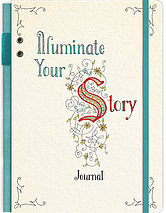
fc3755_8ed06bba0d37467e94c4bd607ce3b518_mv2The Illuminate Your Story Journal had quotes and scriptures salted throughout the book. After every couple of writing pages, the book instructs the writer with how to create illuminated letters used in ancient times. The steps were easy to follow and helped me build my bullet journal lettering vocabulary of styles and fonts. Based on the book and my new abilities, the art of illumination is certainly not lost today, as I once thought.

The hard cover was designed to last a lifetime and is rugged enough to survive more drops than I’d make. The texture and embossing of the book are also of a high quality, making you feel like you own something worthy of your words. The artistic value is amazing and the elastic band to hold the book closed helps protect the pages when the book takes a tumble. The book also has a place saving ribbon and a pocket for collected ideas in the back.

IMG_6799

fc3755_0695f523a03a4f5fabd6f848fdb42986_mv2The Faith and Lettering book is a little larger in size and offers lessons on typography. It only took me a few minutes to understand one of the designs and immediately start using it in my daily business notes. The book also gives professional tips on how to draw flourishes, arrows, and banners.

One of the most fun aspects of the book is the training pages that encompass line art, a graphic, banner, and a mixture of type fonts using a decorative verse. The page shows the final work, provides a lightly traceable version for practice, and gives enough space for a couple efforts of your own.

Not only did I have fun practicing the various styles combined with imagery, but I found myself having memorized the verse just from the writing process. I also had the imagery of it ingrained in my brain so I could review it in my mind’s eye whenever I chose. Prior to doodling in this journal, I had no idea how quickly memorization could happen as a result of this artistic process.

fc3755_92690eef39404e29ac5d755c19f85c77_mv2The Illustrated Word was the third book I reviewed. It took me back in time to the art of the Renaissance. This coloring journal had numerous illustrations ready for my choice colors. It also had a fully colored segment on the opposite page to see what the artist thought to use as an appropriate color palette.

The book had far more pages for writing than the other books and included a full-color illustration on every spread from the Museum of the Bible archives. The artistry illustrated from hundreds of years ago was amazing, and the intricate handwritten words brought an understanding of the importance of words to bear.

All three books were masterfully crafted and raised my interest in the Ellie Claire imprint. I went to EllieClaire.com to see the hundred plus additional artistic products, most of which are worth far more than its price tag.

So, check out the three new journals and let me know how much you enjoy them.

Copyright 2018 by CJ Powers
Disclosure of Material Connection: I received one or more of the products or services mentioned above for free in hopes that I would mention it on my blog. Regardless, I only recommend products or services I use personally and believe will be good for my readers. I am disclosing this in accordance with the Federal Trade Commission’s 16 CFR, Part 255: “Guides Concerning the Use of Endorsements and Testimonials in Advertising.”

The Remnant has Launched

There is a small group of “believers” who are pouring their lives into the secular marketplace. The impact of the group is growing, and while the general public are embracing their message of hope, others who defend the “Evangelical lifestyle” over all else are attacking the remnant.

Lauren Daigle has a clear vision to reach those “outside of the church walls.” Her recent appearance on The Ellen DeGeneres Show and Jimmy Fallon was well received by the general public, but those who are trying to keep the Evangelical lifestyle alive (I’ll refer to them as the ELAs) warned the “church” that her secular venues might lead her astray, causing Daigle to abandon her worship roots to become a secular artist.

The odd thing is that Daigle is a Contemporary Christian Artist through and through. Her latest album “Look Up Child” reached #3 on Billboards Top 200 because its message was universal and appealed to the masses. Unfortunately, Daigle’s performance on NBC received criticism on social media. Most argued that Daigle was wrong to appear on the show because Ellen is a lesbian.

Daigle responded to some of the criticism during an interview on WAY-FM Radio, “I think the second we start drawing lines around which people are able to be approached and which aren’t, we’ve already completely missed the heart of God.”

Jeremy Lynch appears to be another member of this up and coming remnant. His passion is making movies that reach the general public with messages of hope and love. Lynch is a Millennial filmmaker who got his start working crew for Batman v Superman: Dawn of Justice. After getting his feet wet, he became an editor and worked on the visual effects for The Ryan Car Show. Most recently he wrote, directed, and produced his first short film The Scavenger, which can be seen on Amazon Prime Video. The Scavenger is a story of transformational love that changes a selfish man into a self-sacrificing man—a clear demonstration of unconditional love.

Lynch is not immune to ELA attacks, but has far less to worry about since his passion has always been focused on the general marketplace. Most ELAs have a penchant for going after those well established in the “Kingdom” because of what some call a “we/they” mentality. While the Bible directs Christians to “go” into the marketplace, ELAs believe Christians should “separate” themselves and create their own marketplace, which some see as a contradiction to the “Great Commission.”

While the argument about “separating from the world” versus “being in the world, but not of it” will continue to be argued for years to come, high profile people like Selena Gomez are taking advantage of this new uprising of the remnant.

Selena_GomezGomez has promoted Daigle’s album multiple times on social media to her 144.4 million followers. Daigle’s top three songs have been listened to by millions within the general public, creating one of the greatest witnessing tools of this past decade. Yet, the ELAs are more concerned that Daigle might create less worship songs, rather than rejoice in the millions who have heard her message of hope.

Unity within the church and the supporting of those who go into the marketplace must be revived for denominations to survive these changing times. The question is, will the ELAs empower this revival or will they become modern day Pharisees?

No matter what the outcome, millions will continue to be touched by the remnant.

Copyright © 2018 by CJ Powers

Is The Book Or Film Better?

Book vs. FilmThe number of scripts I receive for consideration or review every year is astounding. Each of the major studios receive about 100 scripts a day and 99% of them are not worth reading. The biggest dilemma I face comes from the author. Most of the scripts I receive are from talented literary authors trying to write a screenplay, which seldom goes well.

The first problem that I typically encounter is the author using detailed and flowery words in long-winded descriptions, as if it were lifted right out of a novel. Few authors understand that the screenplay is written in a specific manner for budgeting and creative purposes, and obviously, for the screen. Here is a scene example that I’ll use to discuss the differences:

NOVEL

“Adrenaline pumped through David’s veins as his pace quickened toward the lone grave hidden beneath the canopy of large oak trees deep within the forest. His soiled gym shoes stopped in front of the fresh pile of dirt rounded over like a grave before rain settles the soil. David’s face aged 10 years in that moment and his legs weakened. He dropped to his knees with sorrowful eyes, knowing that he might be facing his daughter’s burial site. His hands looked like gnarled creature paws as he stroked away at the soil, digging deeper and faster with a weak hope of finding an animal in her place.

But he knew the truth. His hands would soon find his kidnapped daughter. He readied himself for the sight, as he plotted a new vision for revenge. His hand snagged a piece of material. The same as the dress his daughter wore at her seventh birthday party, the night she was kidnapped. David’s face flushed and turned stone cold. A fiery revenge welled within his soul forcing him to his feet. “I’m com’n for yah,” he groaned. With more energy than he thought possible, David bolted through the woods focused on his target.”

SCREENPLAY

EXT. FORREST – DAY
Exhausted, David scrambles through the forest. He stops at a fresh grave. Grimacing, David drops to his knees. He paws through the soil. David stops, hardens himself and glances off in the distance.

DAVID
I’m com’n for yah.

David runs from the grave, letting a streak of sunlight hit the floral cloth protruding from the soil.

PRODUCTION TOOL

The same overall action occurs in both depictions of the scene. The screenplay version is measured at 2/8 of a page, which tells the production manager how long the segment will take to film and how much it will cost. The word choices within the screenplay suggest the needed shot list to capture the story. The list includes:

  • XLS: David running in forest
  • MS: David panting as he runs
  • CU: David’s gym shoes stop at the grave
  • MS: David drops to his knees
  • MLS: David kneels at daughter’s grave
  • CU: David
  • CU: Hands digging
  • MS: David’s dialogue
  • LS: David running away from grave
  • XCU: Dress protruding from grave

With the scene being 2/8 of a page, the DP and 1st AD know they have to capture the full shot list in an hour to stay on budget. If, however, the scene were written like the novel, it would take 4-6/8 of a page and the team would allow 3-4 hours for the shoot. Unfortunately, the scene will still only take 15-20 seconds on screen, making the novel version far more costly to shoot—forcing the project over budget.

When properly written, a screenplay reveals the shooting schedule, budget, and camera shots.. It also hints at the character arcs and the emotional tonality the actor must consider when developing his character. There are also hints sewn into the script about the editorial pacing and tempo.

A person who knows how to read a professional screenplay can easily spot the above. But the novelist has no clue what information must be laced into the scene or how to concisely interweave it. Most don’t understand how this scene is likely to be shot handheld because of the story’s emotional turmoil and shooting schedule.

Beginning screenplay writers find themselves writing something halfway between the novel and professional screenplay, which inaccurately reflects the shoot requirements with information that cannot be seen on screen. A screenplay improperly written becomes a useless tool for the producer and production team. The better the screenplay writer, the more accurate the budget.

BOOKS ARE NOT FILMS

A second factor I face with authors is their misguided understanding of what makes for a good film versus a book. The original story allows the reader to get inside of the protagonist’s head, while the film can only show what happens, unless you like a lot of narration, which slows a film down and pulls the viewer out of the film story.

Books are about thought and films are about action. They are two different mediums and must be treated according to its own form. While most authors feel disgruntled about having their story altered to better fit the medium, they hate with a greater magnitude films that try to follow the book and end up destroying the story as a result.

The vast majority of great authors have to get used to seeing their “A” plotline become a “B” plotline in a movie, and their “B” plot become the “A” plotline. This inverted plotline structure makes for a far greater motion picture, and opens the story up to a wider audience than what the book was aimed at. Since movies cost a lot more than a book to create, this distinction is significant.

While there are additional factors that authors face when transitioning their work to the screen, I’ve run out of room to mention them in this post. The key is to understand that film and books are very different and require opposing skills to pull off. Flexibility is paramount for the author desiring a shot at the silver screen.

© 2018 by CJ Powers