
Adaptations True to the Original or Culture

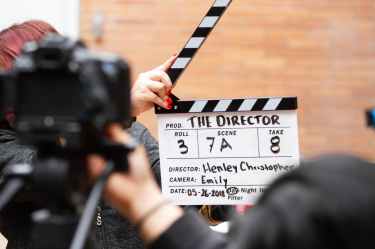
man holding clapper board

Photo by Martin Lopez on Pexels.com

I recently completed writing a short film adaptation for the festival marketplace titled The Sacrificial Gift. The screenplay is based on the original story titled The Gift of the Magi written in 1905. I will be placing the screenplay up for sale so a filmmaker that’s looking for a wholesome story with a great plot twist and moral lesson (provided by the original story) will have a shot at winning several festival awards.

The last short story I wrote for the screen, not only opened up doors for its producer, but it helped expand the awarded actress’ career with a reoccurring role on a major television network. And yes, I too won a festival award for best screenplay. But that was then, and now I’m looking to sell The Sacrificial Gift to an interested producer.

Adaptations are an interesting type of story because some follow the original so closely that the film appears to be a period piece, or worse yet, it’s not understandable by contemporary society. Others use the original only as a springboard to a new creative direction that is so far from the original that it’s hard to see the relationship. Still, others find a balance between updating the story for contemporary culture while maintaining as much of the original author’s passions and intent.

A friend sent me the following link to an adaptation and suggested I watch it this weekend while the movie is free (online through tonight). Here is the link should you want to watch it. https://www.pilgrims.movie/

The writer of this latest version of The Pilgrim’s Progress, the original written in 1678, struggled with how to make the content relevant for today’s audience. This is a very hard decision to make and if the writer is not completely focused on the initial decisions can easily wander and create a glorious mess.

In this film, the writer wrote most of the dialog for Baby Boomers and the action for kids. The director took things a step further and cartoon-ized the bad guys with silliness, while keeping the protagonist highly dramatic, enduring pain after pain—something difficult for kids to watch.

However, Paul Bunyan’s greatest allegory still remains at the core of the story within this adaptation. Unfortunately, that means most people in today’s society won’t understand the story as the film has it unfold. Yet, in spite of these choices, Bunyan’s original story is still the second most sold book next to the Bible.

I did not want to cannibalize The Gift of the Magi, but I did want to bring it into the 21st century. I changed the main Christmas Eve setting to a typical weekend in the average American household. Instead of the holiday driving the exchange of a young couple’s sacrificial gift, I used a marriage enrichment challenge.

The original was about hard times when there was little a person could do to survive, making the sacrificial gift significant. However, with super-powerful computers in everyone’s hands these days (that’s right, smartphones are more powerful than the big mainframe computers were back in the 70s) I wanted the lack of face-to-face time to drive the need for the gift exchange.

Since I’m a person who understands the difference between an entertaining film and a heavy or important film, I’ve also added in some great humor that sets up the message in a new powerful way. Yes, you will laugh and you will have your gut hit with the impact of the final twist in the plot. But the question is, how close to the original did I keep the story?

It doesn’t really matter.

Why? Because the producer and director will also add in their artistic choices. Then, the actors and editor will also salt in their viewpoints. But hopefully, the director will honor my adapted story as I intended it and help keep everyone focused on the same impactful outcome that was designed. But we won’t know how the team handled my story until its premiere.

I’ve got to be honest. Most directors today don’t know how to properly read a script, let alone know how to keep its critical elements intact. So as a writer, I have to find ways of saying goodbye to my little darlings every time I sell a script—hoping the director knows what he or she is doing. In any case, if the intent of my screenplay is honored, the theme and plot twist from The Gift of the Magi will also be honored.
© 2019 by CJ Powers

Creativity in Short Film Festival Selections

pexels-photo-2335046.jpeg

Photo by Bruno Massao on Pexels.com

I know numerous filmmakers who make short films to keep themselves sharp in between their major projects. I also know several students who shoot shorts with the hopes of being discovered. All of their creative knowledge goes into shooting the story they believe might help them achieve awards and attention.

However, the festival circuit is a highly competitive market with a uniqueness not considered by most filmmakers. Few producers contemplate the steps necessary to find the right festival for their story and build the film in a fashion that garners the greatest number of invitations by festival selection committees or jurors.

To help the filmmakers out, I’ve decided to write about a creative approach that will increase their chances of winning a meaningful award. I use the term meaningful because there are less than 50 festivals that will bring acclaim to a filmmaker out of several hundred. It’s easy to win an award if you’re willing to submit your film to small festivals with little competition. There are even fewer Academy Award-qualifying festivals.

BUDGET

The first consideration is the film’s budget. Few filmmakers have taken time to research their return on investment based on their out-of-pocket production budget. Statistically, the higher the budget, the greater the chance of being accepted by any given festival. This is true because the audience, and certainly the selection committee, can see the quality of a film increase with a bigger budget. That’s why some first-time filmmakers hate competing against a company like Pixar who enters high budget animated shorts from time to time.

While the selection process is easy for higher budget films, winning is not. The Short Movie Club conducted a survey and learned that higher budgets do not guarantee to receive an award. Here is a table I put together based on the research results of winners. I put it in the order of best to the worst chance of winning.

Budget

Odds of Win

$10K 3.60%
$20K 2.45%
$500 1.64%
$5K 1.21%
<$20K 1.09%
$0 0.77%

You can see that the budgets, or lack thereof, create an interesting return on investment. The zero-dollar budget is filled with passionate friends who want to help make the film, but when production hits harder than most realize, their skills don’t make it to the silver screen. However, the volunteer cast and crew that gets to eat, thanks to a $500 budget, puts more of their sweat equity on screen. Budgets that exceed $20K are also hampered in the amount of effort that clearly comes across on the screen. Whether the crew is made up of professionals that are trying out new positions, or a passionate group that wants to use the short as a political statement, something falls short in higher budget films.

However, when a passionate group makes a film that they believe in, and have a few extra dollars for CGI work, great music, or something substantial that can differentiate the show from others, the odds of winning an award goes up.

FESTIVAL PERSPECTIVES

Once the budget is settled, then the genre becomes most important. In qualified festivals, documentaries, dramas, and animation shorts rule the awards ceremonies. In unqualified festivals, animation, horror, and sci-fi bring home the awards. Selecting any other genre greatly reduces the filmmaker’s chance to win.

The one exception is niche festivals. For instance, a faith-based festival rarely will give an award to any film except for that of the faith-based genre. That also holds true for LGBTQ+ festivals not giving space to films that are not overt in their agenda.

Knowing the perspective of the festivals of interest prior to production helps the filmmaker creatively focus on the elements that are award-worthy. Promotional dollars can also be saved by not marketing the film to the wrong outlets and markets. However, the smaller the niche, the less likely the filmmaker will become known for his film.

FILM LENGTH

The shorter the film, the greater the chances of a festival accepting the film. Here is a table showing the acceptance rate based on the length of the film.

Length of Film

Odds of Acceptance

5 min. 25.00%
10 min. 11.26%
15 min. 11.73%
20 min. 11.57%
25 min. 11.79%
30+ min. 10.92%

The win rate is a very different set of percentages, as it reveals that brevity is king. The only exception is the 15-minute film that has enough time to develop a character that is worth rooting for. The caution comes in the development process that suggests the tighter the story, the better the chances of winning.

Length

Odds of Win

<:05 min. 7.00%
5 min. 1.84%
10 min. 1.39%
15 min. 2.00%
20 min. 1.45%
25 min. 1.01%
30+ min. 0.91%

I’ve been a festival judge numerous times and I can tell you that based on the vast majority of submissions that I’ve seen, 99% of them demonstrate that they are not award-winning films in the first 60-seconds. It is therefore prudent for filmmakers to immediately capture the attention of the audience with as much on-screen quality as possible.

However, most shorts do not immediately introduce you to the problem or the main character in the first 60-seconds, which guarantees that they will not win an award. Most film entries open with the mundane so you get a feel for the character’s life before something significant happens—killing the film’s chances of surviving the overloaded festival circuit.

Award-winning filmmakers typically open with a scene that oozes of the protagonist’s character or immediately drops the audience into the middle of a problem that is in full swing. While there are some films that win outside of that formula, the vast majority of awards go to the filmmaker who makes a film according to the needs of the targeted festival.

The process of developing a story for a particular festival takes a tremendous amount of creativity. And, it’s very limiting in that the film might not play well in commercial markets that do not hold to those constraints. In fact, if you make a 30+ minute film and release it on Amazon Prime, you’ll make good money and are almost guaranteed to not win a single festival award due to the film’s length—unless you apply to the Emmys.

Filmmakers have to pick between festivals and commercial exploitation. Rarely can a film be successful in both venues. Unfortunately, most filmmakers disagree with that statement, attempt to prove it wrong, and fail miserably. This multiple decade long attempt at reinventing the proverbial wheel in filmmaking continues with every generation. Their hope is more powerful than the measured reality.

Creativity must be applied with reason for success to ensue.

© 2019 by CJ Powers

Failure Breeds Success

man in blue and brown plaid dress shirt touching his hair

Photo by Nathan Cowley on Pexels.com

There are several notable authors speaking on failing forward and the need for environments that allow for, or support failure. None of the individuals speak to the importance of failure and how it increases our ability to think and drive innovation. Out of those who speak about the positive aspects of failure, most seem to do so with failure as a caveat, not a requirement. The truth, however, is that failure is a necessary part of success.

Over the years, I’ve talked with numerous award winners, self-made entrepreneurs, and multi-millionaires. In each case, when talking to a person that made the trek up the hill of success, they shared how integral and critical their failures were in getting them to their goals and big wins. No one was able to succeed until they experienced a healthy dose of failure.

The secret weapon of failure must be added to our creativity tool belt. This tool empowers us for the big wins that company’s need for growth. It also wipes out fear from our workforce, promoting a healthy attitude for calculated risks that drive innovation, instead of the shrinkage driven by a risk-averse environment.

Colin Powell, one of my favorite leaders, says, “There are no secrets to success. It is the result of preparation, hard work, and learning from failure.”

Flaws are found in every product and service. When we choose to look at the negative and learn about the need that is not being met as a result of the given flaw, then we can learn from that single point of failure and innovate a new and better solution. If, however, we pretend that our product or service does not have a flaw, then we fool ourselves and give an opening for another company to build our mousetrap better. We lose market share—by choice.

Failure sets us up to win with three benefits:

A Growth Mindset

We all start from a position of failure. This is easily seen in my first swimming lesson at Sunset Pool. I was afraid of the water, like two-thirds of Americans, and I tended to sink instead of float. By focusing on my inability to swim, I was able to add to my skill set. By the time I was an adult, I was a PADI and NAUI certified diver that swam with sharks. (According to National Geographic there are 375 types of sharks and only about a dozen are considered dangerous.)

A growth mindset was a simple idea discovered by Stanford University psychologist, Carol Dweck, that drives motivation and productivity. The concept is that we can change or improve our basic abilities in order to make great accomplishments. By seeing failure as a stepping stone of learning, being able to consider new ideas that would never have popped up had we not failed, we can alter our products and services to be a better solution for the customer.

A Customer-Focused Perspective

I learned at an early age that failure meant you didn’t have or offer what the customer wanted. I’ll never forget the meeting I had with the vice president of a national youth organization. I was told what the organization wanted and I clarified what they actually needed to be successful. While I was 100% accurate in my assessment, which was later proven true, I was dropped from the project because I didn’t deliver what they wanted.

The disconnect was due to me being focused on their customers and donors, while the vice president was focused on assigned objectives. The organization moved ahead without me and saw a massive failure. They soon realized that their objectives were not aligned to their customers and donors. After making several phone calls to key people, they discovered that the needs in their market were perfectly aligned with my initial recommendation.

My failure taught me a valuable lesson about having a customer-centric perspective. I could have gotten the original contract had my recommendation matched their objectives, but I stood by what I thought was right, not what they were willing to pay for. The next customer that called me in for a quote that wasn’t aligned to their market, I offered exactly what was being asked for and supplied a phase two proposal covering next steps should phase one not work. One company suggested we forgo phase one and just jump to two. I was thrilled that they had made the determination after understanding the differences between phases.

A Trajectory for Success

When failure no longer looks like a problem, but rather the next step of an exploration seeking the best solution, the company finds itself on a trajectory of success no matter what scenario is first developed. I had a friend who once told me that some things aren’t worth doing perfectly. The saying stuck with me because my marketing background suggested that speed to market was far more powerful than second to market—unless you pour a ton of money into the second product’s release.

My friend explained that when a product or service is 80% ready for release, to go ahead and release it while continuing to perfect it. Within six months, regardless of having released the product at 100% or 80% complete, the product will still be tweaked from the market’s initial feedback. The amount of time it takes to polish the final product is not worth the quality difference compared to the percentage of market share gained by releasing first.

While this holds true with most products and services, it does not work in film and music sales. Once the product is created, you rarely have an opportunity to fix and rerelease it. This is why entertainment companies do test screenings and focus groups—to get it right the first time out.

My failures have given me wonderful tools that move each of my projects a step closer to success. Without those failures, I would have no idea how to make a new product or service successful. When we review our failures and determine the lessons learned, we drive success in our next venture. In other words, failure allows us to grow, focus on our customers, and create a process that forces our success.

Shouldn’t we all be thankful for our failures?

© 2019 by CJ Powers