Show Don’t Tell – Unless You’re Christian – What!?!

I was working at Lucent Technologies during the beginning of my heart wrenching divorce. The battle to save my marriage was so intense that I dropped from one of the top ten employees, out of the hundreds holding my same title, down to the bottom of the barrel. I was laid off. Yes, I lost my job and marriage within weeks of each other.

A few weeks before I was escorted out of the office, one of my associates asked me if I was a Christian. It took me by surprise, since I hadn’t shared anything about my beliefs with him. I asked what caused his curiosity.

He told me that he watched my divorce meltdown and how I reacted to it, which was very different than what he had witnessed with others. He shared how I kept my tongue and made my decisions based on love, rather than the pain I was immersed in. He assumed that for me to be able to live in that manner required a supernatural force and he needed it confirmed.

Simply put, he had witnessed what I had shown, not said.

In writing and filmmaking we are taught: Show don’t tell. In Sunday school we are taught to tell. Jesus, however, pointed out the importance of action over words when he said, “My little children, let us not love in word, neither in tongue; but in deed and in truth.”

While he wasn’t telling us to not say anything, he was pointing out the importance of action behind our words. That same sentiment is a great rule in storytelling.

Ashley JuddI watched the movie The Identical this week and found that the film had two messages: The one that the writer forced into the story; and, the one that rose out of the story or the action plotline.

Because the movie showed certain decisions and actions, a theme rose from within it that was perfectly summed up in Ashley Judd’s (Louise Wade) dialog: “It’s a man’s job to learn to stand in his truth.”

The writer, however, artificially presented a different theme in Judd’s dialog: “If He is in your dreams, nothing can stand against them.” This is the same theme showing up on the Blu-Ray and DVD packaging due out on January 13, 2015, but it doesn’t reflect the true voice of the story. Clearly the shown theme was more powerful than the stated theme.

Showing is always more powerful than telling, yet in the Christian marketplace film investors continue to require filmmakers to tell certain things in their films rather than just show or demonstrate them. The odd thing is that it weakens the story, which should be of great importance to the sending of a message.

I also find it peculiar that in all of Jesus’s teachings done through story, he always showed the action to reveal the key point and he never told the point outright. So, why is it that when I watch a Christian or faith-based film that the point is always told to me in the most obvious fashion?

The most powerful films made over the past few years in America were either stories of redemption or patriotism. Both of which can only be shown, not told. Oh, and I’m not including those films that said they were redemptive stories, but really weren’t. I’m talking only about the films that were actually redemptive stories.

Like my associate at Lucent pointed out to me, the power in the message comes from the display, action or demonstration of the truth, not from the telling of it. This fact is something I hope Christian filmmakers grasp in 2015. After all, the story structure Jesus used in his parables was show don’t tell.

Copyright © 2014 by CJ Powers
The Lost Art of Saying, “Merry Christmas” Returns

Last week was filled with lots of people sharing important words with me, as they wished me a “Merry Christmas.” In previous years I heard other words like “Happy Holidays” and several more awkward attempts at spreading cheer including “Happy Hanukkah,” “Happy Solstice,” and “Happy Kwanzaa.” But this year I heard “Merry Christmas” more times than not.

It was as if the PC curtain had dropped from filtering the words of those around me. People were more determined to focus their words in the direction of their choice, rather than couching it according to what was PC.

This change was in more than just the phrases that people shared; it showed up in public ways as well. I read numerous accounts of freedoms being restored that allowed people and organizations to verbalize Christmas greetings and display créches in public – Not reported in the national news.

Individuals taking back their rights to freedom of speech and religion were the most important activities our nation saw this past year. No longer being persuaded by the media, we were moved by our hearts and shared our own words. It has turned this season into a true sense of Christmas for me.

The words we choose to share and follow make a difference in the outcome of our lives. Speaking truth rather than passing on someone else’s PC agenda provides us with freedom and strength to live the life we were wired to live. Our lives are transformed away from the dysfunctional and distorted ways that pound against us daily into a grace filled expression of all that is good.

With this tone set in my life as Christmas approaches, I’ve decided to share what I feel is the most important part of Christmas…

“In the beginning the Word already existed. The Word was with God, and the Word was God. He existed in the beginning with God. God created everything through him. The Word gave life to everything that was created and his life brought light to everyone. The light shines in the darkness, and the darkness can never extinguish it. …So the Word became human and made his home among us.” (John 1:1-5, 14.)

That is what Christmas is all about: God sharing his Word with us through the greatest act of love known to mankind.

I’m now more convinced than ever that a person who shares the joyous phrase “Merry Christmas” is doing it as an expression of whom they are. They no longer need to be concerned about sharing a different phrase that may or may not be received by the person to whom they’re attempting to spread cheer.

We’ve had it backwards these past few years, while being PC was in the forefront. We were too worried about how our words might be received, rather than boldly expressing the truth about ourselves. And, the changes in the words we shared, changed who we were.

But its important that we don’t lose sight of whom we are, as a free people that can express our thoughts and feelings. Our freedom of speech and religion is the greatest innate gift we’ve ever received and we need to cherish it. So, because of who I am…

Merry Christmas!

Media Drives Words into Culture

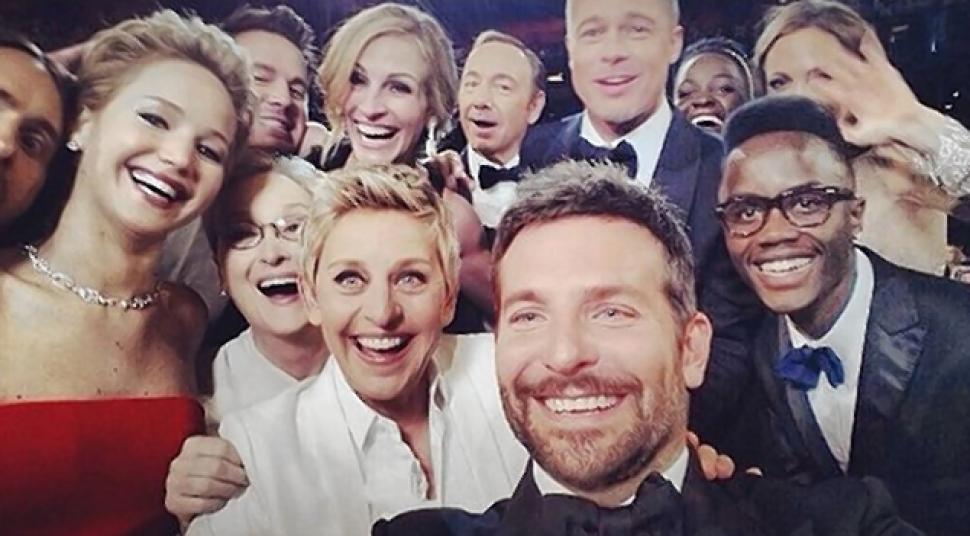
Oscar SelfieEveryone I know is convinced that the media drives our culture. This year saw more people convinced based on the new entries in the Oxford English Dictionary that originated in the media. The following words became a part of our language.

Beatboxer: A performer who uses (amplified) vocal effects to imitate the sounds and rhythms of hip-hop music.

Bestie: A person’s best friend; a very close friend.

Crapshoot: A situation or undertaking regarded as uncertain, risky, or unpredictable.

Hashtag: (On social media web sites and applications) a word or phrase preceded by a hash and used to identify messages relating to a specific topic; (also) the hash symbol itself, when used in this way.

High muckety-muck: A person of high status and influence; an important person, a bigwig.

Hip-hopping: The action of hip-hop. Of or relating to hip-hop; that hip-hops.

Selfie: A photographic self-portrait; esp. one taken with a smartphone or webcam and shared via social media.

Un-PC: Not politically correct.

While some of these words have been around for decades, they all came into such prominence in the media that the dictionary companies had to acknowledge it. The biggest influence of the selfie came from Ellen Degeneres’ Oscar stunt when she got the top stars of the decade to be in her self-portrait.

Earlier generations knew the pound sign “#” from the butcher and later the phone, but this generation only knew it as a hashtag, thanks to social media. Other words used often by the media became a part of the culture and was therefore officially adopted into becoming real words.

Unfortunately, there were other changes that snuck up on many over the past few years. The educational system that was started by churches and seminaries to educate their people, shifted from using the B.C. (Before Christ) and A.D. (Anno domini – In the year of our Lord) to B.C.E. (Before the Common Era) and C.E. (Common Era).

The media played a major role in this influence. Generations ago people respected Christianity and set the calendar by its greatest event. Now that the media says Christianity is politically incorrect, the calendar has changed. Since few conservatives are in the media, it will be interesting to see what new words enter our culture in years to come.

Copyright © 2014 by CJ Powers