 I had a recent conversation with a young director who was about to shoot her first film. She was eager to make sure she wasn’t missing anything in prep and asked me to explain what a director does in prep, production and post.
The first twenty items rattled out of my mouth with ease and her face drained of color. She was overwhelmed and wasn’t ready to hear the remaining 80 – 90 items. She said, “To do all that, you’d have to be a businessman, psychologist, coach, artist, life-experienced decision maker … a lot of things.”
“Yes, and then some,” I said.
She understood. She also realized why there are few good directors that actually do the work of a director.
“Now I understand why there’s so many bad shows,” she said. Her head tilted in thought and within moments she regrouped. Her eyes lost that hazy fog and she brought clarity with one question. “As an inexperienced rookie who might not be able to handle the full job, what three things must I do to succeed?”
Here are my three responses:
- Read the script from top to bottom and notate your emotional experience.
The first read through is the most important, as the director can never have a second, first read. During the reading, the writer’s work will point out the key elements that will make the story succeed. If the director notates it and determines how to shoot it in a way that the audience can experience the same emotional line, the film has a chance at being great.
However, if the director doesn’t capture the emotional pulse of the story, none of the scenes will play out properly during the shoot. Since the director is the only one who will be able to spot the straying storyline during the shoot, he must capture and understand the emotional pulse of the story. Without it reduced to writing in his director’s notebook, he will be directing with a proverbial blindfold on.
- Pencil out a blocking diagram.
Independent productions cost about $5,000 – $25,000 per hour (I’m not talking about ultra low budget films). Rehearsals during prep week cost a fraction of that budget. Therefore its mandatory that a director comes to set prepared to share blocking instructions with the cast and DP (Director of Photography). A quick rehearsal will work out the kinks and the shoot can begin.
Many young directors think they are more creative by designing the blocking on the fly during an extended rehearsal prior to rolling the cameras. These moments become very costly and rarely integrate with the previous or subsequent scenes. Only the director has a full understanding of how the picture will come together before editing, so if he doesn’t do his homework, then no one knows in advance how the picture will look.
- Create a shot list.
Most single camera shoots today require 2-4 cameras to keep within budget. During a typical conversation between two characters, each actor has a close-up camera and an over-the-shoulder camera. This gives the director full latitude in making decisions during post. However, it can become sloppy and extend the editor’s cutting time three fold. To counter this delay, it’s important for the director to create a shot list for the DP, which will be reflected in the editor’s log.
Single camera shoots that only use one camera also require a shot list to make sure set-ups aren’t revisited. The shot list also pinpoints the most important shots in case the day runs long and shots have to be dropped. The list is the only way to guarantee that all the important shots are captured.
These three activities will assure that a new director has a fighting chance to survive. Without any one of them, the film will surely be a disaster in quality, budget or schedule. Not to mention the whole reason for creating the story will have evaporated from the set for lack of prepared vision.
© 2016 by CJ Powers
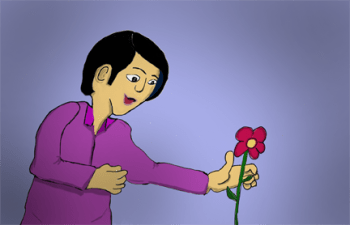 My picture of a character reaching for a flower is symbolic of anticipation. It causes the audience to wonder if the character will caress the flower and smell it, or pick it. Both possibilities have been seen before, so how it’s done tells a new story worth watching. Not knowing how things will play out causes the audience to anticipate several possibilities. The audience is compelled to continue watching to see the outcome.
 The flower being picked confirms the anticipated event to be new or what was expected, but done in a fresh way. It also raises another question. The audience now wants to know what will happen to the flower. The action drives the viewer to seek the end of the scene. They need to know if the character will hand the flower to someone, put it in a vase, toss it over the neighbors fence, or maybe realize that picking it killed the poor thing and grieve. The possibilities are endless.
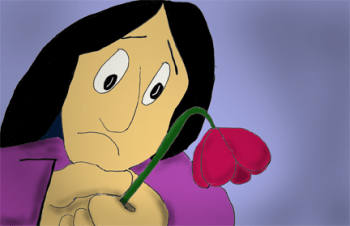 The aftermath isn’t always negative, but many times it is, except for the midpoint and climax of the film. But it’s always emotional so the audience shares the experience and desires to know more about what will happen in the next scene. Many writers speak about this moment being critical to moving a story forward using a consequence or conflict.
 Twitter was abuzz with the release of Fuller House, the Netflix reprise series based on the original Full House. Since Netflix doesn’t reveal the number of viewers watching, estimates can only be determined by social media activity. All standard media sources suggest that the new series is a large success – No surprise to anyone.
 CJ's Corner