
What Do You Dwell On?

I recently read an interesting article about the Stanford Psychiatrist’s findings and the direct correlation between the increased anger within our society and the Internet. The findings went further in depth, discussing the shortness of patience in our culture that’s become epidemic. In an attempt to test the validity of these findings, I reflected back on a few experiences I had.

When I was learning how to play the drum kit in Jr. High, I had an instructor who would constantly ask, “What will turn you into a great drummer?” At which I typically replied, “Practice.” I was too young to understand why that response was never sufficient for Mr. Wolf, who would correct me by saying, “Perfect practice develops perfect.”

His perfectionistic rants were always about us drummers spending more and more time with our sets. He wanted us to become so familiar with the position of each drum that when certain things happened musically, we would respond without thinking – Hitting the right drum in the right spot, to get the right sound at the right time. He wanted it to be second nature for us.

God stated something similar, “Meditate on my word both day and night.” The shear repetition of thinking over the scriptures and understanding how it fits into our life develops Godly perfection. This isn’t the type of perfection that puts us above others, but rather is the type that helps us to know what to say in the hour we need it, always showing grace to those around us.

During the Fourth of July festivities, I chatted with a woman whose husband had become very short tempered over the past year. His patience for others had greatly diminished and his sense of entitlement had risen higher than his wife and daughter could keep up with. His family and friends had all noted his increased narcissism in all areas of life.

When I asked about how things were going, she suggested that he talked in short Twitter type bytes. He also shared his web personification with the full expectation that people would see him as he determined, rather than who he really was.

I asked how much time he spent on the Internet and wasn’t surprised that the response was hours on a daily basis. It was clear to me that the continual instant gratification generated by the Internet had taken it’s toll on his life.

I then asked how often he read and meditated on the word of God. The response was sketchy at best, but I surmised it was less than an hour a month. It was no wonder that his life reflected what he fed himself.

Years ago, Pastor Schmidgall shared a story about a man down south who had problems with his two dogs fighting. One day a neighbor came by while the dogs were battling and asked, “Which one will win?” The man simply replied, “Whichever one I feed.”

Reflecting on my past experiences helped me to quickly understand why the Stanford Psychiatrist was able to draw the conclusions made, as we all become what we focus on or practice doing.

As for this dog, I’m going to feed on the wholesome and moral things in life:

“Finally, brethren, whatever is true, whatever is honorable, whatever is right, whatever is pure, whatever is lovely, whatever is of good repute, if there is any excellence and if anything worthy of praise, dwell on these things.” Philippians 4:8

Copyright 2011 By CJ Powers
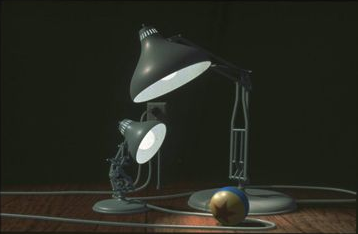
Talented Collaboration

It’s a small world in the Christian film market. Just about every filmmaker knows the Kendrick brothers. Other names within the field include: Ralph Winters, John David Ware, John Robert Moore, Kyle Prohaska, and David Nixon to mention a few. Additional names quickly rise for those filmmakers who frequent key Christian film festivals and workshops like the San Antonio Independent Christian Film Festival, Gideon Media Arts Conference and Film Festival, and the Biola Media Conference.

Even though the Christian Film market now has a “who’s who” list in filmmaking, one thing has yet to happen that is frequent in the secular field: Creative partnerships.

Hundreds of people flock to see anything created by Pixar, who managed to have a dozen box office successes back to back since their Toy Story foundation in 1995. Their track record of having ALL of their films in the top 50 highest grossing animated films of all-time is amazing.

Developing a company that has averaged $602 million in gross box office dollars per film was only made possible through creative partnerships. George Lucas of Lucasfilm started the Graphics Group as part his computer division. The group created incredible special effects that won numerous awards. Unfortunately, Lucas was not able to make the division profitable and under the recommendation of John Lassiter, prepared to spin it off.

Steve Jobs of Apple fame, acquired the young company and added to the mix tech savvy Edwin Catmull as President of Pixar. This unique partnership with Lassiter shifted the company from a computer graphics organization into a great animation studio – All because of their joint love for seeing computers developed into a great medium for telling story.

It seems to me that Christian filmmakers have some of the greatest stories worth telling, yet many are still working in isolation. Surrounded by some of the best in the industry, you would think that friendships would be developed that lead to collaboration. In fact, since filmmaking is a collaborative art form, I questioned why it hadn’t already happened and explored a couple possible reasons.

One thing I noticed when attending secular film conferences is how willing everyone is to help each other learn new techniques and improve their craft. When attending Christian conferences it seemed that most attending were still star struck caused by some level of glamour. This elevated some filmmakers to a higher artificial level that gave them something to lose if others caught onto their tricks of the trade – Causing filmmakers to withhold important lessons from each other.

The other notable difference is that secular filmmakers pick a craft within filmmaking that they are good at and practice it until they are the best. Most Christian filmmakers feel compelled to be the writer, director, producer, editor and sometimes actor on every film project, not to mention manage distribution, leaving mastering any given job a distant dream.

I can’t help but wonder how things might be different if Alex and Stephen Kendrick wrote a film produced by Ralph Winters and David Nixon, with distribution managed by John David Ware, directed by Kyle Prohaska, and acted in by John Robert Moore. With each one having a growing audience and the ability to fit into the above positions, my speculation would suggest the film could be an independent success story.

But what are the odds of this combination coming together?

In the secular film market, the creatives share the joint desire to tell a great story. However, in the Christian film market story isn’t always a prime consideration, nor do all aspire to it. Instead, some Christian filmmakers focus on evangelism. Some might be in it for the sake of God’s art. One might see no problem working with secular crews in order to use the best craft, while another wants people that are right before God, so God can honor his or her film.

The list of variations is almost exhausting to review. All because Christian filmmakers share different passions when it comes to their filmmaking approach. So, until each filmmaker gets to the place where they’ve mastered the wearing of multiple hats, or they change their approach, Christian films will not be able to compete against the likes of Pixar.

Copyright © 2011 By CJ Powers
Photo © Disney/Pixar

To Know or Not

My son called the other day and informed me that I will have a granddaughter come November. Aside from being honored by the call, I found the conversation exciting and odd. The excitement erupted from reflecting back on my two daughters during their preschool days and the great times we had, with the expectation that I get to do it again with the next generation. The oddness was due largely to knowing my granddaughter’s gender in advance of her being born.

I never thought of myself as being old fashioned, especially since retro is in. But, there’s something about not knowing until the moment, which stops us from putting too many presumptions in place before we meet the new princess. I suppose there are still many things to learn like whether she will be pretty in pink, or wear a baseball cap like every other tomboy.

There will also be new rules, as her parents try to figure out how to raise her better than we parents raised them. Some things won’t change, as I’ll probably pass my figurative shotgun onto my son once she turns 12, so he can hold off the boys for a few more years.

One rule that some couples request is neutrally colored outfits instead of the typical blue and pink. However, putting a boy in a neutral yellow is not kosher in my book. Nor is putting a little girl in blue, as too often the parents will have to listen to strangers make comments about their little boy. Or, watch the stranger awkwardly try to say something palatable when they can’t figure out the gender living in the green jumpsuit.

It’s so much easier for distant relatives and strangers to see the child in clothing that communicates gender. Besides, aren’t babies too young for the debate surrounding theoretical signifiers of sex deconstruction associated with consumerism? Well, maybe not, but certainly it’s beyond their initial vocabulary.

I found that knowing gender this far in advance moved up certain conversations, like my sister and I talking about how we both knew it was going to be a girl. After all, my gut did reveal the gender of all three of my kids without the use of an ultrasound. And no, I’m not suggesting we pitch technology and return to the days of finding water with witching sticks.

Having a granddaughter in the making is a great honor and very intriguing. I can’t wait to sit on those little chairs sipping afternoon tea from a plastic cup, while eating rubber crumpets. Or, joking around, while we lay on the floor building skyscrapers with her Lego pieces, as she develops her hand eye coordination and architectural artistry.

Then come all the thoughts of her potential career, motherhood, and hobbies. Will she be able to sing or play an instrument? How will she do in school or… Do you see what I mean? Some of these thoughts never happened this early before the day of ultrasounds.

The one thing that makes me chuckle is that I no longer have to think of her as a baby, but now a baby girl. We’ve moved out of the “it” stage and into the “she or her” stage. And, once she’s born and the parents finally give up her name, we can call her by her personal name that will reflect many aspects of who she will become.

Let’s just hope they don’t call her Solar Powers, Super Powers, or Vera Powers (A past relative’s name). More importantly, let’s hope the new parents yell the name out the back door several times to see how it comes across, as many names have failed that test over the years. And, since this is the day of the Internet, it might be prudent to purchase her domain name in advance so she has lots of options ahead of her. Who would have thought?

Over all, I’m good with knowing it’s a girl before she’s born. In fact, the sooner she has a name, the sooner I can start a college fund to help her parents pay her future tuition of $76,406 per year at a private university like her parents attended. Based on many universities shifting to five-year programs it totals $382,030. Maybe I’ll ask my distant relatives to start funds to help as well.

Copyright © 2011 By CJ Powers
Photo © reflektastudios – Fotolia.com