
Time to Renew

Recently a woman commented on my large capacity for doing so many things at once. While it was supposed to be a compliment, I took it as a warning that I was about to hit the ceiling of busyness. I was on the verge of losing myself in activities, rather than enjoying the blessings that were in my life.

The good news is that we all can make an adult decision to take care of ourselves when we see our lives being choked out like freshly grown plants trying to survive in a thicket of weeds. Time is a precious commodity, but few use it to edifying themselves or to recharge their energy levels.

Bringing oneself back into a healthy perspective and workload takes a great deal of effort and requires us to know ourselves. For instance, a person like me gets significantly recharged whenever I stop by Walt Disney World (WDW), have a speaking engagement, or rest in the north woods of Wisconsin. My Saturday mornings seem to be the time when I get those smaller boosts of energy to cover any draining from the prior week.

While there are many possibilities for renewal, especially during those quiet times in the morning, I’ve learned my recharging pattern and found that a four day weekend every quarter and a few hours to myself every Saturday morning to be most effective.

Here is how I determined what energized me:

1. Observed my actions in every situation that brought a smile to my face and tried to determine what about it invoked the grin.
2. Determined what core characteristic or element of temperament the moment encouraged or fed.
3. Appreciated what and why something puts a smile on my face and embraced that which was good.

WDW is a great example. After finding my creativity skyrocket with every visit, I found that no other theme park or location impacted me creatively, with the one possible exception of a Hollywood sound stage in full swing.

I am a story person through and through, and when I learned that the entire WDW theme park was built around a large story, I understood why it impacted me as an old friend coming along side of me filled with encouragement.

When entering the Magic Kingdom, the first thing you see is a bed of flowers forming a giant Mickey Mouse. This matches the opening screen of many Disney shorts during Walt’s glory days. Next you enter the brief tunnel where the lockers are and you see numerous one sheets/posters lining the walls like the trailers of coming attractions. Each poster representing something you will soon see or take in.

Stepping from the tunnel into Main Street USA brings us to the opening credits, which of course are in full sight. Every window is painted with the names of those who made Walt Disney World a reality. In the distance, you can see a fantasy castle setting the tone for your time in the special kingdom like an opening scene does in a movie. I could continue drawing the parallels that Imagineers worked so hard to create, but I just wanted to give you a glimpse into why WDW recharges this storyteller.

When talking about how we recharge our batteries, there are many who will suggest that they sacrifice their dreams and desires for the sake of the kids or a spouse. While some may truly do that, most speak as though they were a martyr that is some how above others with their self-sacrificing role.

I sometimes wonder if that positioning is a form of self-appeasement to cover the person’s inability to tell loved ones what their true heartfelt needs are – Needs that are valuable in of it’s self. I wonder if these types of people act more like a doormat for others to take advantage of them, rather than giving freely to help others. Some might even couch their fears of advancing with words of self-inflicted martyrdom.

A believer once told me that God wanted living sacrifices, not the kind that cause grumbling or brings death. He suggested that the best sacrifice comes from a person’s abundance and encourages others to rise to their best level in life, regardless of any form of thanks. These are people who give from their overflow, not their moments of despair.

If we take care of ourselves first, then we are healthy and can pass on healthiness. If we’re drained, then we might pass on a sense of helpfulness or distorted love, which won’t be beneficial. It’s like being on an airplane when the oxygen masks drop down. You must put the mask on yourself before you can help someone else with theirs, otherwise you might pass out before helping them and you’ll both be in trouble.

While it may feel selfish at first, I promise you that taking time to recharge will create an overflow from which you can bless others. And, when you’re operating at full capacity and it seems like child’s play, you’ll realize that you were made by a God who wants you to soar like on eagles wings – Effortless soaring without having to flap your wings very often.

Copyright © 2011 By CJ Powers
Photo © iQoncept – Fotolia.com

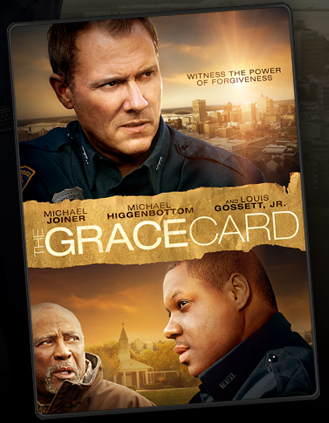
The Grace Card – Review

The Grace Card releases today on DVD. It’s a story about sacrifice, partnership and acceptance. The film is shot in a tone and style similar to the Southland cop series on TNT. It’s a gritty look, and very realistic according to the Chicago Police Officers I watched the movie with.

The story is more than just a cop show about a white and black partnership and the obvious issues they face as a team. It dives deeper into the heart of Officer Mac McDonald (Michael Joiner) who lost his son in an accident and must find a way to work through the pain before alienating everyone around him, including his surviving son.

With his emotions erupting in unhealthy ways, no one wants to ride with him on patrol. Sgt. Sam Wright (Michael Higgenbottom) steps up to ride with him and finds their relationship stretched to the max, until God asks him to make a significant sacrifice for Mac.

This drama is paced according to the lives of real cops, not the faster paced Hollywood action film. With reality being leveraged by the director, the audience has a chance to learn more about the emotional and mental anguish some cops bare and how God can intervene through the closeness of a partner or friend.

Michael Joiner’s performance was amazing. His screen intensity never gave hint to his professional life as a comedian. After watching his realistic tough cop performance on screen, I had a chance to shake his hand and chat about the film. To my surprise he was a soft-spoken tender man who loves God.

Michael felt honored by the officers I was with who validated how realistic his performance came across. Even the Hollywood Reporter published comments about his “Powerfully Intense Performance.” Michael shared the screen with Louis Gossett Jr., who won an Oscar for his performance in An Officer and a Gentleman and an Emmy for his role as Fiddler in the historic TV miniseries Roots.

“Disclosure of Material Connection: I received one or more of the products or services mentioned above for free in the hope that I would mention it on my blog. Regardless, I only recommend products or services I use personally and believe will be good for my readers. I am disclosing this in accordance with the Federal Trade Commission’s 16 CFR, Part 255: “Guides Concerning the Use of Endorsements and Testimonials in Advertising.”

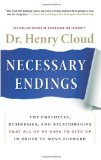
Necessary Endings

I was able to hear Dr. Henry Cloud speak last Saturday night and found his topic timely. He shared how often we can’t move forward unless we first bring an end to something else. Its the concept that we only have so much capacity in life and can’t accept something new if something old or unhealthy is in its place.

This truth fits numerous scenarios like an employee that needs to move on before the workplace becomes toxic, or a relationship that is going nowhere needing to be brought to an end, or letting go of a dream that is not going to materialize.

Cloud drew an analogy by stating, “Everything has seasons, and we have to be able to recognize that something’s time has passed and be able to move to the next season. And, everything that is alive requires pruning as well, which is a great metaphor for endings. Gardeners prune a rose bush for three reasons: 1. The bush produces more buds than it can sustain, and some good ones have to go so the best ones can have the resources of the bush
2. There are some branches and buds that are sick and not going to get well
3. There are some that are already dead and are taking up space.”

Cloud made it clear that over time we tend to gather more activities, relationships and work than what we can handle. We therefore are in a position where we have to determine who or what activities we’ll continue to maintain and what or who we need to walk away from.

We first need to determine where we’ll put our energy. If there is someone who is always a hassle to deal with, then that is a person we should consider walking away from. Or, if there is a person that makes us feel healthy, confident and positive every time our paths cross, making sure we have more time with them is important.

In relationships there are two kinds of people: The ones who drain you and the ones that build you up. So why is it hard to walk away from those who drain us? Cloud suggests its because, of how we, “look at endings in general. Do you perceive them as natural? Do you have a worldview that everything has its season and life cycle, or do you think that if something comes to an end it means that “something must be wrong?”

“When you see that you need to let go of something, or a person, what happens inside? What fears emerge? How paralyzing are they? What can you do to address them?

“Have you really thought about the fact that if you don’t do the pruning in that area that is needed, then you won’t get what you ultimately want? For example, if you keep that employee then that department will never perform well? Or if you stay in that dating relationship you will not find the one that fulfills? Play the movie forward a year or two and see if you like the results of not making a decision.

“If you are holding on to hope, what is the basis for that? Is it rational and objective? Or is it just a defense against facing the issue? Endings are a part of life, and we are actually wired to be able to execute them.”

Cloud also pointed out that when we are fearful about hurting someone’s feelings, we should consider if the outcome of not bringing things to an end is more hurtful. In fact, he sighted numerous examples where the person was actually thankful to learn of the issues at hand and bringing them to an end put the person into a good and right place for the next chapter of their life. They were win/win scenarios.

If you are as intrigued as I was about Cloud’s insights and the process for bringing things to a necessary ending, you can jump to Amazon.com and pick up a copy of Necessary Endings for yourself.