
One Hit Wonders

Jim StaffordThe term “One Hit Wonder” refers to a singer who made it into the top Billboard list with one hit song. Some songs had staying power like Jim Stafford’s “Spiders and Snakes” (1974), but most came and went like Rick Dees’ “Disco Duck” or Larry Croce’s “Junk Food Junkie.”

Stafford turned his hit into a goldmine for 24 years at the Jim Stafford Theater in Branson, Missouri. Years ago when I met Stafford, his theater was generating an average of $1MM a month, thanks to its 3,000 seats and great publicity. To accomplish the nice paycheck, Stafford had to perform regularly each year. It’s no wonder that he’s decided to move into semi-retirement.

“I feel like it’s time to try something else,” Stafford said. “You do a show just about every day. The least number of shows I ever did there was five days a week.”

Semi-retirement means he’ll be taking a show on the road this year. It’ll be the first bus tour of his career, which started in the early 70’s. His show will be family oriented, filled with nostalgic songs and the comedic humor he’s known for.

Stafford’s success never took off like many in the industry, but it did allow him to perform and have fun throughout his career. He loved performing and touching the lives of those with similar wholesome and moral entertainment taste. That’s not to say he didn’t face hard times. He did. There were days when he’d play for a small handful of people – One show only had six people in the audience.

While Stafford never had more than one hit, he certainly knew how to entertain. His show had great musicians and singers, wonderful costumes and time for the artist to share a conversation with his audience. No matter what performance you’d attend, whether he was working that day or not, you could always expect great performances and good wholesome fun and laughter.

Keep a lookout for Stafford coming to your area over the next couple of year.
The Latest Technology

I laughed when I saw the latest technology satire, as it took me back to the days of 2″ VTR tape. That’s right, when I was just starting out in the business, the industry was moving from 2″ video tape to 1″ for studio work and Betacam for field work. That was about the time when professional Super 8mm film was attempting to take over the 16mm market.

I hope you enjoy a good laugh…

Tie-Breaking Story

Tie-Breaking FilmsFor years filmmakers have suggested that story is more important than media, platform or business. Last week I read a report about large retail and corporate businesses that compete with similar products, at matching price points, and in the same marketplace. The ads and marketing campaigns are so similar that the only marketing tool left to sway the consumer’s decision is called “story.”

The hundreds of pages of survey data boiled down to the fact that consumers now make purchases based on the company’s presented story. Consumers no longer consider price, as expectations suggest all items are similarly priced. Nor do they consider quality of product, as all products can be manufactured at equal levels.

The beverage industry, which was monopolized by two companies for decades, learned about the importance of story when Nantucket Nectars captured significant market share. Placing short brand stories on each bottle enhanced the campaign. The marketing ploy was successful and caused other companies to distinguish their brands by using storytelling techniques.

Blockbusters, sports, horror and Christian films are no longer unique within the industry. Filmmakers are now forced to find deliberate ways to distinguish their film from similar stories. The Fast and Furious franchise used the sense of belonging and family to distinguish each sequel from the numerous race car knock off films created by competitive studios.

A film’s uniqueness is what separates the quality film from the “me also” films. Many times a corporation will attach a spokesperson to its campaign to help create a deliberate separation between similar products. However, maintaining a celebrity spokesperson can be costly, forcing companies to create new distinguishing and promotable story lines.

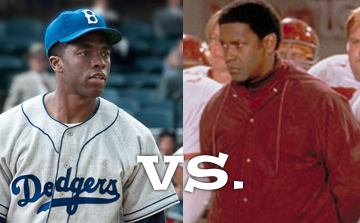
Without the delineation, the latest sports film can sound just like the last one. When the Major League Baseball film 42 released, there was little to distinguish it from The Express, Remember the Titans and Glory Road.

Even the trailer of those films suggest it was just another sports film:

  • Hero predicts his future greatness
  • Hotheaded coach shouts that the only thing that matters is how you play ball
  • Nice guy warns future hero about how his kind isn’t accepted by the team
  • Nice guy embraces hero as true friend and foretells his greatness

The key to breaking a film out of a tie situation with its “me also” films is designing a marketing story that is unique and highlights parts of the story that are significantly different than anything else. Without helping the audience to discern the specific differences prior to watching the film, the release will just look like all other like-minded releases and will generate about the same dollars at the box office. In other words, the film will tie with all others in its sub-genre.

The differences reflected in the marketing story can be about the above line talent, story, visuals, etc. But it’s important that only the film’s uniqueness’s are promoted – After all, how many slasher films can you watch?

What are your thoughts about differentiating films? Are all apocalyptic films the same? What about time travel films? Or, Jesus films?

Copyright © 2014 by CJ Powers