
Simplify Your Business Story

Companies are filled with stories that advance their goals or hold them back. The messages that don’t work are typically not simplified so the company’s audience can understand their story and its value. Or, sometimes, the story is understood, but not its value.

As a director who consults in the corporate sector, I’m often called on to streamline complex messages into something that can sell and educate.

While there are many tricks learned from experience, there are a few things each employee can do to help their customer understand their story and its value to them. Here are the three steps for employees that are easiest to implement.

Listen Attentively

When your competitor has an opportunity to listen to the customer, they listen through the filter of how they can angle one of their solutions to meet most of the customer’s needs. They are more about winning than building the relationship through effective answers that help.

To truly serve the customer, the employee has to listen to “why” there is a need. Listening carefully will also give the employee an understanding of several “whats” and “hows” the customer may have already explored. These give the employee clarity on why the customer has a need, the steps taken to date in search of an answer, and why the current answers won’t work.

This information positions the employee to guide the customer into being their own hero.

Float the Ideal

Based on what was learned about the customer’s journey, the employee can suggest or test out what the ideal solution might look like. When floating an ideal solution that may or may not be possible, the customer immediately knows if the employee truly understands the need and the direction they are interested in heading.

No matter how good the listener, the customer usually corrects certain aspects of the ideal. This might be due to the employee missing something, or the customer realizing after hearing the ideal solution, that they want something a bit different than they originally thought. The employee can alter the ideal and float another possible solution.

Focus on Gains, NOT Gaps

After understanding what the customer’s ideal solution looks like, the employee can now determine what products and services the company offers that can give specific gains to the customer. It is critical that the employee also mention what they can’t specifically address in the ideal solution. These gaps can be used for future discovery with the customer and the development of new solutions.

Also, by being upfront with the customer about the gaps, the employee is given more trust, which will help with upselling and any future solutions. Most competitors won’t be honest about the gaps and try to pull one over on the customer, hoping they’ll forget the stunt when future needs arise.

Too Close to See the Big Picture

When employees listen, float ideals, and focus on gains, the customer is endeared to the employee. This empowerment will position the employee for great success. However, not all employees understand the value of their role or know how to adjust for faster growth.

Should an employee be too close to see the big picture and is therefore unable to adjust their next steps, bringing in a director to simplify the message is prudent. Directors are observant, understand the human condition that drives decisions, and are experts at crafting simple messages that will help your audience understand your story and its value.

In summary, the company that educates its employees on the above three steps will see an increase in revenue, trust, and understanding. Training costs are minimal, and the benefits far exceed the revenue that a simple message can drive.

Copyright © 2023 by CJ Powers

Condo Fire: Leading in Crisis

Photo by Pixabay on Pexels.com

(I took first place in a speech contest with the below—this is not a transcript of my talk, but a close approximation)

The fire alarm was not a rehearsal. But I was unaware—sound asleep.

I slept through multiple knocks on my door as I drifted from dreamland to reality. I vaguely heard conversations in the hallway and thought, “Who would be talking at this late hour? How rude.”

BAM!

I was startled by pounding on my door. The knocking had turned to banging.

“Just a minute, I’m coming.”

I got out of bed, put on my slippers, and opened the door. The frantic individual said, “The building fire alarm is going off!”

“Okay, I’ll get my clothes on.”

I put on a pair of pants, a warm-up jacket, and my glasses. Then I grabbed my winter coat and stepped into the hallway.

The blaring alarm and the people heading to the staircase suggested the fire was real. I reflected on my training and decided to focus on three skills to help others.

Everyone can help others by demonstrating three values people seek from a leader during a crisis: honesty, clarity, and consistency.

HONESTY

A woman from the far end of the hallway shouted, “Is it real?”

“Yes,” I responded. While I wasn’t sure, I was confident that the late hour suggested it was not a drill. A sensor had to have detected something. There had to be a real threat, but how significant was yet to be determined.

Referring to her husband, the woman said, “We can’t use the elevator during a fire, so we have to stay in our designated area until the firemen can move us. We have a phone number to call.”

I had no idea my words could impact such an important decision about calling that special phone number.

Had I chosen to comfort and relieve their worry by saying, “No,” the firemen would never have known they were in the building. The couple needed the unadulterated truth. I was thankful my answer was “Yes.”

CLARITY

I made my way to the lobby. A group was arguing about whether the alarm was real. Some just wanted to delay standing in the wintery night.

I shared a clear and succinct message for everyone to move outside. I stated clear and simple action steps and headed toward the door. Others followed. 

The firetruck pulled up as we exited the building. The response time could’ve been better for a station three blocks away. But the delay did give us time to get out of the building.

As the firemen headed inside, a few people asked me what would happen next. I said, “The firemen will read the lobby control panel to determine what sensor set off the alarm and head to that room.”

Shoulders drop and people relaxed a bit. A sense of peace came over those who heard the clear truth. While we didn’t know the outcome, honesty coupled with clarity reduced the anxiety level of others.

I saw the Lieutenant open a door and watched smoke billow into the hallway. The fire was real.

What I observed were firemen that weren’t concerned. That made me curious as I watched the smoke dissipate. There was very little smoke, which raised a few questions in my mind.

None of the firemen headed to the fire engine for more equipment or hoses. That suggested the fire was contained or small enough to handle with a fire extinguisher.

I found the Lieutenant to learn the facts.

He said, “There was a small electrical fire, but we couldn’t find the source. The room was sealed, and the smoke absorbed the oxygen and extinguished the fire. You’re all set. Call us if the fire starts up again.”

The Lieutenant’s comment didn’t give me any hope, but his clarity reduced my concerns. Since the room held new water heaters, it was possible the smoke was caused by a label burning off a hot metal piece. There was no real threat.

CONSISTENCY

As the firetrucks left, a few residents hounded me for information. I quieted the group and led them into the water heater room. A few entered, but most stayed at the door and peeked inside.

Consistency was foremost on my mind. I needed to speak honestly and clearly, as I had already done, to maintain consistency. The reason for consistency is to build trust.

I said, “There was a small electrical fire that produced enough smoke to put itself out due to the lack of oxygen in the room. The Lieutenant didn’t see any threat at this time.”

One woman asked, “Is there anything we can do to avoid this issue in the future?”

“No specific cause was mentioned, except that the equipment detected and labeled the fire as an electrical fire. The only thing I can see is that the three water heaters are plugged into the same extension cord. However, the Lieutenant said there was enough amperage to cover the electrical draw of all three water heaters on the same outlet, so it wasn’t the cause.”

I suggested that the board could consider running conduit with separate outlet boxes to each machine, but it wasn’t necessary.

Then I realized some people just needed to hear that everything was clear, so I said, “There were no signs of fire or cause that needed to be addressed tonight. The fire is over, there is no longer a threat, and I’m returning to bed.”

The crowd dispersed with enough confidence in our safety to sleep well.

My attempt at leadership in a crisis was complete. Everyone was comfortable with heading back to their condos. The evening was a success because I demonstrated honesty, clarity, and consistency during a crisis.

Should you one day find yourself in a crisis, help those around you by demonstrating honesty, clarity, and consistency.

Copyright © 2023 by CJ Powers

Franklin’s Recommendation Helps Us Today

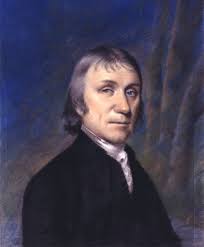
Toward the end of summer in 1772, Joseph Priestley required help from his friend, Benjamin Franklin. Priestley was a scientist, theologian, and liberal political theorist. 

Joseph Priestley

His dilemma was deciding between the acceptance of a scientific opportunity that would provide him a full lab, and continuing his ministry within the Unitarian church. Priestley wrote Franklin, hoping for a clear response. Instead, of suggesting an answer, Franklin explained his weighted process for difficult decisions.

The process was a weighted version of what we consider today as a pro and con sheet.

Franklin instructed Priestley to fold a sheet of paper in half and write the word “Pros” on one side and “Cons” on the other. He was then to write down all pros and cons that came to mind over a four-day period.

The four days were important to Franklin because humans think in groupings (or chunks) of ideas. When one grouping is at the forefront of our minds, it blocks other thoughts from coming forward. Franklin explained that our minds never think about the pros and cons at the same time. 

Benjamin Franklin

Once we write down the abbreviated central idea of each, we can forget about it and move on to other ideas worth capturing.

Franklin also suggested Priestley weigh each item based on the impact of purpose. 

At the end of the four-day process, Franklin recommended a review of the two lists. If there were similar items across from other items, Priestley was to strike through the words.

It’s important to use a single line to strike the words so they are still readable.

Franklin explained that if there was a single similar, yet more heavily weighted item in one column, across from two lesser weighted items, all three can be struck at the same time. Any combination of similar items that equates to a balance of weighting can be marked at the same time.

By following this pattern, Priestley quickly reduced the complex decision down to a couple of key factors. This made his decision simple. He left the ministry and opened up an incredible science lab.

This decision led Priestley to discover a process that creates Oxygen used by first responders and hospitals ever since.  Priestley described the O2 as being “five to six times better than common air.”

Copyright © 2022 by CJ Powers