Videoconference with Ralph Winter of X-Men Fame

Clyde Tabor

Clyde Tabor

Clyde Tabor is a visionary and a man who likes connecting industry professionals together, so we can learn from each other. Clyde is the founder of the Visual Story Network and he got several of us on a videoconference to chat about development techniques last Thursday. Professionals and up coming filmmakers alike were on the call.

Brian Bird

Brian Bird

Last month he asked Brian Bird to chat about writing. Brian just got green lighted on a six hour, $20MM show on the life of Jesus, thanks in part to The History Channel’s successful miniseries, “The Bible.” I originally met Brian some years back when he was working a project with Michael Landon, Jr.. Their partnership will continue with this miniseries and they both deserve congratulations.

Brian is most known for his writing work on Touched by an Angel, The Ultimate Life, and The Last Sin Eater. Brian also has a significant list of credits as a producer including Saving Sarah Cain, The Shunning, and his recent TV movie When Calls the Heart. Brian’s heart is not only deep into the art of filmmaking, but he has a soft spot for seeing the next generation educated in the craft.

Ralph Winter

Ralph Winter

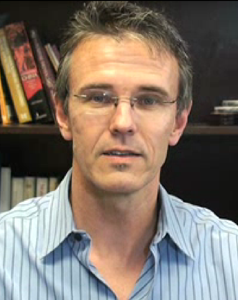
Clyde’s gathering this past week was led by Ralph Winter. He is a force to be reckoned with in the industry and, like Brian, loves to help the next generation of filmmakers. Ralph is part of the bread and butter filmmakers that make a lifelong career in Hollywood and has watched many rise and disappear over the years.

The feature Hocus Pocus seems to have gained Ralph more than a decade of notoriety, but his sci-fi work exceeded everyone’s expectations with Star Trek III, IV, V and VI; X-Men, X2, X-Men: The Last Stand, and X-Men Origins: Wolverine; and, Fantastic Four, and Fantastic 4: Rising of the Silver Surfer. He has also produced several Frank Peretti titles and a myriad of other films.

Ralph uses “old school” techniques to get his job done. He pointed out that when it comes to scheduling, he’s faster using Post-it® notes on a wall than PAs or inters using their computer scheduling programs. I actually use the wall myself, but I use blank business cards and painter’s tape for longer lasting stickiness. It seems to be much faster than any strip board or scheduling program.

There were a good number of things discussed on the call, but the one thing Ralph shared that impacted me was the latest variation of P&L Analysis for films. In the past, creating a proforma chart with high, medium and low expectations were sufficient. However, today’s resources tend to come from more diverse sources that may need a little more handholding.

Ralph shared the analysis from his latest venture, which showed a breakdown of revenue and expenses for each release window. It was also notated, not as H, M, or L, but instead under the following categories: Downside, Breakeven, Base, and Breakout. With this new type of analysis, the investors can determine the good and bad of each release window and its impact on the other revenue sources. It also allows for the added benefit line that notates the state tax incentive based on shooting credits for location work.

The discussion got a little more invigorating when we shifted for a time to the standard breakeven scenario, which is no longer accurate based on the way many films are now being made. The old method and still the “official” standard method is as follows:

Breakeven = 2.5 * (P&A + Production Costs)

However, with tax incentives, A-list actors taking more backend funds, and low budget films requiring points for a percentage of the cast & crew’s work, the formula is adjusted for almost every independent production today.

Jess Stainbrook

Jess Stainbrook

It was also great to have Jess Stainbrook add to the conversation with his executive producer’s experience with the Kathy Baker and Robert Duvall vehicle, Seven days in Utopia. Producer David Nixon was also on the call (Facing the Giants, Fireproof, and Letters to God) and added his experience to the mix.

David Nixon

David Nixon

It appeared to me that while some of their choices and techniques varied, the things each of these producers had in common were their beliefs and passion for high quality, heart touching stories that inspire moral excellence and wholesome living.  But frankly, it was just a good time connecting and learning a couple of golden nuggets of information from each of them.


Copyright © 2013 by CJ Powers
 

The Production Trinity

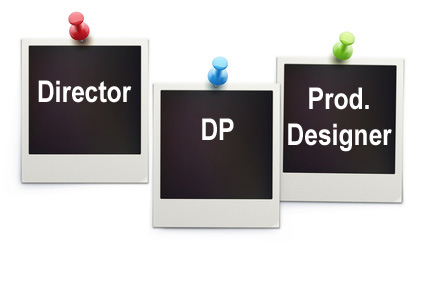
Great films start with great writing, but the trinity formed by the director, director of photography, and the production designer create high production values – Giving rise to excellence. Without the trinity, films can’t surpass the quality of an average B movie.

Production TrinityCost cutting methods used by many independent films includes the merging of the director and the DP into one person, leaving out the production designer all together. While a few films lacking a trinity have been remarkable, most can’t compete in the marketplace. This is due to the low production values and shortcuts that occur because there isn’t enough manpower.

When a creative trinity is a part of a production, the focus on detail plays out in the following three ways:

DIRECTOR: The director owns the vision for the film and needs to have a strong opinion on what the film will be. He is responsible for how the story is told visually with a specific point of view. He must have a strong sense in how to translate the written word (screenplay) to the screen cinematically. His focus covers the story, characters, motivation, technical and aesthetics – The over all look and feel of the film. His point of view will determine how the tools of the trade are applied to the story. He also collaborates with the department heads and makes all final decisions on design and photographic elements.

PRODUCTION DESIGNER: Being the head of the Art Department, the designer is in charge of the physical environments: The creation, construction and selection of sets and locations. He also oversees the costume designer, wardrobe, hair and make-up. His team focuses on the period, space, texture and colors. In preproduction, he collaborates with the director to understand his impression of the story and how he will pull it together.

DIRECTOR OF PHOTOGRAPHY: The DP or Cinematographer is responsible to capture the director’s vision on film/video. His collaboration with the director and production designer is for the purpose of creating the look and visual style of the film that best serves the director’s vision. He oversees a team that covers the camera, composition, lighting, and movement. The choice of equipment, lenses, processes, and digital enhancements determine the perspective, color and visual texture of the story.

The trinity sometimes uses previs, a tool/technique to pre-visualize scenes, to make sure they clearly understand the same visual story elements. Some trinities use software for pre-visualization, others use storyboards or animatics, and some use models and miniatures. I’ve actually used a combination of tools, not to mention my own technique for camera placement within my blocking charts.

Whenever the exact right combination of artists forms the trinity there are normally a lot of award ceremonies that follow. The amount of high quality detail is also talked about by the audience, which typically generates a buzz that leads to an increase at the box office.

Copyright © 2013 by CJ Powers

7 Storytelling Tips Directors Wished Their Writers Knew

I wanted to reprint the Guest Blog I wrote for JourneyCraft in case my readers hadn’t seen it…

CJ PowersAn article on screenwriting from a director’s perspective might seem self-serving, but what I’m sharing quickly differentiates great writers from the really good ones.

These finer points can easily be overlooked by an experienced writer who sees a familiar term and doesn’t take time to understand it from the director’s perspective.

Since the director owns the vision of the film, it’s prudent to understand his expectations for a given scene.

The below tips should help the writer step it up.

1. Improve the Scene, Don’t Change it.

It’s frustrating for a director to read a scene that is just shy of being perfect. Not because the writer missed the mark, but because the director typically gets back significant changes instead of the minor modifications he requests. I’ve seen stories needing a slight tweak go through such major revisions that it changed a comedy into a drama.

Major changes are typical for writers who love creating story and don’t take time to understand what the director was planning to do with a given scene. Before making any changes, writers need to find out what the director likes about the scene and how he perceives it – So they know what not to change. The writer’s focus must facilitate the director’s vision, not keep her favorite scene intact or create something that could be really cool in a different film.

2. Understand the Point of the Story.

Every writer knows that each scene must move the story forward or be cut from the film. Scenes that are near and dear to the writer’s heart, but don’t move the audience toward the point of the film, leads to the deterioration of the story. I’m amazed at how many professional writers lose track of the story’s point during their creative process and write something that doesn’t belong in the film.

It’s prudent for the writer to reduce the point of the story to paper and compare it to every scene, making sure it belongs in the film. She might also reconsider arguing with the director about keeping the “unique” scene, as it will weaken the core story and make both of them look bad.

3. Develop Subtext.

If I had a dollar for every time a writer is told to write subtext… So why are so few scenes built on subtext? I co-wrote a love story that had a scene with the woman helping the man learn about abductive reasoning while packing for a trip to meet her folks. The original scene was flat and written on the nose, like many first drafts. By having the main character decide about taking or not taking a sweater based on possible weather conditions, we were able to create subtext about how warmly he may or may not be received by her parents.

Creating subtext is an art all unto itself and is welcomed by all directors. One of the easiest ways to create subtext is for the writer to build an honest scene
from a situation she would normally avoid in life at all costs. By forcing the character through the situation with as much tact as possible, while being honest, the writer will generate a layer of subtext that the director and actors can ignite.

4. Create Clear Story Beats.

The term “beats” is hard to explain since there are beats in the three-act structure, beats within a scene, and action beats for actors, not to mention when an actor takes a beat or pauses. Every scene has a beginning, middle and end, which accounts for a minimum of 3 beats. Within each scene are shifts of power between characters that are also called beats.

The key beats that directors look for are the exchanges of power between actors through dialog or physical movement. These beats set up a rhythm for the scene and bring interest to the viewer. Without the beats, the scene is flat and can lose the audience’s attention. Writers who proactively create beats within each scene to capture and recapture the audience’s attention are always in high demand.

5. Set the Scene’s Rhythm.

Story ebbs and flows like an ocean. Each character takes on a life of its own and his or her interaction drive scenes in new directions, while the writer maintains the point and direction of the overall story. Every conflict or surprise gives rise to another shift or turning point within the story and takes the audience down a path they’ve never visited before.

There is a natural rhythm that rises from the characters that needs to be found and clarified. If forced, the scene becomes stilted and cliché. The writer
is required to bring clarity to these strong and weak patterns to enhance the storytelling process. When its done properly, the audience feels good about having witnessed the actions within the scene and are drawn further into the story.

6. Shift Power in Every Scene.

Numerous techniques exist that alter the control of power within a given scene. This can be done with blocking, camera position and most importantly dialog. The writer through a handful of expressed words can take the power owned by one character and quickly pass it to another. In a moment of conflict, the exchange can happen several times and raise the interest of the audience.

The easiest way to shift power from one character to another is by having the one in power ask a question, followed by the other avoiding an answer and talking about another topic. This immediately transitions the power within the scene. Another example is having the person in power make a statement and having the other person immediately accuse the first person.

7. Add More Conflict.

Stories are boring without conflict. It doesn’t matter if the conflict rises from the internal, nature, or another character. What does matter is that the story must be laced with plenty of it. Too many writers don’t want their good character to come across in a nasty way, so they avoid creating moments of conflict. However, great drama is built on conflict and great characters learn how to work through conflict.

The easiest way to overcome a character looking bad for a moment is to focus on the choice and outcome of the conflict. Audiences are intelligent enough to focus on what the writer declares important and avoid going down rabbit trails that don’t exist. By establishing a choice or a forced decision, the writer can demonstrate the character of the protagonist as he walks through the difficulties and finds success.

Focusing on these 7 tips will bring peace of mind to most directors and save his efforts from having to tactfully hire another writer to improve your story for a strong transition to the screen.

Copyright © 2013 by CJ Powers