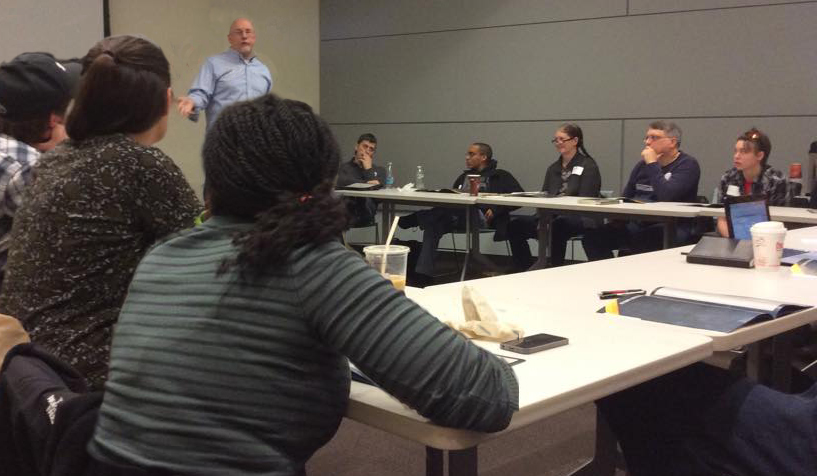
 Last weekend I taught a four-hour workshop on the 7 Secrets of Impacting a Film’s Story. The room had filmmakers from several genres present including far right Christian and far left LGBT. One of the Q&A topics that came up was all too familiar: Why are faith-based films so bad?
I gave the first obvious answer about how Christian filmmakers focus so much on the message that they leave out the story. I also defined story based on story structure standards:
Action + Emotion = Story
(By the way, to achieve action a film must have conflict, which faith-based filmmakers fear and avoid.)
Then I pointed out the second most obvious answer about how the message must be lightly salted into the B-plot rather than dumping massive doses into the A-plot, as Christian filmmakers love to do – Reducing their audience to a handful of religious Baby Boomers.
I also pointed out that Blue is the Warmest Color, a lesbian film, did a great job of lightly salting their message into the B-plot. The film received great acclaim and touched millions of Millennials internationally.
The filmmakers who know how to structure and salt their message within the story are the ones who will change the future of our planet. Those few, are also on top of the latest marketing trends, while most “Christian markets” are now 12 years behind the trends. It used to be ten years behind, but the latest marketing push for Christian films included 12-year-old techniques.
The “Becomers” are the fastest growing marketing segment within the Millennials. They are the ones now coming into power and will determine the fate of our planet over the next 20-40 years. I have yet to find a single Christian filmmaker who is addressing this group, yet the LGBT groups have been researching and seeking them for the past two years.
The Gen-Xers have dissipated from marketing models and were split. They either ended up lumped in with Baby Boomers or mixed into the Millennials. As a group, they were depowered and only had a short-term presence driving the business market. This resulted in shifting control to the Becomers.
The Becomers are the older Millennials who are currently positioned to change the marketplace in all industries. They are the ones who don’t attend church. They believe in truthful facts, but don’t care about it unless there is a narrative that guides their acceptance of the facts.
In other words, to get them into church required a very different approach that Baby Boomers wouldn’t fund or accept, as it would change their religious experiences. Some pastors created new churches aimed solely at Millennials and grew strong, but those congregations were mostly void of controlling Baby Boomers.
This dichotomy between church groups arises from marketplace conditions and decisions, which is the same issue now driving faith-based films. The Baby Boomers control the budgets, the Christian filmmakers are ignorant about the Becomers, and the combined groups are having fun creating films that don’t impact society. These new films have little ability to stand the test of time based on societal norms.
The trend is getting worse. Baby Boomers are now funding ten times more irrelevant films, while convincing themselves that they are making a difference in our culture. However, the LGBT groups continue to make a smaller quantity of films that make a significant impact in our culture. The differences are limited to how a message is crafted within a story: subtly or overtly.
The “how” can easily change if and when new Christian filmmakers, that understand story structure, step up to the plate. Unless, that is, current Christian filmmakers scare away the audience by promoting one thing, while delivering another – A new common and unethical, yet self-justified, practice.
The key is that the new breed of filmmakers must understand the Becomers and how to market to them. Then again, I have five screenplays written for Becomers and cant’ find any Baby Boomers to fund the projects, so maybe having understanding isn’t enough.
Of course, I’ve been told that if I change the stories to fit the faith-based market I’ll get funded, but then it would no longer attract the Becomers and sway their future to something more wholesome and moral. So, my scripts collect dust and I continually get told that I need to conform to the “right” way of writing screenplays, you know, the way it was done 12-15 years ago.
Wake up!
Those days are over and bringing back old strategies is foolish. Don’t you know the parable about the wineskins? It won’t work. Instead, learn from the LGBT producers who are succeeding at changing our world. They know exactly who the Becomers are and how to reach them. And most Christian filmmakers I’ve met don’t even know the Becomers exist or that they are being given control of the market’s future.
Okay, that’s enough. Let me know if you’re interested in funding a film written for Becomers that will introduce time proven morals into the lives of those coming into power.





 CJ's Corner