
Screen Fatigue Leads to Human Touch

Photo by Andrea Piacquadio on Pexels.com

The need to communicate is a part of the human condition. The recent stay-at-home programs helped launch Zoom from a small business tool into a common household name. But today, Zoom is becoming less appealing due to screen fatigue.

Social distancing forced many companies to use video conferencing and webinars for multiple daily meetings. Add to this phenomenon the staggering growth of virtual social gatherings and you find most working adults in front of a screen well beyond what their bodies can handle.

Screen fatigue overcame the fresh, exciting moments that new media brought to social communication.

Our desire to communicate with others has increased during our seclusion. Our appetite for connection was never satisfied by meeting on screen. We as a people group needed to get outside and connect in person to feel any level of fulfillment. Long periods of isolation didn’t even feel good to many introverts. Cabin fever set in and screen fatigue made everyone more susceptible.

We as humans need physical touch for our sanity and to feel connected. This is due to what psychologists refer to as phycological hungers. One of the phycological hungers that Dr. Eric Berne noted in Transactional Analysis was Contact Hunger. His work states that physical touch develops comfort and identity. The moment of touch also causes a visceral sense of connectedness and a healthy separateness.

Physical touch develops comfort and identity.

In societies that have looked down on forms of interactive touch like hugs, handshakes, and kisses, the individuals are more susceptible to being emotionally unhealthy and filled with distress. Those societies move into a progression of dysfunction, more so than that of a society that accepts touch and has to deal with some issues of abuse.

The extended COVID-19 isolation has starved many people from human touch, which has driven a need for more personal interaction. Screen fatigue has added to this problem and has driven people to seek outdoor gatherings. Since most are spaced six feet apart, the growing hunger will not be satisfied.

Kory Floyd Ph.D., recently published an article on “Skin Hunger” in Psychology Today. He pointed out that the starvation of physical touch is no less detrimental than water or food starvation. In a recent study, he found that adults deprived of human touch showed a great increase in depression, stress and loneliness. He also noted that they were less happy and they saw a major drop-off of their immune system leading to significant health risks.

Both noted experts helped me understand that our skin hunger will drive us to any oasis of human touch that is available. And, just as our bodies can’t go without food for more than 40 days, our skin can’t go without human touch. The phycological factors of blocking physical touch lead to dysfunctional problems that our society is not prepared to handle. The isolation of the healthy will drive people to hunger for what their bodies need in order to survive.

The next time you find yourself feeling empty while on a social video conference call, remember that those virtual relationships will always lack the touch that your skin needs to survive. We are a physical people that must interact to feel fulfilled and to solidify our identity. The next chance you have to extend your human touch, remember that doing so will feed person’s skin and bring health to their soul.

Copyright © 2020 by CJ Powers

A Fun Romp Wins Over the Best Picture

Academy AwardsWhile I was on my way to an Oscar® party last Sunday, a friend reminded me that it was “my night” and wished me well. The comment acknowledged my love for the cinema, which I started to develop at age ten. During my freshman year at university, I attended so many movies that I developed personal friendships with most of the theater managers in town, giving me free access to all the movies I attended for four years.
During my tenure as a cinephile, I came to appreciate American movies above all others. I understood the uniqueness of American movies and could easily spot and separate those nuances from foreign films. I also knew the key elements that turned the films into iconic American treasures. On a few occasions, I was even known to win a short-clip film contest where you had to guess a film’s country of origin in a matter of seconds.

This background churned my stomach when a foreign film won Best “American” Picture, revealing that the Oscars® are no longer about America’s best. But what really bothered me was that 1917 did not win Best Picture.

I watch about 100 films a year in the theaters. When comparing 1917 to other films over the past ten years, I can clearly say that it could easily win the best picture of the decade award. Why? Because it was masterfully crafted, pulled the audience into the war with all of its emotional charge, and took us on a journey that changed our perception of war within two hours.

This year’s winner, Parasite, a Korean film, was nothing more than a screwball comedy. The story was crafted like a movie-of-the-week Rom-Com. The film had technical and artistic problems and did not represent the type of film where all departments demonstrated mastery of their craft. I saw way too many flaws on the screen and couldn’t understand how it got nominated.

I was recently asked a couple of important questions. Since America is a diversified country with Korean-Americans, why don’t I consider Parasite an American film? How many Americans need to be involved in a picture for it to be American?

The answer is not as complex as the questions might lead us to believe. The producers admitted it was an international picture when they entered it into the International Film category and won another Oscar® in that category. They knew it was not an American film. In fact, they were quoted numerous times calling it a Korean film.

A few years back, the Academy opened its doors, in the name of diversity, with the hopes that it could change the direction of the American film industry by diversifying the culture. Having raised my family in a diverse culture, I had no problem with the concept. However, the execution was terrible because instead of only letting people into the Academy who had mastered their craft, they let people in solely because of their nationality to quickly balance the number of voters by race.

The end result was a group of individuals in the industry voting for the best picture that hadn’t yet mastered their craft. Instead of the Oscar® being given to the best of the best, the trajectory appears to have awarded politics over excellence.

I believe people are tired of the politics surrounding the awards. In fact, this year’s broadcast saw a hefty group of 5 million viewers drop off from last year. Fans want to learn more about their favorite celebrities and films, not someone’s political opinion who gets a bigger paycheck by aligning their comments to a popular cause.

Fans also want to find out what American films are worth their time. Yes, American films. While there are a few of us that watch international films regularly, most people have a limited amount of time to watch films in the theater and would prefer to watch a well-crafted American film over an international film with subtitles.

If the Academy is transitioning to be a global “best of” organization and is no longer charged with the American film industry, then I’d like to know who is going to step up and help viewers learn about the best America has to offer the cinema. Maybe there needs to be a new organization that is willing to fight to keep the American film culture alive.

Or, if our global film community is strong enough to compete internationally, then a new organization that represents the global best should rise up, rather than converting our American film Academy into a global one.

Copyright © 2020 by CJ Powers


Streaming Markets Explode

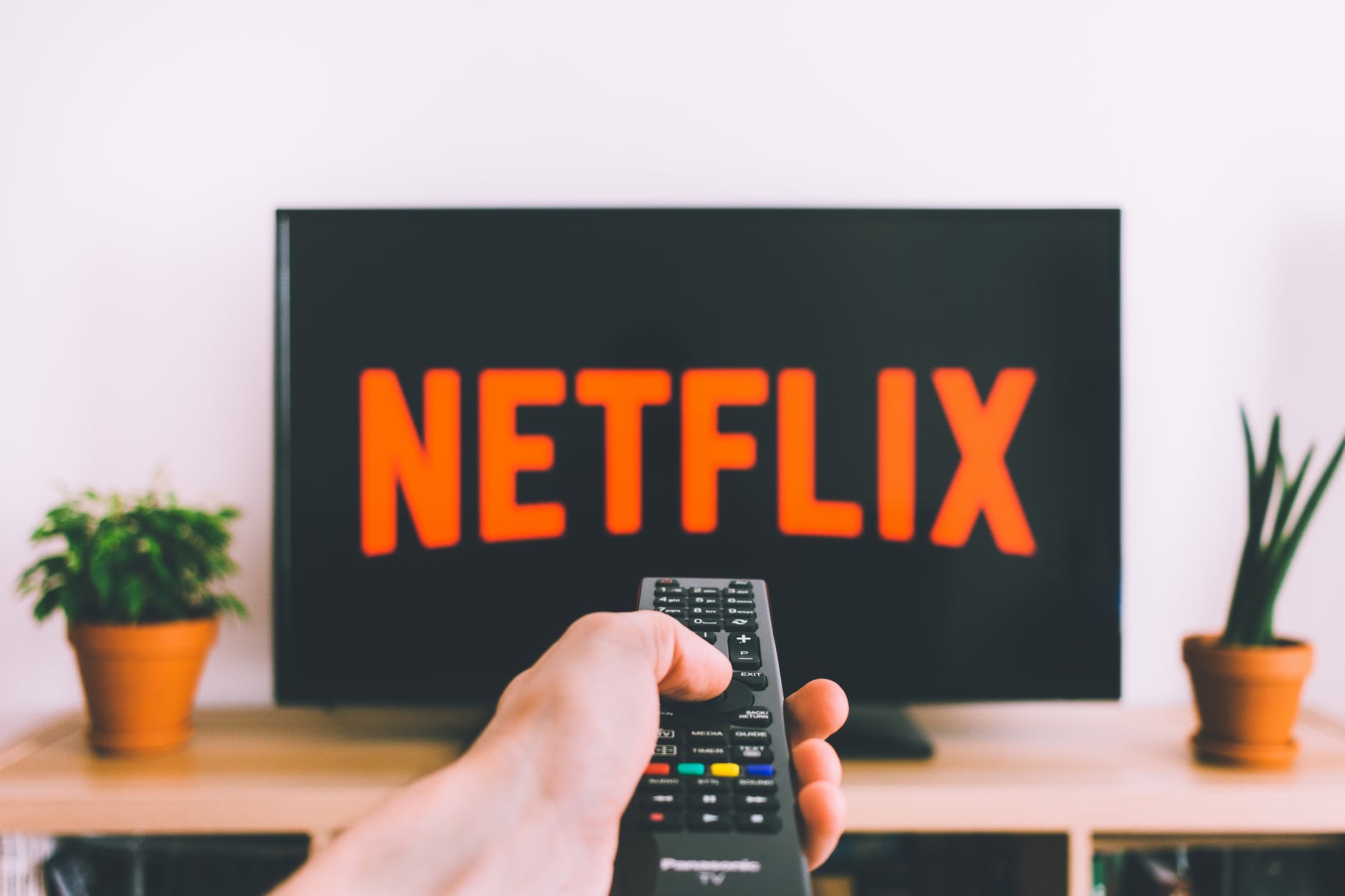
closeup photo of person holding panasonic remote control in front of turned on smart television

Photo by freestocks.org on Pexels.com

My guess wasn’t too far off. In fact, I’d say that given the industries’ lack of experience in this area, I was close enough to satisfy any statistician. After all, streaming is new to everyone and taking the world by storm. The speed at which new channels are releasing is faster than most expected. Netflix is no longer the sole player in the sandbox.

The day before Disney+ released, I estimated that at the end of its first three months the number of subscribers would hit 30 million. Disney’s analysts estimated 20 million. The final count was 28.6 million. Disney was happy that they came in higher than was estimated and I was thrilled that my number crunching landed me close to reality.

Disney+ will obviously cross the billion-dollar mark this year and will continue to give Netflix a run for its money. Walmart is next in line to release its new streaming channel followed by Quibi and Peacock, with HBO Max and Discovery/BBC right on their tails.

Many independent filmmakers are excited about the prospects of more venues for the potential release of their films, while others wonder how many current streamers will lose ground to AppleTV+, Amazon Prime, Disney+ and NetFlix battling for viewers.

Industry experts have suggested that any company with a niche audience and 500,000 subscribers will be able to withstand the storm. Small companies like PureFlix who bounce between 125,000 and 250,000 subscribers will have to figure out how to cross the 500,000-subscriber barrier before it’s too late.

Solidifying a customer base is always more difficult than most think in the streaming world because it is product-centric. There are two kinds of viewers that need to be appeased: the moviegoers, and the binge TV watchers.

The audience that tunes in to watch long-form stories like movies and mini-series look for a title that shows them something they’ve never seen before or takes them to a place that they’ve never been. Those who like to watch serialized programming and binge-worthy titles look for character development that is done so well they can relate to them as a second family. Both types of programming are needed to capture and maintain a solid subscriber base to keep the company afloat regardless of shifting market trends.

Disney+ knows there audience very well and had no problem launching new shows to grab their attention. The Mandalorian was the biggest hit with viewers splashing millions of comments on social media about Baby Yoda. Other titles perfectly aimed at that same audience are already in production.

PureFlix is in a more precarious position. They are too tightly focused on what they perceive their niche market to be that few quality production companies create the type of content their audience needs. In other words, as the market currently stands, PureFlix is not in a position to produce enough new niche-focused content to grow their subscriber base, especially since acquisitions are light in their niche due to outside companies selling titles to NetFlix.

Disney+ will rack up a debt of $4.9 billion this year, in spite of its fast growth, on new and current programming to solidify their current subscribers and draw in new ones. NetFlix has budgeted $17.3 billion for new programming in 2020.

I estimate that PureFlix can only afford to spend about $20 million, outside of donations or investors, on new products this year since their theatrical releases have waned over the past couple of years. Their niche market is too small and extremely hard to please. However, many of their subscribers are okay with PureFlix loosening their focus a bit, since they are also willing to spend money on NetFlix and Disney+. Time will only tell if PureFlix expands its new content.

The world of streaming has changed the entertainment and edutainment industries. It won’t be too long before you’ll see micro studios pop up to produce niche programming for specific markets including Magnolia TV network that is poised to take HGTV head-on in battle this fall with Chip and Joanna Gaines at the helm.

Copyright © 2020 by CJ Powers