7 Great Speech Opening Techniques

Winston_ChurchillLast night I gave a talk to a group of speakers on seven techniques that will help a speaker create a great opening to his or her talk. It was well received and I wanted to share it with you. Please keep in mind that this is not a transcript of the talk, so lasts night’s humor was trimmed out to present the information more succinctly.

1. State the Importance of the Topic

This appears to be a no brainer idea, but its one that is critically important and seldom done. When the audience is told how the topic relates to their life, attention spans are lengthened and interest is peaked to absorb the content with pleasure. People always pay closer attention to topics that will effectively improve their lives.

2. Make a Startling Statement

Attention getting devices are helpful to draw an audience’s focus from their drifting thoughts to your talk. The bigger the wow factor the more alert the audience. Within a short period of time the audience scans their memories to compare what they already know to the factualness of the statement. This practice demands the audience hear you out to fill in the gaps the statement created.

3. Arouse Suspense or Curiosity

Everyone likes a good mystery that pays off with a benefit for his or her life. Our peaked curiosity places our minds into a learning mode that allows us to consider the value of new information. It moves us into the zone of soaking up information.

4. Tell a Story or Anecdote

Storytelling forms our memories and is the vehicle we use to share unforgettable information. The anecdote becomes the demonstrative element of the points we make. It is also the relatable trigger that brings back the shared self-help information we crave.

5. Ask a Rhetorical Statement

When a person asks a question, whether rhetorical or not, our minds engage in a process to find the answer. If one is not quickly found within our memories, our curiosity is peaked and we willingly hear out the messenger. If, however, we have a memory of similarity or contrast, we use the comparison as a filter in our listening process, giving full attention to the speaker.

6. Use a Quotation

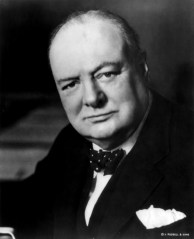
Quotes stand the test of time and cause the listener to think. Winston S. Churchill is one of the most notable people ever quoted and he clarifies what makes for a good speech. “A good speech should be like a woman’s skirt; long enough to cover the subject and short enough to create interest.”

7. Reference the Occasion

Acknowledging the event you speak at helps the audience to immediately correlate your talk with the night’s purpose. The embracing of the content becomes synonymous with the event in the minds of the audience.

A successful opening gets the audience’s attention, introduces the topic, and helps the speaker establish report. These positive opening techniques drive the success factor, but should not take over the talk. Keeping the opening to about 5% of the talk’s length (not exceeding 10% of the talk) guarantees a captivated audience for the presented keynote content.

Copyright © 2016 by CJ Powers


“The Force Awakens” Box Office

TFAStar Wars: The Force Awakens is now the top grossing film in history, not counting for inflation. Disney is thrilled. George Lucas is happy. J.J. Abrams is delighted. And fans are mostly ecstatic. Why? They were all a part of making a cultural icon break box office records.
Disney bought the Star Wars property from creator Lucas for $4 billion. The domestic and international box office, and its merch will likely hit $4 billion in gross sales by the end of January. Both Lucas and Disney made a great win/win deal.

Lucas is happy to personally have $4 billion to make the kind of movies he wants to make for his friends. He’s also happy because Disney guaranteed that Lucas Film Ltd. and its employees have a future. When Lucas started making the types of films he wanted to make like “Red Tails,” Lucas Film Ltd. took a financial hit due to the story being unpopular. Studio research revealed an all black cast about WWII fighter pilots would flop, so the studio limited the film’s release.

Lucas is now making whatever types of films he wants to make and showing them to his friends. He’s no longer interested in placing the stories into the theater circuit or dealing with the studios. The interest rate alone on his $4 billion suggests that he’ll never again have to make another film for popular culture. Instead he can satisfy his artistic heart by making whatever films he wants.

Abrams is delighted with “The Force Awakens.” The only requirement he put in place for the film with co-writer Lawrence Kasdan was that the film must be delightful. He purposely placed certain reminiscent scenes in the film to draw in the original fans of the Star Wars series that stopped following it after the first three episodes.

The reason fans are “mostly ecstatic” was due to the franchise’s re-launch being hampered by a weaker story, in the sense that too many scenes are from earlier films and several new scenes aren’t explained anywhere near as well as in the book. However, the fans love the film’s execution with the exception of the couple dozen miss handled plot holes. But, the fans needed to have some fun and the film delivered fun.

Star Wars has once again become a cultural phenomenon. It’s original father/son story elements stayed intact and its introduction to a new cast was successful. The next two sequels and three new Star Wars films have all been given a green light and release dates:

Dec. 16, 2016……….Rogue One: A Star Wars Story
May 26, 2017……….Star Wars: Episode VIII
May 25, 2018……….Young Han Solo Movie
2019………………….Star Wars: Episode IX
2020…………………A Boba Fett Movie

Copyright © 2016 by CJ Powers

Screenplay Oscar Hopefuls

lady-in-the-vanBelow are most of the screenplays I found that are vying for an Oscar nomination. Take a quick read, as I don’t know when the links will be pulled.

99 Homes
Story by Ramin Bahrani, Bahareh Azimi
Screenplay by Ramin Bahrani, Amir Naderi

Beasts of No Nation
By Cary Joji Fukunaga
Based on the novel by Uzodinma Iweala

The Big Short
Adaptation by Adam McKay, rewriting Charles Randolph
Based on The Big Short by Michael Lewis

Bridge of Spies
By Matt Charman and Ethan Coen & Joel Coen

Brooklyn
By Nick Hornby
Adapted from the novel by Colm Toibin

Carol
By Phyllis Nagy
Based on the novel The Price of Salt by Patricia Highsmith

Concussion
By Peter Landesman

The Danish Girl
Screenplay by Lucinda Coxon
Based on the novel by David Ebershoff

Danny Collins
By Dan Fogelman

The Diary of a Teenage Girl
Written by Marielle Heller
Based on the graphic novel by Phoebe Gloeckner

The End of the Tour
Screenplay by Donald Margulies
Based on “Although Of Course You End Up Becoming Yourself: A Road Trip with David Foster Wallace” by David Lipsky

Ex Machina
By Alex Garland

Far from the Madding Crowd
By David Nicholls
Based on the novel by Thomas Hardy

Grandma
Written by Paul Weitz

The Hateful Eight
By Quentin Tarantino

I Smile Back
Written by Paige Dylan and Amy Koppelman
Based on the novel I Smile Back by Amy Koppelman

I’ll See You in My Dreams
Written by Brett Haley & Marc Basch

Infinitely Polar Bear
By Maya Forbes

Inside Out
Original story by Pete Docter, Ronnie Del Carmen
Screenplay by Pete Docter, Meg LeFauve, Josh Cooley

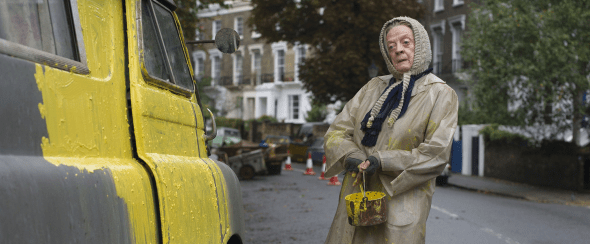
The Lady in the Van
Written by Alan Bennett
Based on his memoir

Learning to Drive
By Sarah Kernochan

Legend
Written by Brian Helgeland

Macbeth
Adapted by Jacob Koskoff & Todd Louiso and Michael Lesslie
Based on the play Macbeth by William Shakespeare

The Martian
Written by Drew Goddard
Based on the novel by Andy Weir

Me & Earl & the Dying Girl
Written by Jesse Andrews
Based on the book Me and Earl and the DYing Girl (Harry Abrams, 2012)

Minions
By Brian Lynch

Mississippi Grind
By Anna Boden & Ryan Fleck

Mistress America
Written by Noah Baumbach and Greta Gerwig

Pawn Sacrifice
Screenplay by Steven Knight
Story by Stephen J Rivele & Christopher Wilkinson and Steven Knight

Remember
By Benjamin A. August

Room
Written by Emma Donoghue
Based on the novel by Emma Donoghue

Slow West
By John Maclean

The Son of Saul
A screenplay by Laszlo Nemes, Clara Royer

Steve Jobs
Screenplay by Aaron Sorkin
Based on the book by Walter Isaacson

Straight Outta Compton
Screenplay by Jonathan Herman and Andrea Berloff
Story by S. Leigh Savidge & Alan Wenkus and Andrea Berloff

Suffragette
Written by Abi Morgan

Testament of Youth
By Juliette Towhidi
Based on the autobiography of Vera Brittain

Trainwreck
By Amy Schumer

Trumbo
Written by John McNamara
Based on the biography by Bruce Cook

Truth
By James Vanderbilt
Based on the Book Truth and Duty by Mary Mapes

While We’re Young
By Noah Baumbach

Woman in Gold
Written by Alexi Kaye Campbell

Youth
Written by Paolo Sorrentino