Dealing with Nomophobia on Set

Many independent filmmakers face a cast and crew filled with nomophobia on closed sets. It’s a psychological issue that touches approximately 94% of people who fear being out of mobile phone contact. The term abbreviates, “no-mobile-phone phobia.”

Psychology Today released a report that revealed how people felt after misplacing their cell phones. Here are the results:

73% Panicked
14% Became Desperate
7% Became Physically Sick

The results of being without a cell phone for the length of a shooting day plays havoc with many people’s emotions during production. It’s a real issue that few producers are taught how to handle. The most experienced makes sure that their key players can get to their phones during breaks.

Unfortunately, there is another issue that starts to build in the film world. While networking is the only way for most to get their next gig and requires a lot of interaction, many find themselves so attached to their mobile phone that they become lonely regardless of with whom they are networking.

There are many ways of staying connected, thanks to mobile devices and the Internet, yet many feel alone. One expert noted, “It’s a great psychological truth that if we don’t teach our children how to be alone, they will always be lonely.”

A leading consultant for non-profits pointed out that Jesus, who spent numerous daily hours in public, took time to get a way for some alone time. This spiritual discipline is counterintuitive to the activities of a mobile society who no longer knows how to be alone. However, taking time daily to be without one’s cell phone brings understanding to the new emotions the practice brings into play.

In an industry where everything is about hurrying up and waiting, cast and crew are required to be content during those long periods without cell phones. Those who are absorbed by the desperation brought on with nomophobia may soon find themselves emotionally bankrupt and out of work.

The only sure fire way of working through the sense of withdrawal or dread, is to learn how to be good company with oneself. For it’s only those who aren’t afraid of being alone with themselves that can actually overcome the odd feeling that mobile phone withdrawal brings about.

Being able to live at peace without a phone, messaging, or other forms of mobile connectivity will help a person develop the self-control necessary to survive a film shoot. Practicing being without a connected device also helps one to get to know themselves and find self-acceptance. Being able to be alone in a room gives rise to self-control and the stamina required for being unplugged – A trait that’s required in filmmaking.
The Answer is “Solemates” by Bryce Dallas Howard

SolematesYoung filmmakers often ask me how they can create a short film that will win festival awards. Having been a festival judge and an award winner, my answer always reflects the two elements that I’ve seen in all successful short films: some form of character development and a plotline that has a beginning, middle and end.

At that point, the filmmaker scoffs and makes a film that lacks character development and is missing a beginning, middle or end. And no, they don’t win awards, but they do wonder why others didn’t see their genius.

I’m not the only one who struggles with today’s young filmmakers. Steven Spielberg says of the new filmmakers, “People have forgotten how to tell a story. Stories don’t have a middle or an end any more. They usually have a beginning that never stops beginning.”

Bryce Dallas HowardBryce Dallas Howard (Terminator Salvation, The Help, Jurrasic World) was raised in a motion picture family with her dad being Ron Howard (The Andy Griffth Show, Happy Days, American Graffiti, Apollo 13, A Beautiful Mind, etc.). She not only has a great list of acting credits, but she is an accomplished director herself.

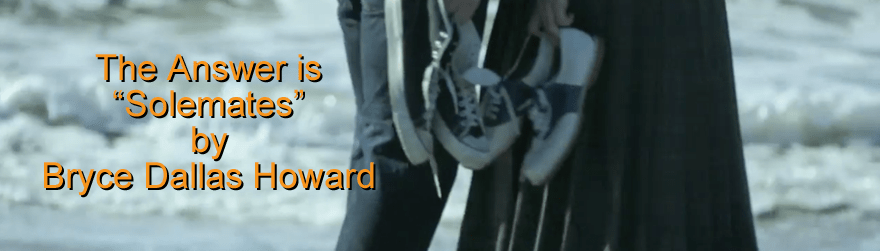
Her latest short film, “Solemates,” has a beginning, middle and end, and also develops a sense of character – All done from the perspective of the soles of the character’s shoes. If new filmmakers would watch short films like “Solemates” and see that it has the answers about how to make shorts, far more first time films would start making sense.

Here is Canon’s trailer: Solemates.

Death of the Three-Act Structure – Maybe Not

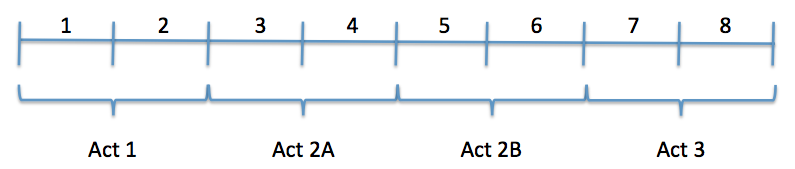
Story Sequence BreakdownFor decades filmmakers have pointed to William Shakespeare’s three-act structure for the development of motion pictures. Even noted screenwriter and teacher Syd Field was a solid proponent of the structure. But today, the Internet, television, and shortened attention spans of viewers are forcing filmmakers to shift to a new eight-sequence structure.

The new structure still holds true to the three-act form, but breaks it down into acts 1, 2A, 2B, and 3 – Each having two sequences. The story beats have stayed the same, but the structure was evenly divided to simplify productions, reduce costs and provide for future commercial breaks.

In all reality, the three-act structure will never disappear, as all stories have a beginning, middle and end. However, the middle is now split into two parts to avoid the loss of momentum in the action plotline. In the past, numerous films would die in the second act, which gave rise to the mid-point that turned the tables on the protagonist in order to regain the audience’s attention.

The further shrinkage of attention spans drove films to split each act further into what is referred to as mini-movies. Each 12-15 minute segment is given its own beginning, middle and end, while energizing the character arc and plot points to catapult the viewer into seeing the next sequence.

This format allows the audience to gain some satisfaction from minor issues being resolved in the story, while building a desire for them to watch until the entire film is resolved. In other words, the mini-resolutions reward the audience for continuing to watch for the climax of the overall story.

The new structure makes it all the more difficult for the director to generate an emotional flow with the audience and forces the use of more transitions to reset the viewers’ emotional state at the end of each sequence. This formula, if adhered to religiously, can create an unwanted pulse that alerts viewers to what’s coming next within the story. It can also pull the audience emotionally out of the story and make them feel like they’re watching a film rather than exploring an unfolding event.

The good news is that the new structure can help first time filmmakers understand a complex process in simpler terms. It may also lead to longer shorts that use a similar structure with the hope that a series of shorts can turn into a feature film after transitions are edited in.

A 10-minute short might be broken down in the following way:

ACT 1

:30 Teaser
:60 Backstory/Set-up
:30 Reluctant of Call to Action
:30 Turning Point 1

ACT 2A

:30 Intro Plot B
:60 Learn Needed Skills for Act 3
:30 All Goes Well
:30 Mid-Point

ACT 2B

:30 The Chase
:60 Mini Proxy Battle
:30 All is Lost
:30 Turning Point 2

ACT 3

:30 Regroup
:60 The Main Battle
:30 The Climax
:30 The Resolution

This type of structure works well for a story based short film rather than an image based film. It allows enough time for the director to develop the story and its main characters, causing audiences to desire a second and third viewing. It might also be combined with seven other shorts utilizing the same structure to make a feature film, although this has yet to be accomplished.

The pacing of shots and sequences has also increased due to short attention spans and the audiences’ ability to construct the missing elements in order to compete the story. This allows for further time compression and shorter scenes. In fact, the average scene length today is one page long compared to four pages in the early 70s.

Copyright © 2015 by CJ Powers