

CJ’s Corner Blog in Review

CJ's Corner Blog 2012 Review

At the end of every year I review my blog traffic and learn what my readers read and determine my focus for the next year. This analysis is tricky because I have several different types of readers.

Out of the numerous categories of people that read my blog, the two largest groups of readers are filmmakers and youth pastors. One group desires to learn how to influence our culture through film and the other group wants to learn how film is influencing our culture. The next three biggest categories of readers include consumers, screenwriters and actors.

This year saw consumers and pastors reading numerous posts that included interviews, reviews, and culturally relevant articles. Since I wrote more of these types of posts in 2011, many of them dominated this year’s top ten list. In fact, the 2011 post titled “Right Brain vs. Left Brain” received about 7,000 views in 2012. This leads me to consider splitting my blog: One for consumers and pastors; and, One for filmmakers, screenwriters and actors. Or, I might assign certain days of the week for each type of reader.

The top ten posts written in 2012:

  1. Interview with Francine Locke Starring in “Cry for Justice”
  2. Directors Stage Shots and Block Actors with Triangles
  3. How to Determine Scene Length
  4. Seven Steps to Determine if a Script is Worth Shooting
  5. Dynamic Composition
  6. Movies Told in 8 Sequences
  7. Taking Back Our Culture
  8. Protecting Your Core Strength with Workflow
  9. Finding the Action for Actors
  10. Outstanding Performance by Gary Oldman – Review

The top ten 2011 posts read in 2012:

  1. Right Brain vs. Left Brain
  2. Top 100 Grossing Movies Objectifying Women
  3. Game Time: Tackling the Past – Review
  4. Why are Men Superficial?
  5. The Christmas Lodge – Review
  6. Focus on the Problem, Not the Person
  7. Set Pieces are the Latest Movie Tool
  8. Shaky Camera Technique
  9. Provocative Freedom of Speech to Help Abused Women
  10. Faith and Family Films vs. R-Rated Films

In past years, my international screenwriting consulting drove numerous posts and readers from 138 countries. In 2012 I did less screenwriting posts dropping my audience to 101 countries, while greatly increasing the number of overall readers per post. Here are the top ten countries that read my blog in 2012:

  1. United States
  2. Canada
  3. United Kingdom
  4. India
  5. Australia
  6. Philippines
  7. Singapore
  8. France
  9. Indonesia
  10. Brazil

It wasn’t a surprise to learn that most of my blog traffic came through Google, Facebook and Twitter, since I use that social media myself. However, I was a bit more surprised by the greater number of consumers and youth pastors now reading my blog compared to people in the film industry.

I will plan on making some adjustments to compensate for the growing audience and hope you are patient during my reconstruction phase. In the meantime, I hope you take time to read some of the top ten posts you may have missed.
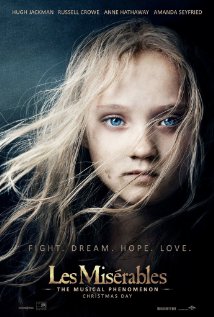
Les Miserables — Review

Les Miserables depicts one of the greatest Christian stories of redemption ever told in a powerful and moving, artistic manner. Told through incredible music with an awe inspiring and Oscar® worthy cast, the audience is transported back to France during its pre-revolutionary days of depravity.

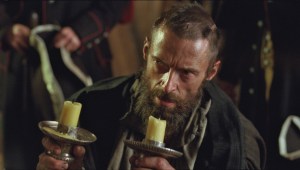
Les Miserables PosterThe story opens with Jean Valjean (Hugh Jackman) serving his last day in prison after 19 years of a 5 year sentence for stealing a piece of bread to feed his sister’s starving child. Police Inspector Javet (Russell Crowe) gives Valjean his walking papers and promises to bring him back to prison where all “dangerous” men should live out their existence.

Desperate for food and experiencing constant rejection searching for a simple job, while carrying papers that label him as a dangerous man, Valjean is taken in by a priest who feeds him a hearty meal and gives him a bed for the night. Before the sun rises, Valjean steals away with silver dinning pieces and is caught by the law.

les miserables hugh jackmanWhen brought to the priest to validate the crime, the priest refuses to press charges and explains that the silver was a gift. He shows Valjean grace and gives him the prize candle sticks as well, questioning why he left the best part of the gift behind. Once the officers leave, the priest tells Valjean to use the silver to start a new life and be dedicated to help others in return for his life.

les miserables anne hathawayValjean soon skips parole, takes on a new name and becomes an esteemed business owner who helps numerous families cope during the hard times in 19th century France. In the peek of his blessings, he stumbles upon Fantine (Anne Hathaway) who struggles to make enough money to take care of her little girl, Cosette. After selling her hair and a tooth, she lowers herself into a life of prostitution. Feeling responsible, after learning she was once his worker that was fired unjustly, Valjean promises to look after her daughter, demonstrating his newfound ability to give grace to others.

While he raises Cosette (Amanda Seyfried), Valjean learns about love. Stumbling upon a love note to Marious (Eddie Redmayne) he feels a tearing at his heart that drives him to learn about this man. Valjean finds Marious preparing for the revolution and is taken aback by his passion for freedom, something Valjean treasures most dearly. In those moments of standing side by side for the cause, Valjean is moved to show mercy and saves Marious from a gruesome death.

les miserables russell croweIn order to protect Cosette and bring her true love to her side, Valjean finds himself with a new perspective of love, as he makes a sacrificial decision to be lonely in order for Cosette to experience the fullness of life and love.

The film closes with Valjean being found by his loved ones in time for them to say goodbye, as he passes into heaven and the true freedom he longed for. There he is greeted with the cheers of all others who died sacrificially for the ones they loved. Valjean was redeemed and not only understood God’s sacrificial love, but was able to live his life out in the same manner as Christ.

Hugh Jackman’s portrayal of an imprisoned man seeking true freedom was Oscar® worthy – Yes, more than Daniel Day-Lewis’ performance of Lincoln, which was also Oscar® worthy. Jackman took the audience on a journey that was started by a gift of grace, blossomed through a course of love, which led to an act of mercy, followed by true sacrificial love, and culminated in a real and true freedom in Christ.

Tom Hooper deserves an Oscar® for Best Director and Les Miserables deserve to take home the Best Picture Oscar®.

I was amazed at the production value and a couple days later I’m still reeling from the great performances. I was, however, perplexed by Christians on Facebook warning people not to see the film because it was loaded with prostitution, drunkardness, and thievery. While the film depicts these actions, it’s done in its proper light and reveals the depth and power of grace and sacrificial love. Without the contrast, God would seem awfully small.

This is the only film I’ve given 5 stars to in 2012. I did, however, give Lincoln 4.5 stars. And, I have high hopes for Katheryn Bigelow’s Zero Dark Thirty, but I haven’t seen it yet since its main release isn’t until January 11th. So until then, get into the theater and see the most incredible movie of 2012 – Les Miserables.

5 Steps to Take an Idea to Script

Last week I attended a special creative writing class at Northwestern University to gain incites from great writers. I was the writer with the least amount of skill in the room and battled with my emotions. I could sense that by the end of the day, I’d either take advantage of the talent surrounding me to improve my skills or I’d feel bad about my ignorance and give up the craft.

5 Steps to Take an Idea to ScriptWhat fascinated me about the class was the incredible word craftsmanship revealed as each writer read his in-class work. It was amazing. However, there was one oddity that surfaced as I read my lackluster work: It was a story, not a series of polished words with no direction.

My poor ability to wordsmith was obvious, but it was odd that I was the only one with a complete story. This was partially due to the time limit of ten minutes given to the writers, but I wondered if it was more due to focus. The writers were into words and their sounds, while I was into telling stories that evoke a response.

To help the class, the instructor had us write a one-sentence story. It was a difficult challenge, but we all dove in. When it came time to read our work, it was once again clear that everyone used eloquent and polished words, except for me. The only redeeming quality attributed to me was my story – No one else had a complete story. I happened to write a comedic story, which caused everyone to burst out laughing  – Yes, it was only one sentence long.

I concluded that most screenwriters start with their cool ideas or dive into the scenes they can easily visualize, rather than thinking through story structure, themes, and the character development that drives a story. In fact, I think it plays out for most screenwriters like this:

An idea pops into the head of an independent screenwriter and he’s off to the keyboard, typing at a breakneck pace. He pulls the paper from the printer and shoves it into his most supportive readers’ hands. They chug through the 120-page script over a few weeks and finally give feedback about the handful of scenes they loved and the story they didn’t understand.

The screenwriter takes another stab at the story and soon finds he added three more scenes that play well, but again, the story is incoherent. Returning to the keyboard again, he pumps out another 120-pages of a very different version of the story. He finds fewer readers available that are willing to give up 3-4 hours of time, but those who work through it find nine loveable scenes, yet still no story.

After another six months of pleading, looking up old friends and finding new ones to read his work, he sets the unfinished script on the shelf to dive into an entirely new concept that popped into his mind during coffee with an acquaintance. This idea is larger than life and is sure to be a box office success, so he hits the keyboard and starts the process all over again.

No matter how creative the person is, until he puts the story into a structure that makes sense, he will only have a handful of cool scenes. To help screenwriters focus on creating a functional story, I’ve listed the five steps to take an idea to a script:

STEP 1: LOGLINE. Every story worth telling can be reduced to 1 or 2 sentences. This step is incredibly important as you can test your story idea with lots of people in a short time frame without much effort on their part. If they don’t like the story, you’ve lost little time at the keyboard. And, when you’ve got an idea that peaks most people’s interest, you have a story blueprint that will help keep your story focused through all writing stages.

STEP 2: STEP OUTLINE. A stack of index cards can be used to capture one sentence for each scene in the film. Once the brainstorming of scenes are complete, they can be easily moved around the wall to help determine which scenes will be used for the inciting incident, various turning points and the climax. Cards can be quickly added, changed and tossed into the recycle bin.

STEP 3: PITCH. Testing the Step Outline with a handful of people only takes 10 minutes. By reducing the sentences to a couple pages, the screenwriter can glance at it as he shares his story with others. This is a critical step in learning what ideas or scenes captured the person’s attention or bored them.

STEP 4: TREATMENT. This step explodes out each sentence from the step outline into a full paragraph or two. It captures what the characters talk about without using dialog, as it creates the subtext of the scenes. And, to better clarify things for the first draft, the long form treatment will include the character’s thoughts and feelings.

STEP 5: FIRST DRAFT. This tool is in place to transfer the story from the literary world into the visual world. It typically has minimal dialog, descriptive action, and clear subtext. It is also the first time to determine what parts of the story work and flow with the juxtaposition of scenes and pacing.

Screenwriters understand that 90% of what they write during these steps will survive in the final screenplay, but they know that they need the process to create great story. Anyone can write a story, but few will persevere for a great story.


© 2012 By CJ Powers
Photo © alphaspirit – Fotolia.com